Autonomous drone military
1344×768 · AVIF · CC BY 4.0
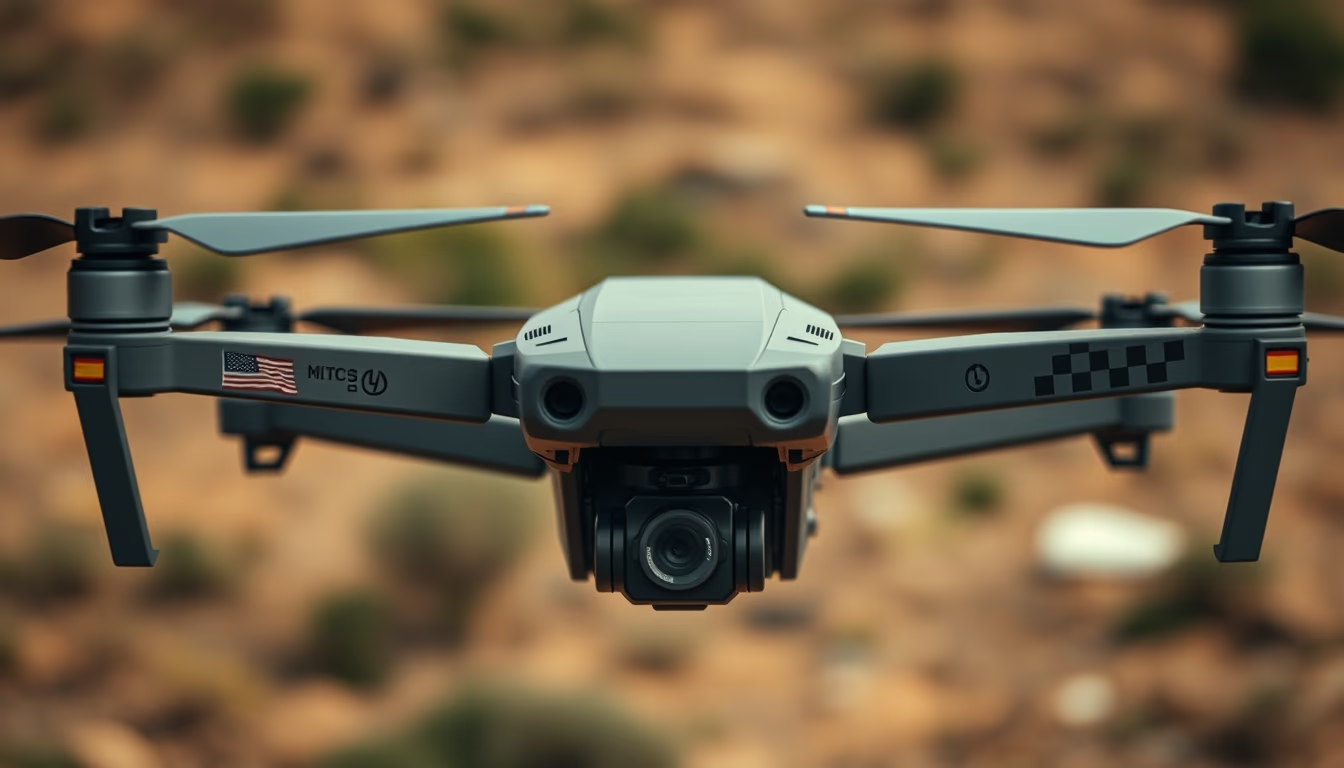
Autonomous military drones are redefining modern combat with artificial intelligence and decision-making without human intervention.
About this subject
Autonomous military drones represent one of the most significant transformations in 21st-century warfare. Unlike remotely piloted unmanned aerial vehicles (UAVs), these systems operate with a high degree of independence, using artificial intelligence algorithms for navigation, target recognition, and tactical decision-making. Since the early 2020s, several nations, including the United States, China, Israel, and Russia, have heavily invested in developing drones capable of performing missions without constant communication with a ground station.
The technology behind these drones involves machine learning, computer vision, and sensor fusion. The primary goal is to reduce risk to human operators and increase efficiency in contested environments where radio signals may be jammed. Notable examples include the XQ-58A Valkyrie, an experimental American combat drone designed as a loyal wingman, and the Harop loitering munition from Israel Aerospace Industries, which can hover over an area for hours before striking a predefined target.
Autonomy in military drones raises intense ethical and legal debates. Critics point to risks of errors in attack decisions, lack of clear accountability, and potential violations of the laws of war. Organizations like the United Nations have discussed the need for international treaties to limit the development of lethal autonomous systems. In 2023, UN Security Council Resolution 2664 partially addressed the issue, but without consensus on a total ban.
Operationally, these drones have already shown effectiveness in recent conflicts. During the War in Ukraine, both sides employed autonomous drones for reconnaissance and precision strikes, albeit with technical limitations. Turkish company Baykar developed the Bayraktar TB2, which, although not fully autonomous, inspired advances in more independent systems. The trend is for future military drones to integrate real-time decision-making, operating in AI-coordinated swarms.
Frequently Asked Questions
What differentiates an autonomous military drone from a remotely controlled one?
An autonomous drone performs missions based on artificial intelligence without constant human control. It can make decisions such as flight path and target identification using onboard algorithms, unlike traditional drones that rely on a remote pilot.
Which countries are leading the development of autonomous military drones?
The United States, China, Israel, and Russia are at the forefront. The US has programs like the XQ-58A Valkyrie, while Israel developed the Harop. Turkey is also advancing with the Bayraktar TB2, which inspired more autonomous systems.
Are there international regulations for lethal autonomous drones?
Not yet a binding treaty. The UN has discussed the issue since 2014, and in 2023 Resolution 2664 partially addressed it, but without a ban. Organizations like the International Committee of the Red Cross call for clear limits.
Direct URL
https://pub-c7d6a6ea828543ac903a74a341ccb2e1.r2.dev/imagens/autonomous-drone-military-national-geographic-style-p11.avifHow to credit
Include a visible link back to UtilizAí. Copy one of the snippets below:
<a href="https://xn--utiliza-eza.com/en/midia/imagens/autonomous-drone-military-national-geographic-style-p11">Autonomous drone military</a> by <a href="https://xn--utiliza-eza.com">UtilizAí</a>, licensed under <a href="https://creativecommons.org/licenses/by/4.0/">CC BY 4.0</a>.
[Autonomous drone military](https://xn--utiliza-eza.com/en/midia/imagens/autonomous-drone-military-national-geographic-style-p11) by [UtilizAí](https://xn--utiliza-eza.com), CC BY 4.0
License: CC-BY-4.0