Autonomous drone military
1344×768 · AVIF · CC BY 4.0
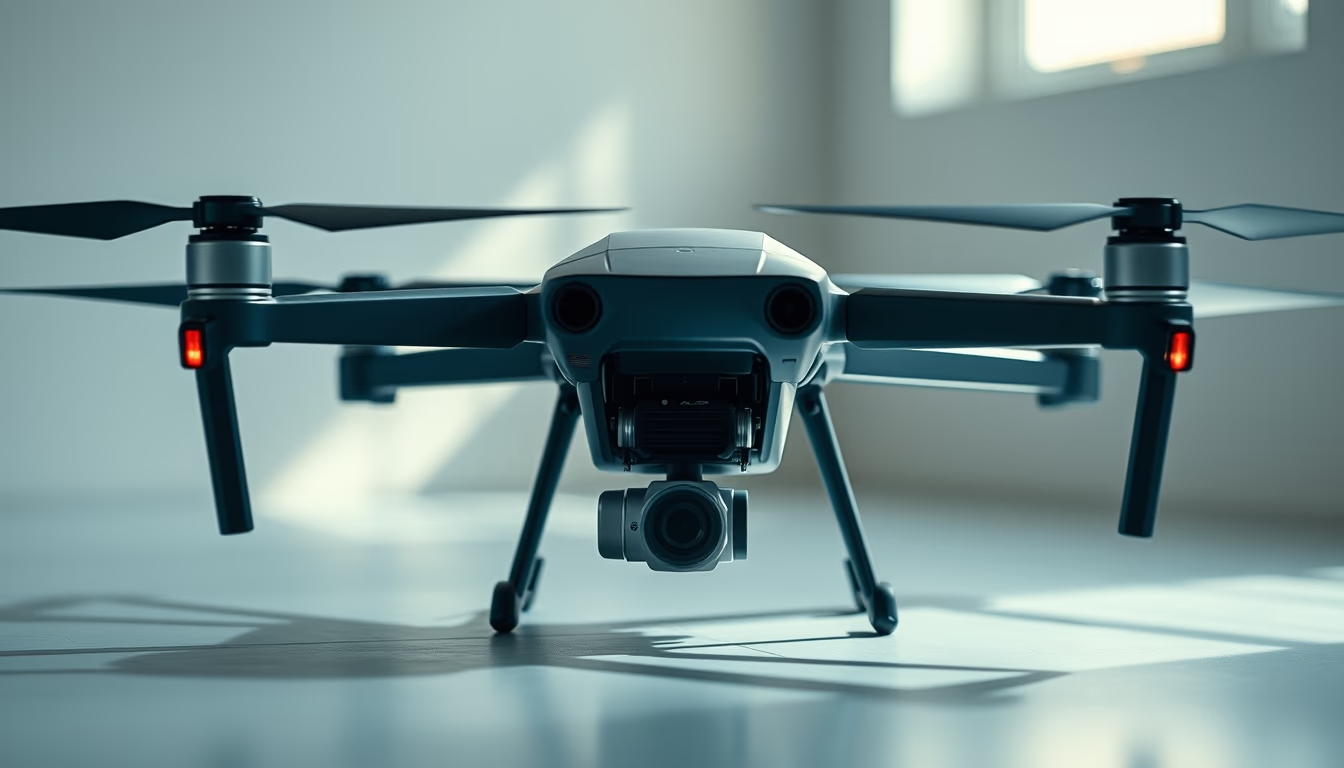
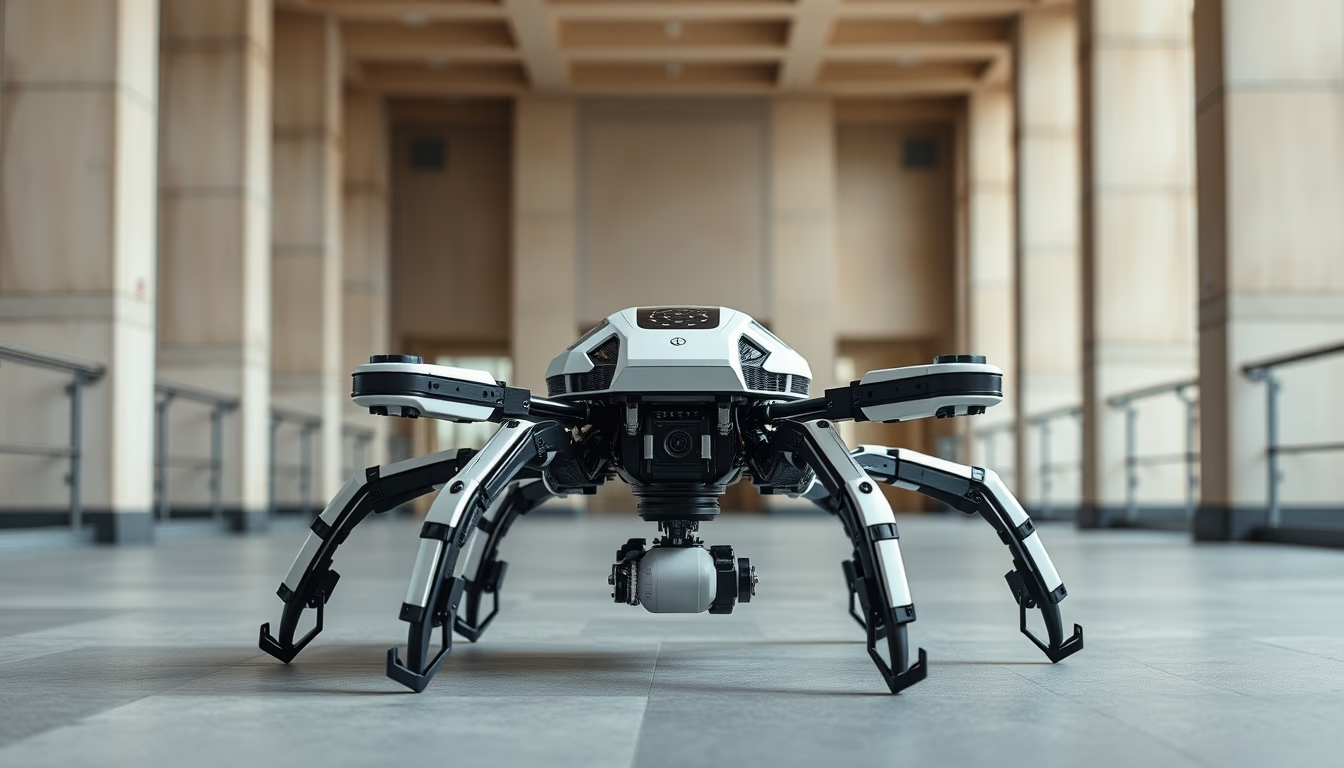
Autonomous military drones are unmanned aerial systems capable of operating without direct human control, revolutionizing modern warfare tactics.
About this subject
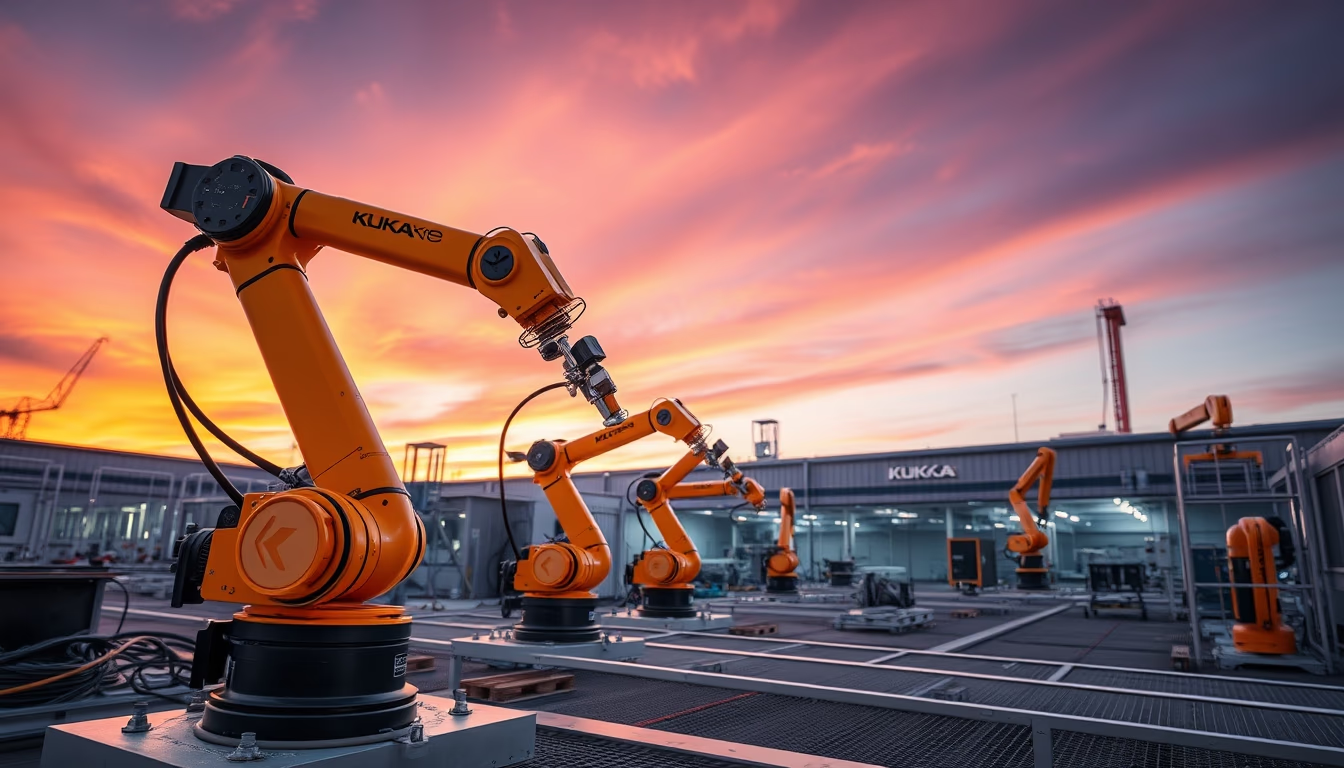
Autonomous military drones, also known as unmanned aerial vehicles (UAVs) with independent decision-making capability, represent a significant leap in warfare technology. Unlike remotely piloted drones that rely on a human operator on the ground, autonomous models use artificial intelligence, sensors, and machine learning algorithms to navigate, identify targets, and execute missions without continuous human intervention.
Development of these systems accelerated from the 2000s onward, with countries like the United States, China, Israel, and Turkey investing heavily. The US MQ-9 Reaper, though often remotely operated, already incorporates autonomous modes for takeoff and landing. Systems like the Turkish Bayraktar TB2, widely used in the Ukraine war, demonstrate the effectiveness of semi-autonomous drones in modern conflicts. Full autonomy, where the machine decides to engage targets, remains controversial and raises ethical and legal questions.
An example of an autonomous drone is the XQ-58A Valkyrie, a US collaborative combat aircraft designed to fly in formation with manned fighters and execute strike or reconnaissance missions with minimal supervision. China's CH-5 Rainbow has autonomous operation capability for surveillance missions. Beyond military aspects, these technologies spark debates on accountability for human rights violations, risk of inadvertent conflict escalation, and the need for international treaties regulating lethal autonomous weapons systems (LAWS).
Frequently Asked Questions
What differentiates an autonomous drone from a remotely controlled one?
A remotely controlled drone requires a human pilot in real time to command movements and actions. An autonomous drone uses AI and sensors to navigate and make decisions without constant intervention, though it may still allow human oversight.
Which countries are leading in autonomous military drone development?
The United States, China, Israel, Turkey, and Russia are at the forefront. The US develops models like the XQ-58A Valkyrie, while China produces the CH-5 Rainbow. Turkey gained prominence with the Bayraktar TB2, used in recent conflicts.
Can autonomous drones decide to kill without human authorization?
Currently, most systems require human authorization for lethal attacks, but there are concerns about future fully autonomous systems. The UN is debating treaties to regulate lethal autonomous weapons systems (LAWS) and prevent ethical violations.
Direct URL
https://pub-c7d6a6ea828543ac903a74a341ccb2e1.r2.dev/imagens/autonomous-drone-military-minimalist-composition-p6.avifHow to credit
Include a visible link back to UtilizAí. Copy one of the snippets below:
<a href="https://xn--utiliza-eza.com/en/midia/imagens/autonomous-drone-military-minimalist-composition-p6">Autonomous drone military</a> by <a href="https://xn--utiliza-eza.com">UtilizAí</a>, licensed under <a href="https://creativecommons.org/licenses/by/4.0/">CC BY 4.0</a>.
[Autonomous drone military](https://xn--utiliza-eza.com/en/midia/imagens/autonomous-drone-military-minimalist-composition-p6) by [UtilizAí](https://xn--utiliza-eza.com), CC BY 4.0
License: CC-BY-4.0