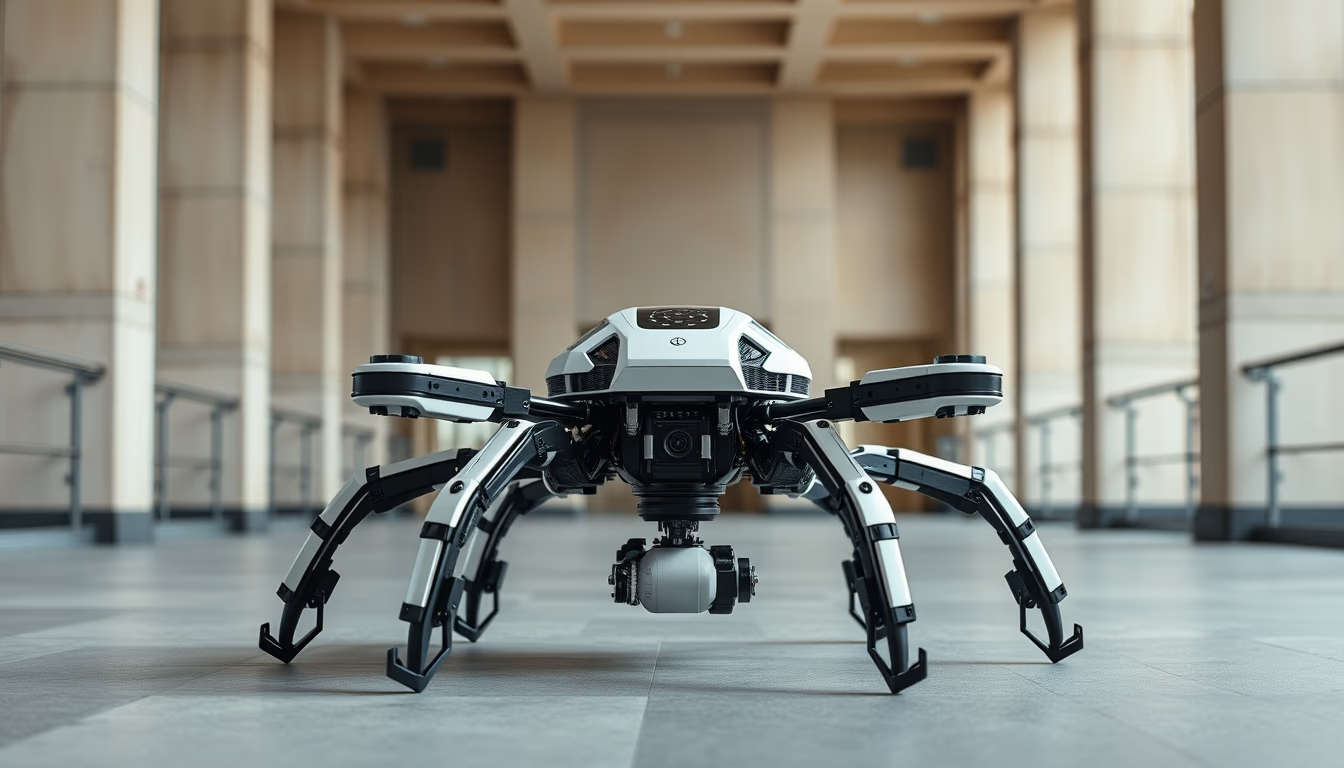
Autonomous drone military
1344×768 · AVIF · CC BY 4.0
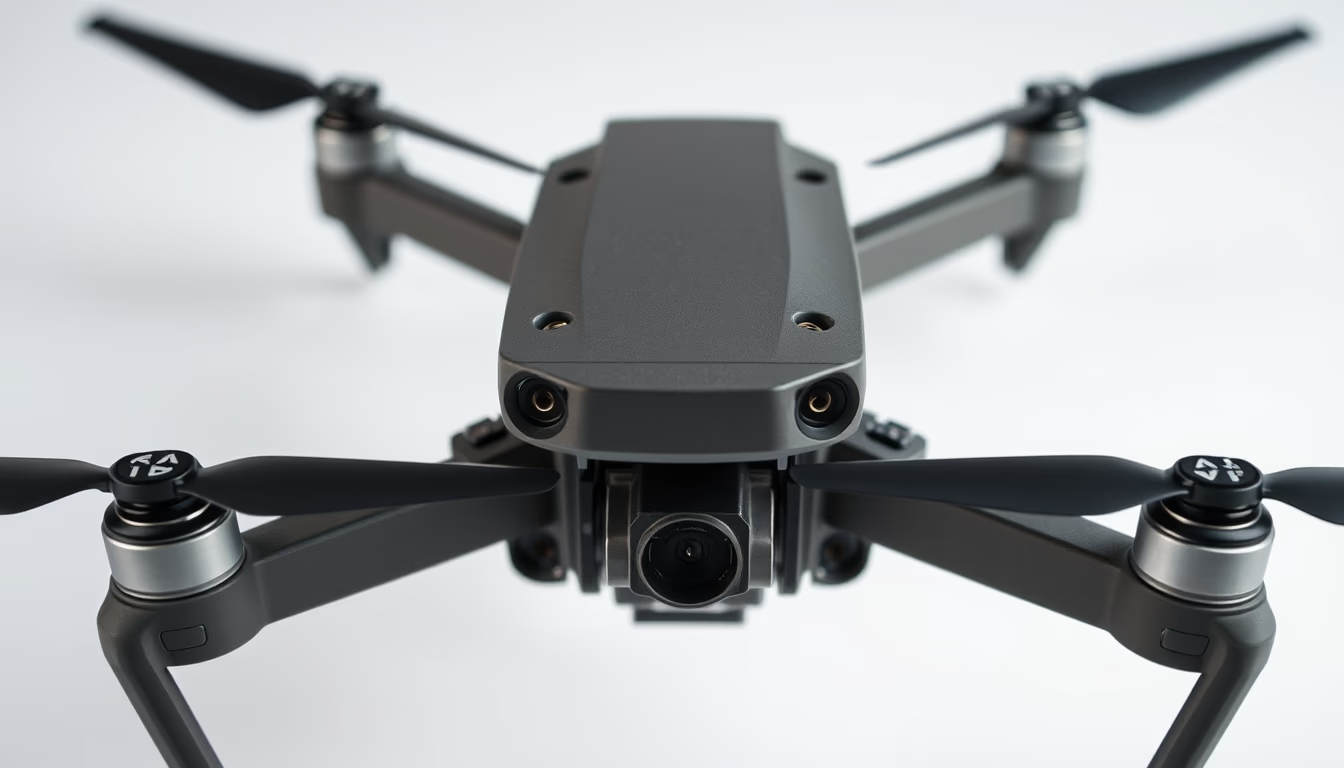
Autonomous military drones are reshaping modern warfare with artificial intelligence and independent attack capabilities.
About this subject
Autonomous military drones, also known as UAVs (Unmanned Aerial Vehicles) with independent decision-making capabilities, represent a technological leap on the battlefield. Unlike remotely piloted drones, these systems use artificial intelligence to navigate, identify targets, and in some cases, execute attacks without direct human intervention. Countries such as the United States, China, Israel, and Turkey lead the development of these aircraft, ranging from small reconnaissance models to large platforms like the MQ-9 Reaper and Bayraktar TB2.
The autonomy in military drones sparks intense ethical and legal debates. International organizations and treaties like the Convention on Certain Conventional Weapons discuss the need to maintain meaningful human control over lethal decisions. In 2020, a UN report suggested that an autonomous drone may have attacked soldiers without explicit command, although the case was unconfirmed. These events accelerate calls for global regulations that define limits for AI use in conflicts.
From a technical standpoint, autonomous drones rely on advanced sensors such as LIDAR, thermal cameras, and synthetic aperture radars, combined with deep learning algorithms for real-time processing. Satellite communication latency can be a challenge, but autonomous systems reduce dependence on command links. Companies like General Atomics and Turkish Aerospace Industries invest heavily in hardware and software to make these vehicles faster and more accurate, while startups develop swarms of AI-coordinated drones.
In the current scenario, the use of autonomous drones has already changed military tactics. Conflicts like the war in Ukraine demonstrated the effectiveness of relatively cheap drones against conventional forces. However, the proliferation of these technologies worries global security experts, as they could fall into the hands of non-state groups or be used in asymmetric attacks. Transparency and export control have become central themes in disarmament forums.
Frequently Asked Questions
What is an autonomous military drone?
It is an unmanned aerial vehicle that uses artificial intelligence to perform missions such as surveillance, reconnaissance, and attack without direct human control. It differs from remotely operated drones by its ability to make decisions based on algorithms.
What are the main ethical concerns about autonomous drones?
The primary concern is the possibility of lethal decisions without human oversight, which would violate principles of international humanitarian law. There are also risks of target misidentification and difficulty in assigning responsibility for violations.
Which countries are at the forefront of developing autonomous military drones?
The United States, China, Israel, and Turkey are leaders. The US operates the MQ-9 Reaper; China develops the Wing Loong; Israel exports the Hermes; and Turkey gained prominence with the Bayraktar TB2 used in recent conflicts.
Direct URL
https://pub-c7d6a6ea828543ac903a74a341ccb2e1.r2.dev/imagens/autonomous-drone-military-commercial-product-photography-p9.avifHow to credit
Include a visible link back to UtilizAí. Copy one of the snippets below:
<a href="https://xn--utiliza-eza.com/en/midia/imagens/autonomous-drone-military-commercial-product-photography-p9">Autonomous drone military</a> by <a href="https://xn--utiliza-eza.com">UtilizAí</a>, licensed under <a href="https://creativecommons.org/licenses/by/4.0/">CC BY 4.0</a>.
[Autonomous drone military](https://xn--utiliza-eza.com/en/midia/imagens/autonomous-drone-military-commercial-product-photography-p9) by [UtilizAí](https://xn--utiliza-eza.com), CC BY 4.0
License: CC-BY-4.0