Autonomous drone military
1344×768 · AVIF · CC BY 4.0
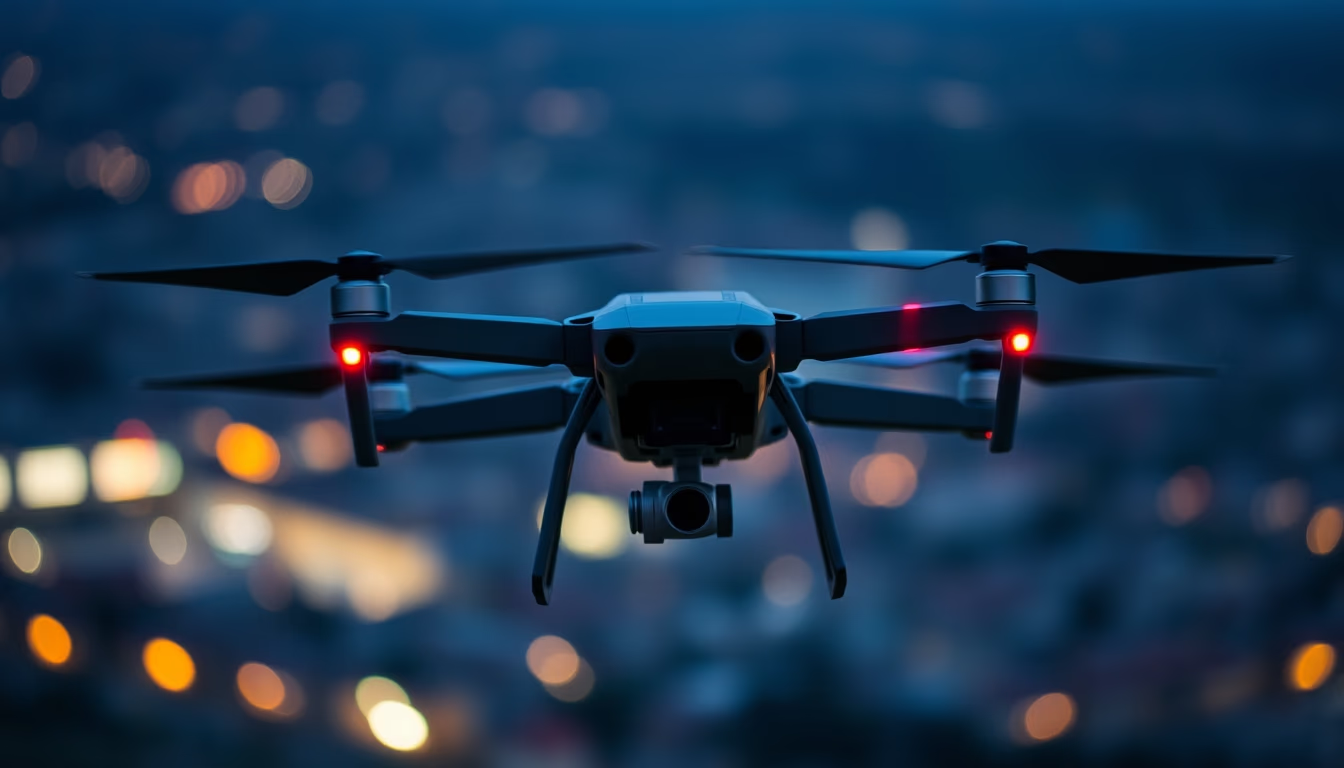
Autonomous military drones are redefining combat and aerial surveillance strategies worldwide, with systems increasingly independent of human control.
About this subject
Autonomous military drones, also known as unmanned combat aerial vehicles (UCAVs), represent one of the most transformative technologies in modern warfare. Unlike remotely piloted drones, these systems use artificial intelligence to carry out reconnaissance, attack, and surveillance missions with minimal human intervention. Countries like the United States, China, Turkey, and Israel lead development, with models such as the MQ-9 Reaper, Bayraktar TB2, and Wing Loong. These systems can operate in swarms, coordinating attacks without direct operator communication.
Autonomy ranges from simple autopilot to fully independent target identification and engagement. Growing use raises ethical and legal debates, especially regarding accountability in case of errors. In 2020, an autonomous drone reportedly attacked soldiers in Libya without human command, considered the first case of a lethal autonomous attack. International organizations discuss the need for regulations limiting lethal autonomy.
In Brazil, the Armed Forces have invested in national drones such as the IAI Heron and the VT-15 project for border patrol and counter-narcotics operations. Although they have not yet fully adopted lethal autonomy, the global trend points to increased automation. The technology also impacts the military job market, demanding new skills in artificial intelligence and cybernetics.
Trivia: the term "drone" derives from the English word for male bee, referencing the characteristic sound of early models. Military use dates back to World War I with unmanned aerial targets, but armed drones became widespread only after the 2000s, especially in Afghanistan and Iraq.
Frequently Asked Questions
What distinguishes an autonomous military drone from a remotely controlled one?
Autonomous drones use artificial intelligence to carry out missions without constant human intervention, while remotely controlled drones require a pilot at a distance. Autonomy can include navigation decisions, target identification, and even attacks.
Which countries currently use autonomous military drones the most?
The United States, China, Turkey, and Israel are the main developers and users. Models like the MQ-9 Reaper (USA), Bayraktar TB2 (Turkey), and Wing Loong (China) are widely deployed in conflicts in the Middle East, Africa, and Asia.
Are there ethical risks in using lethal autonomous drones?
Yes, major risks include failures in identifying civilian targets, diffuse accountability in attacks, and the potential for conflict escalation. Organizations like the UN debate treaties to ban lethal autonomous systems without human control.
Direct URL
https://pub-c7d6a6ea828543ac903a74a341ccb2e1.r2.dev/imagens/autonomous-drone-military-aerial-drone-shot-p4.avifHow to credit
Include a visible link back to UtilizAí. Copy one of the snippets below:
<a href="https://xn--utiliza-eza.com/en/midia/imagens/autonomous-drone-military-aerial-drone-shot-p4">Autonomous drone military</a> by <a href="https://xn--utiliza-eza.com">UtilizAí</a>, licensed under <a href="https://creativecommons.org/licenses/by/4.0/">CC BY 4.0</a>.
[Autonomous drone military](https://xn--utiliza-eza.com/en/midia/imagens/autonomous-drone-military-aerial-drone-shot-p4) by [UtilizAí](https://xn--utiliza-eza.com), CC BY 4.0
License: CC-BY-4.0