Antique microscope brass
1344×768 · AVIF · CC BY 4.0
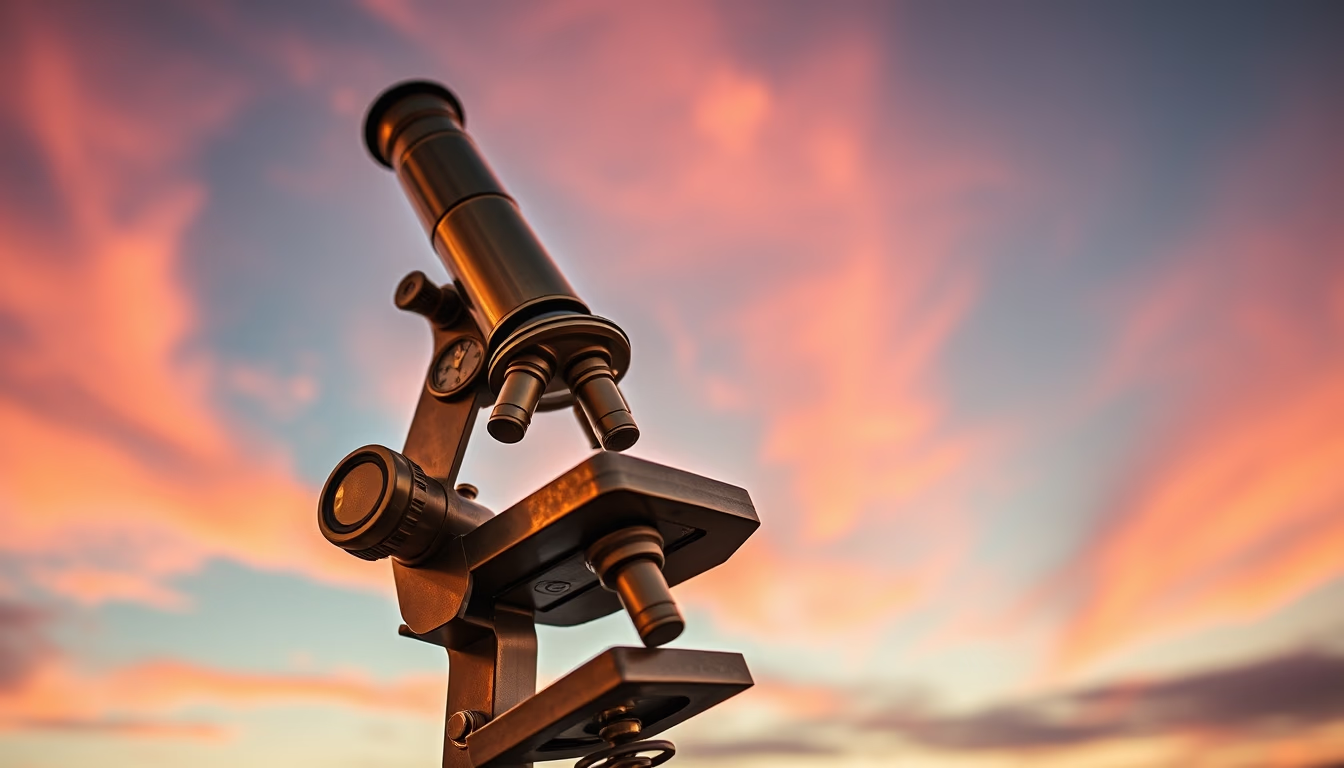
Nineteenth-century brass microscopes represent a landmark in the history of science, blending refined craftsmanship with innovative optical functionality.
About this subject
Nineteenth-century brass microscopes are testaments to the scientific and industrial revolution. Crafted by European artisans, such as the British firms R. & J. Beck or the French Nachet, these instruments combined mechanical precision with high-quality glass lenses. Brass, resistant to corrosion and easy to machine, was the standard material for the frame, enabling fine adjustments of focus and illumination. Many models featured articulated stands, concave mirrors to concentrate natural light, and rack-and-pinion systems for smooth movements.
The heyday of brass microscopy occurred between 1830 and 1880, when microscopists like Ernst Abbe and Carl Zeiss began developing achromatic and apochromatic lenses. Although modern microscopes have surpassed these models in magnification and resolution, antique specimens are valued by collectors and historians of science. They not only reveal technical evolution but also Victorian aesthetics, with ornamental details such as turned brass feet, engraved tubes with monograms, and wooden cases with brass locks.
A curiosity is that many brass microscopes included accessories like dark chambers to project images onto paper, precursors to photomicrography. Moreover, lens calibration was done manually by artisans who tested sharpness with plant tissue and blood samples. Today, these instruments are often displayed in natural history museums or used as decorative objects that evoke the 19th-century spirit of discovery.
Frequently Asked Questions
What is the difference between an antique brass microscope and a modern one?
Antique brass microscopes use simple or achromatic lenses with limited magnification (up to 600x). They are fully mechanical, without electric illumination. Modern ones have compound lenses, aberration correction, and LED lighting.
How can I tell if a brass microscope is original from the 19th century?
Look for manufacturer marks (e.g., R. & J. Beck, Nachet) engraved on the tube or base. The natural patina of brass and hand-split screw slots indicate authenticity. Consult collector guides.
What was the concave mirror used for in antique microscopes?
The concave mirror focused natural light (sun or candle) toward the specimen. Some models had two mirrors: one plane and one concave, to control light intensity.
Direct URL
https://pub-c7d6a6ea828543ac903a74a341ccb2e1.r2.dev/imagens/antique-microscope-brass-long-exposure-p6.avifHow to credit
Include a visible link back to UtilizAí. Copy one of the snippets below:
<a href="https://xn--utiliza-eza.com/en/midia/imagens/antique-microscope-brass-long-exposure-p6">Antique microscope brass</a> by <a href="https://xn--utiliza-eza.com">UtilizAí</a>, licensed under <a href="https://creativecommons.org/licenses/by/4.0/">CC BY 4.0</a>.
[Antique microscope brass](https://xn--utiliza-eza.com/en/midia/imagens/antique-microscope-brass-long-exposure-p6) by [UtilizAí](https://xn--utiliza-eza.com), CC BY 4.0
License: CC-BY-4.0