Antique microscope brass
1344×768 · AVIF · CC BY 4.0
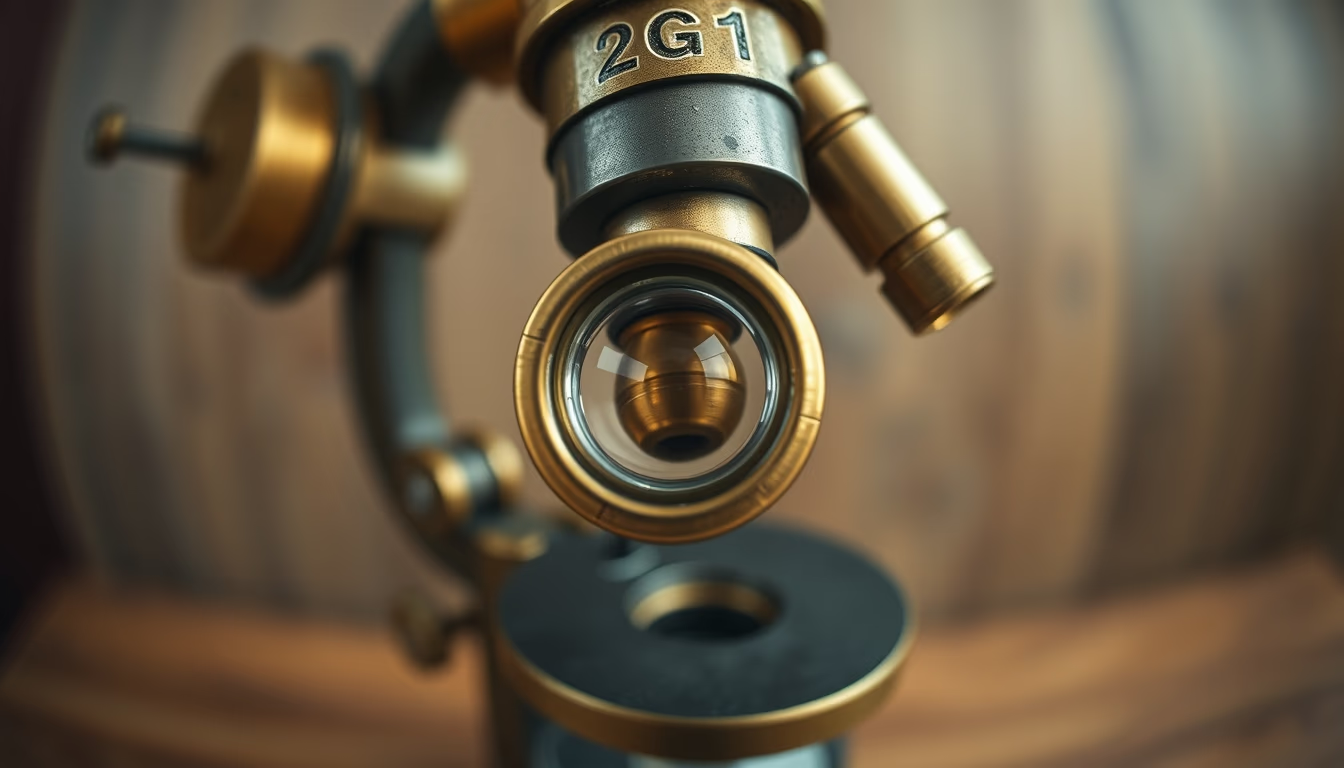
Antique brass microscope, a 19th-century scientific instrument that revolutionized biological and medical research.
About this subject
The antique brass microscope marks a milestone in the history of science. Handcrafted from the mid-18th century, this instrument consisted of a polished brass tube, glass lenses mounted in metal frames, and a rack and pinion focusing system. Unlike modern microscopes, early models used natural light reflected by a concave mirror, limiting magnification to about 200 to 400 times. Nevertheless, they were crucial for discoveries such as cell structure, observed by Robert Hooke in 1665, and the microorganisms described by Antonie van Leeuwenhoek.
During the 19th century, the brass microscope reached its peak with manufacturers like Carl Zeiss and Ernst Leitz in Germany, as well as craftsmen in England and France. These instruments featured ornamental details such as engravings and decorated feet, reflecting careful workmanship. Brass was the preferred material due to its corrosion resistance and malleability, allowing precise adjustments. Each piece was individually assembled, resulting in subtle variations that make them highly sought-after collector's items today.
The historical significance of these microscopes extends beyond their aesthetic beauty. They enabled medical breakthroughs with the identification of pathogens by Louis Pasteur and Robert Koch, and biological advances such as the cell theory of Theodor Schwann and Matthias Schleiden. Without these instruments, the scientific revolution of the 19th century would have been impossible. Today, antique brass microscopes are displayed in museums and competed for at auctions, fetching hundreds to thousands of dollars depending on condition and maker.
Interestingly, many of these microscopes still work and are used by historical microscopy enthusiasts. Maintenance requires special care, such as cleaning with fine oils to prevent brass oxidation. Collectors seek complete models with original accessories like extra lenses and wooden cases. Each microscope tells a story of discovery and innovation, bridging the scientific past with the present technological era.
Frequently Asked Questions
How did an antique brass microscope work?
The antique brass microscope used natural light reflected by a concave mirror to illuminate the specimen. Focus was adjusted manually via a rack and pinion system. Glass lenses magnified the image, but with resolution limits compared to modern models.
What is the historical significance of these microscopes?
They were essential for fundamental discoveries such as cell structure, microorganisms, and pathogens. They directly contributed to the development of microbiology and medicine, enabling advances by scientists like Hooke, Leeuwenhoek, Pasteur, and Koch.
How much is an antique brass microscope worth?
Value varies greatly by manufacturer, condition, and rarity. Common models can cost hundreds of dollars, while iconic pieces from brands like Zeiss or Leitz in good condition fetch thousands of dollars at specialized auctions.
Direct URL
https://pub-c7d6a6ea828543ac903a74a341ccb2e1.r2.dev/imagens/antique-microscope-brass-fish-eye-wide-angle-p8.avifHow to credit
Include a visible link back to UtilizAí. Copy one of the snippets below:
<a href="https://xn--utiliza-eza.com/en/midia/imagens/antique-microscope-brass-fish-eye-wide-angle-p8">Antique microscope brass</a> by <a href="https://xn--utiliza-eza.com">UtilizAí</a>, licensed under <a href="https://creativecommons.org/licenses/by/4.0/">CC BY 4.0</a>.
[Antique microscope brass](https://xn--utiliza-eza.com/en/midia/imagens/antique-microscope-brass-fish-eye-wide-angle-p8) by [UtilizAí](https://xn--utiliza-eza.com), CC BY 4.0
License: CC-BY-4.0