Antique microscope brass
1344×768 · AVIF · CC BY 4.0
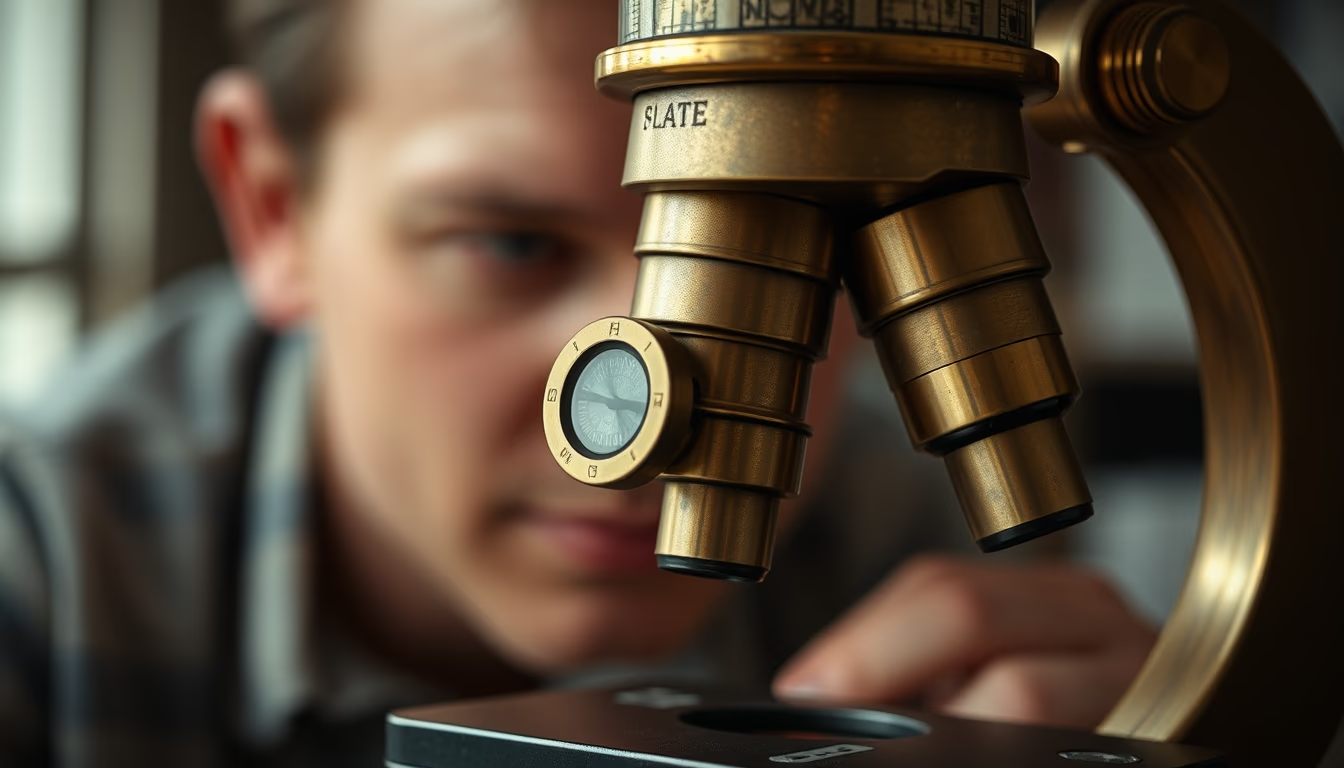
Antique brass microscopes, key pieces in science history, combine refined craftsmanship and optical advances from the 18th and 19th centuries.
About this subject
Antique brass microscopes represent a fascinating chapter in scientific instrumentation. During the 18th and 19th centuries, European craftsmen, especially in England, France and Germany, produced these instruments with meticulous attention to detail. Brass was the preferred material for its durability, malleability and resistance to corrosion, allowing the creation of complex parts such as micrometer focusing screws and articulated tubes. Iconic models include Culpeper's simple microscope and Cuff's compound microscope, both from the 18th century, which set design standards. These instruments were essential for discoveries such as Robert Hooke's observation of cells and Antonie van Leeuwenhoek's identification of microorganisms, although Leeuwenhoek's earliest microscopes were single-lens. The historical and aesthetic value of these microscopes is highly prized by collectors, often fetching thousands of dollars at auction. Original pieces frequently feature polished brass finishes, decorative engravings and blown glass lenses, often restored to preserve functionality. Science and natural history museums, such as the Museum of the History of Science in Oxford, display notable examples that trace the evolution of microscopy.
Frequently Asked Questions
How to identify an authentic antique brass microscope?
Look for manufacturer marks (e.g., Dollond, C. Zeiss), solid brass screws, lenses with slight chromatic aberration, and aged patina. Green verdigris (basic copper carbonate) indicates genuine brass and age.
What is the average value of an antique brass microscope?
It depends on rarity, condition, and provenance. Common 19th-century models may fetch US$500 to US$2,000, while rare 18th-century pieces or those by renowned makers can exceed US$10,000.
Can antique brass microscopes still be used for scientific observation?
Yes, in most cases if lenses are clean and free of fungus. However, resolution is limited compared to modern microscopes. Collectors often use them for demonstrations or historical study.
Direct URL
https://pub-c7d6a6ea828543ac903a74a341ccb2e1.r2.dev/imagens/antique-microscope-brass-film-grain-authentic-p3.avifHow to credit
Include a visible link back to UtilizAí. Copy one of the snippets below:
<a href="https://xn--utiliza-eza.com/en/midia/imagens/antique-microscope-brass-film-grain-authentic-p3">Antique microscope brass</a> by <a href="https://xn--utiliza-eza.com">UtilizAí</a>, licensed under <a href="https://creativecommons.org/licenses/by/4.0/">CC BY 4.0</a>.
[Antique microscope brass](https://xn--utiliza-eza.com/en/midia/imagens/antique-microscope-brass-film-grain-authentic-p3) by [UtilizAí](https://xn--utiliza-eza.com), CC BY 4.0
License: CC-BY-4.0