Antique books library
1344×768 · AVIF · CC BY 4.0
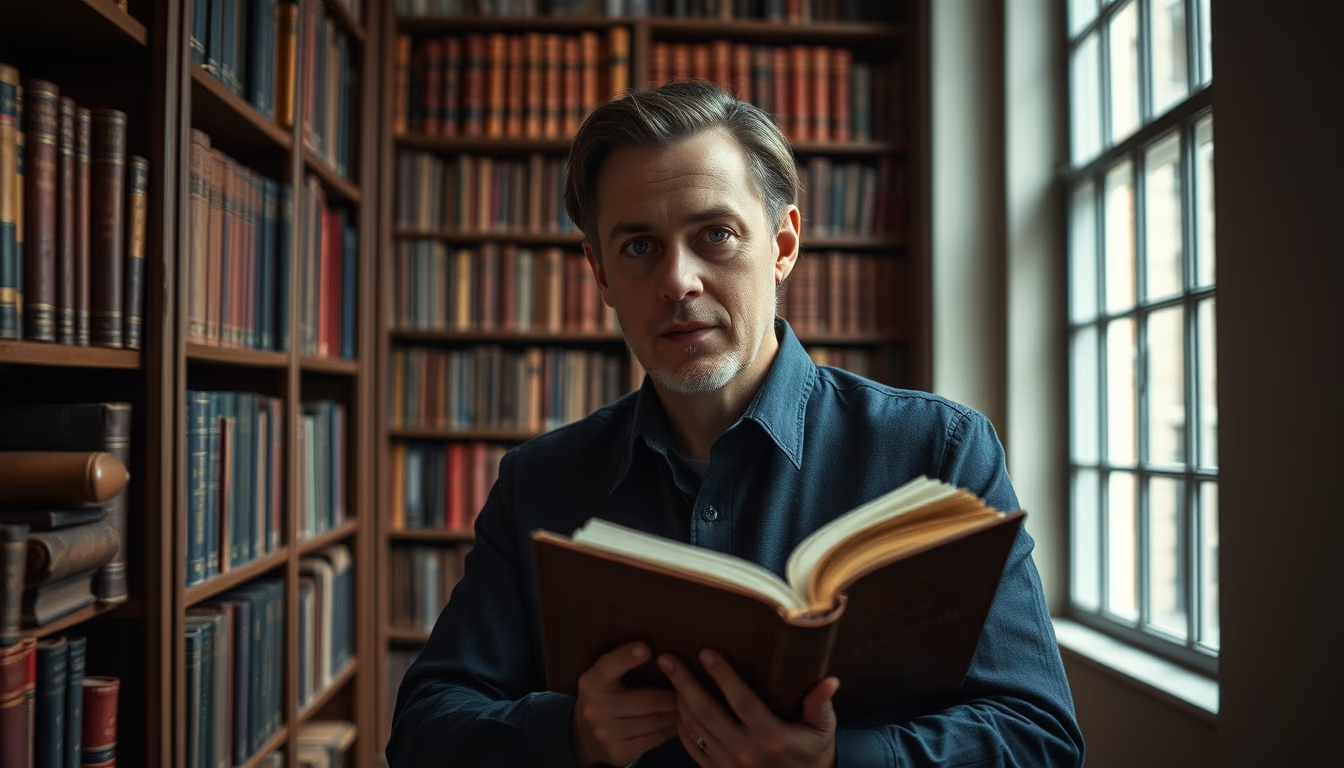
Antique book libraries house historical treasures, with rare works that trace the evolution of human knowledge.
About this subject
An antique book library is more than a collection; it is a repository of memories and knowledge accumulated over centuries. Works dating from the medieval, Renaissance, or 19th century are among the most coveted by collectors and researchers. In Brazil, institutions like the National Library in Rio de Janeiro hold precious collections, including volumes brought by the Portuguese court in 1808. These books often feature handcrafted leather bindings, handmade paper, and movable type typography, characteristics that distinguish them from modern editions.
Historically, libraries emerged as centers for safeguarding knowledge, such as the Library of Alexandria in ancient Egypt. During the Middle Ages, European monasteries maintained scriptoria to copy manuscripts, many of which survive today. The invention of the printing press by Gutenberg in the 15th century revolutionized book production, allowing larger print runs and wider dissemination of knowledge. However, antique books continue to be valued for their rarity and direct testimony to past eras.
Interestingly, antique books may contain marks of ownership, such as bookplates, marginal annotations, and even hidden notes. Many were printed on rag paper, made from textile fibers, which grants greater durability. The characteristic smell of old books, known as "vintage book smell," results from the chemical decomposition of paper components and glue. Preserving these works requires strict control of temperature, humidity, and light, as well as care against insects and fungi.
Today, digitization of antique books allows remote access to works that were once restricted to scholars. Projects like the World Digital Library and Google Books provide facsimiles of rare manuscripts. However, the tactile experience and the aura of authenticity of an original antique book remain irreplaceable for history enthusiasts.
Frequently Asked Questions
How to identify an antique book?
Check the publication date, usually on the title page. Books from the 19th century or earlier are considered antique. Features like leather binding, textured paper, and movable type are indicators. Watermarks and annotations also help in identification.
What is the oldest library in the world?
The Library of Alexandria, founded around the 3rd century BC, is the most famous but was destroyed. The oldest still-operating library is the Al Quaraouiyine University Library in Fez, Morocco, founded in 859 AD.
How to preserve antique books at home?
Keep them in a well-ventilated environment with a temperature between 18-22°C and relative humidity of 45-60%. Avoid direct sunlight. Use cotton gloves when handling and store them upright, supported by other books, to prevent warping.
Direct URL
https://pub-c7d6a6ea828543ac903a74a341ccb2e1.r2.dev/imagens/antique-books-library-studio-editorial-portrait-p4.avifHow to credit
Include a visible link back to UtilizAí. Copy one of the snippets below:
<a href="https://xn--utiliza-eza.com/en/midia/imagens/antique-books-library-studio-editorial-portrait-p4">Antique books library</a> by <a href="https://xn--utiliza-eza.com">UtilizAí</a>, licensed under <a href="https://creativecommons.org/licenses/by/4.0/">CC BY 4.0</a>.
[Antique books library](https://xn--utiliza-eza.com/en/midia/imagens/antique-books-library-studio-editorial-portrait-p4) by [UtilizAí](https://xn--utiliza-eza.com), CC BY 4.0
License: CC-BY-4.0