Antique books library
1344×768 · AVIF · CC BY 4.0
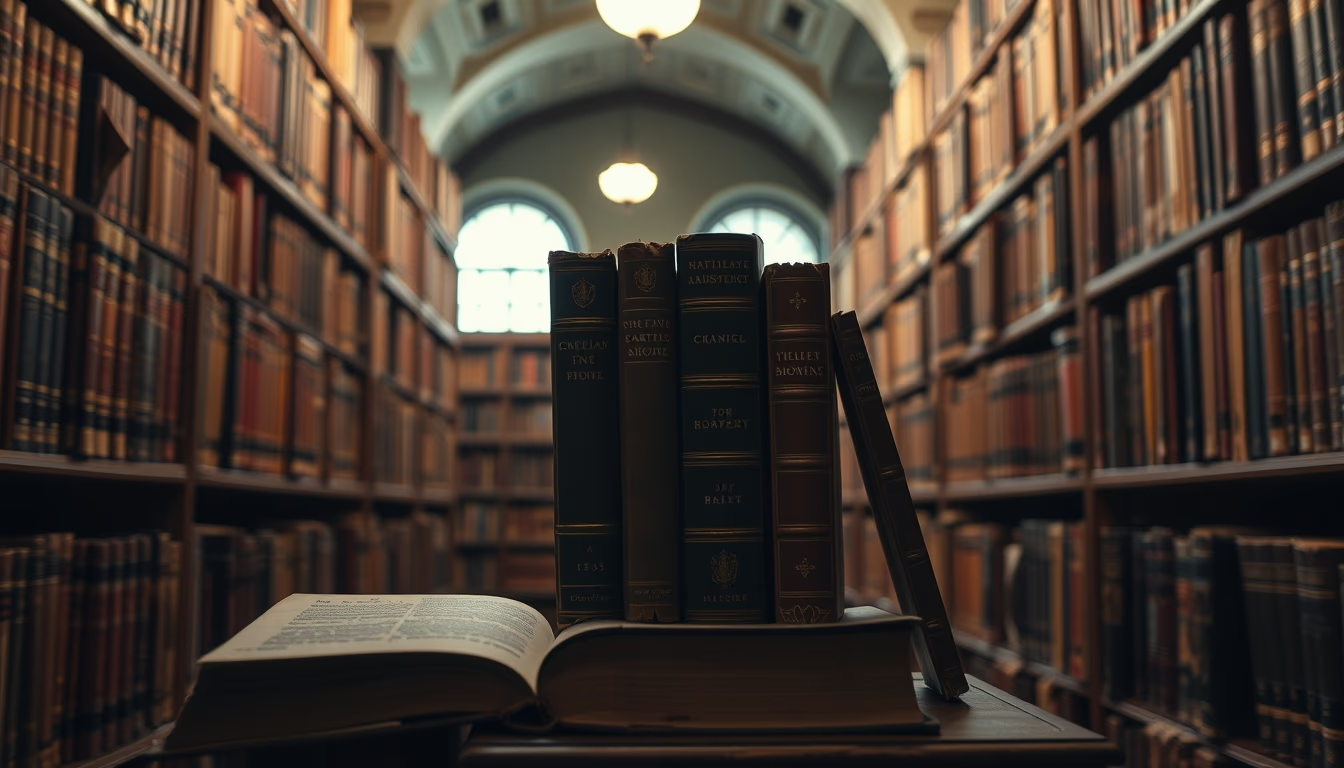
Antique book libraries hold centuries of knowledge, with rare volumes that tell humanity's history through their bindings and contents.
About this subject
Antique book libraries are true cultural treasures, housing works dating from the Renaissance, the Enlightenment, and the 19th century. Their collections include first editions, illuminated manuscripts, incunabula (books printed before 1501), and volumes with handcrafted leather bindings often decorated with gold tooling. Institutions such as the National Library of Brazil, the Library of Congress in the United States, and the Bibliothèque nationale de France hold emblematic collections that attract scholars worldwide.
Preserving these books requires controlled temperature and humidity conditions, as well as specialized restoration techniques to repair yellowed pages and worn covers. Many antique libraries also invest in digitization, allowing the public to access rare works digitally without physical handling. The curation of these collections involves historians, librarians, and conservators who study each volume's provenance, identifying ownership marks, ex-libris, and marginal notes that reveal unique trajectories.
Interestingly, the characteristic smell of old books, described as sweet and earthy, results from the degradation of chemical compounds like lignin and cellulose in the paper, along with adhesives used in binding. This odor is so distinctive that it inspired perfumes such as "Book" by Byredo. Additionally, historic libraries like the Royal Portuguese Reading Room in Rio de Janeiro are tourist attractions for their neo-Manueline architecture and shelves filled with Lusophone works from the 16th to 19th centuries.
The importance of these libraries goes beyond the monetary value of the books: they are primary sources for research in literature, philosophy, science, and history. Each volume represents a fragment of the past, offering insights into the ideas and techniques of its time. Therefore, conservation and access to these collections are priorities for world cultural heritage.
Frequently Asked Questions
What is the difference between an incunabulum and an illuminated manuscript?
Incunabula are books printed with movable type before 1501, while illuminated manuscripts are handwritten works decorated with illuminations, usually produced before Gutenberg's press.
How do antique libraries control humidity to preserve books?
They use climate control systems that maintain relative humidity between 40% and 60%, along with dehumidifiers and continuous monitoring to prevent mold and paper deformation.
Why do old books have that characteristic smell?
The odor comes from the decomposition of chemical compounds in paper, such as lignin, and adhesives used in binding. This process releases volatile organic compounds, creating a sweet, earthy aroma.
Direct URL
https://pub-c7d6a6ea828543ac903a74a341ccb2e1.r2.dev/imagens/antique-books-library-fine-art-photography-p8.avifHow to credit
Include a visible link back to UtilizAí. Copy one of the snippets below:
<a href="https://xn--utiliza-eza.com/en/midia/imagens/antique-books-library-fine-art-photography-p8">Antique books library</a> by <a href="https://xn--utiliza-eza.com">UtilizAí</a>, licensed under <a href="https://creativecommons.org/licenses/by/4.0/">CC BY 4.0</a>.
[Antique books library](https://xn--utiliza-eza.com/en/midia/imagens/antique-books-library-fine-art-photography-p8) by [UtilizAí](https://xn--utiliza-eza.com), CC BY 4.0
License: CC-BY-4.0