Agricultural robot field
1344×768 · AVIF · CC BY 4.0

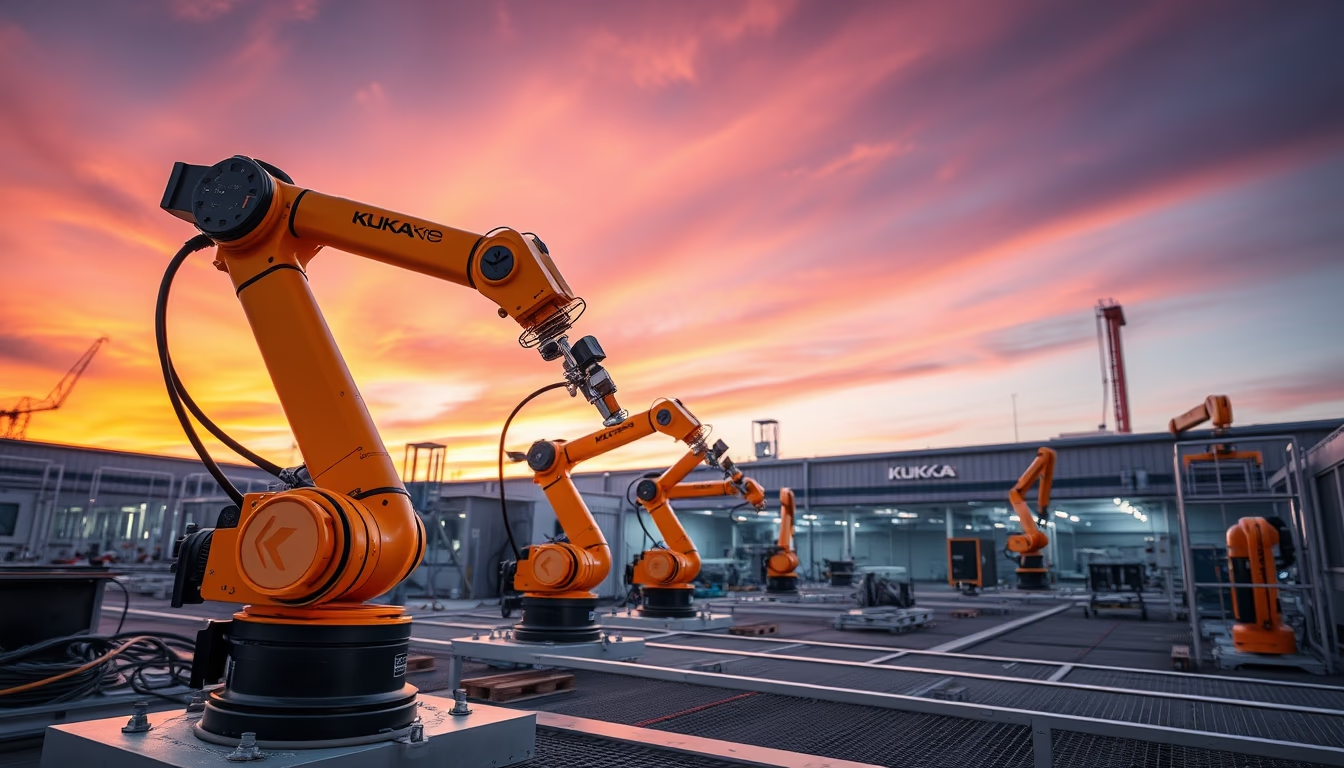
Agricultural robots automate planting, harvesting and crop monitoring, boosting efficiency and reducing pesticide use.
About this subject
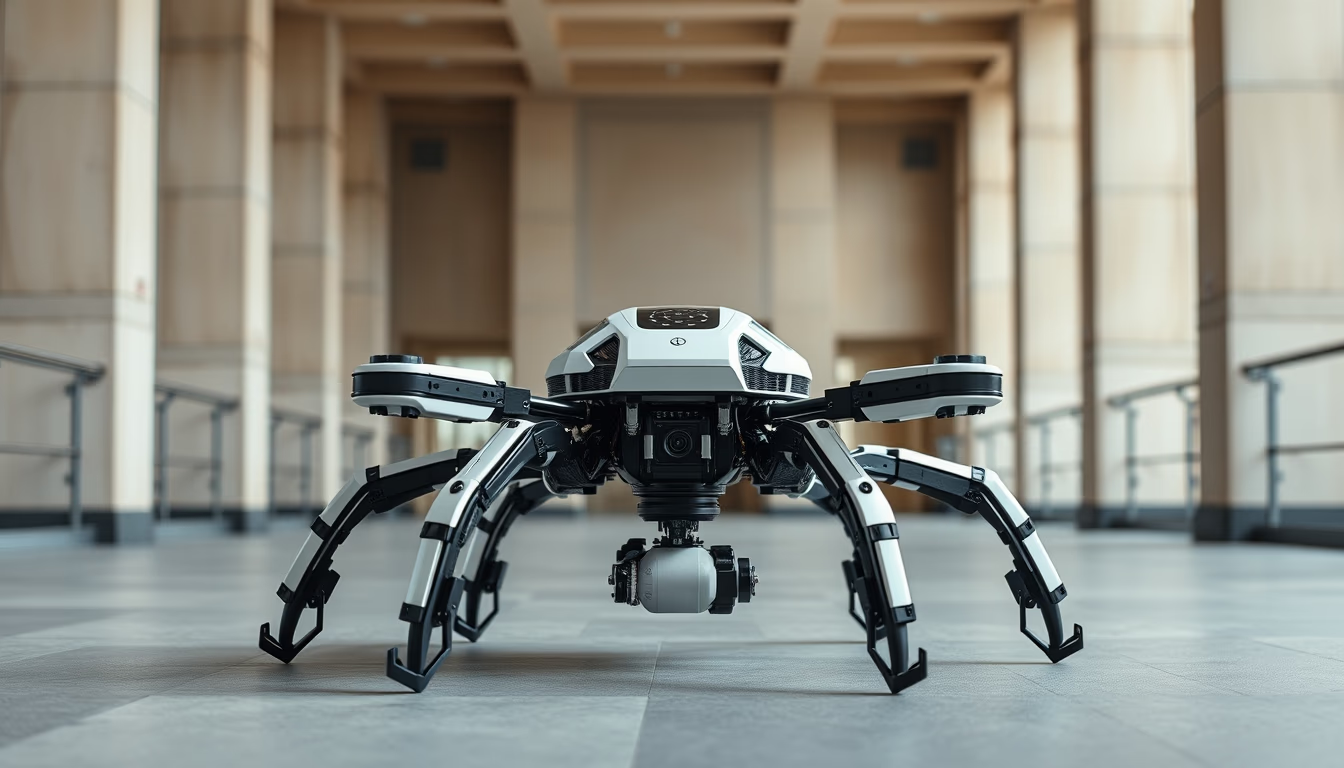
Agricultural robots are revolutionizing farming by integrating sensors, artificial intelligence, and precision mechanization. Different models perform specific tasks: from drones mapping fields with multispectral cameras to autonomous tractors preparing soil without human operators. Companies like John Deere and AgRobot already sell machines that identify weeds and spray only where needed, reducing herbicide use by up to 90%.
In countries with strong agricultural sectors like Brazil, adoption of farming robots is rapidly increasing. Studies by Embrapa show that robotics can boost productivity by 30% and lower operational costs. An example is the Tiago robot developed by USP, which prunes and harvests fruit using a robotic arm and computer vision.
The tilt-shift technique, when applied to images of robots in the field, creates a miniature-like aesthetic that highlights the precision of these machines. This perspective helps viewers visualize the reduced scale of movements and the intricate engineering involved. Artificial intelligence allows robots to learn from their environment, adjusting trajectories and actions in real time.
The future points to fully automated farms with robots working 24/7. Challenges such as battery life and connectivity in rural areas remain, but advances in edge computing and 5G networks already enable remote operations. Precision agriculture supported by robots is likely to become standard, ensuring greater food security and sustainability.
Frequently Asked Questions
What tasks can an agricultural robot perform?
Agricultural robots can plant seeds, irrigate, spray pesticides, harvest fruits, and monitor plant health using sensors and cameras.
How do agricultural robots contribute to sustainability?
They apply inputs precisely, reducing waste of water and chemicals, and also decrease soil compaction caused by heavy machinery.
Does Brazil produce its own agricultural robots?
Yes, institutions like USP and Embrapa develop prototypes, and Brazilian startups like Solinftec create solutions for crop monitoring.
Direct URL
https://pub-c7d6a6ea828543ac903a74a341ccb2e1.r2.dev/imagens/agricultural-robot-field-tilt-shift-miniature-p5.avifHow to credit
Include a visible link back to UtilizAí. Copy one of the snippets below:
<a href="https://xn--utiliza-eza.com/en/midia/imagens/agricultural-robot-field-tilt-shift-miniature-p5">Agricultural robot field</a> by <a href="https://xn--utiliza-eza.com">UtilizAí</a>, licensed under <a href="https://creativecommons.org/licenses/by/4.0/">CC BY 4.0</a>.
[Agricultural robot field](https://xn--utiliza-eza.com/en/midia/imagens/agricultural-robot-field-tilt-shift-miniature-p5) by [UtilizAí](https://xn--utiliza-eza.com), CC BY 4.0
License: CC-BY-4.0