Agricultural robot field
1344×768 · AVIF · CC BY 4.0
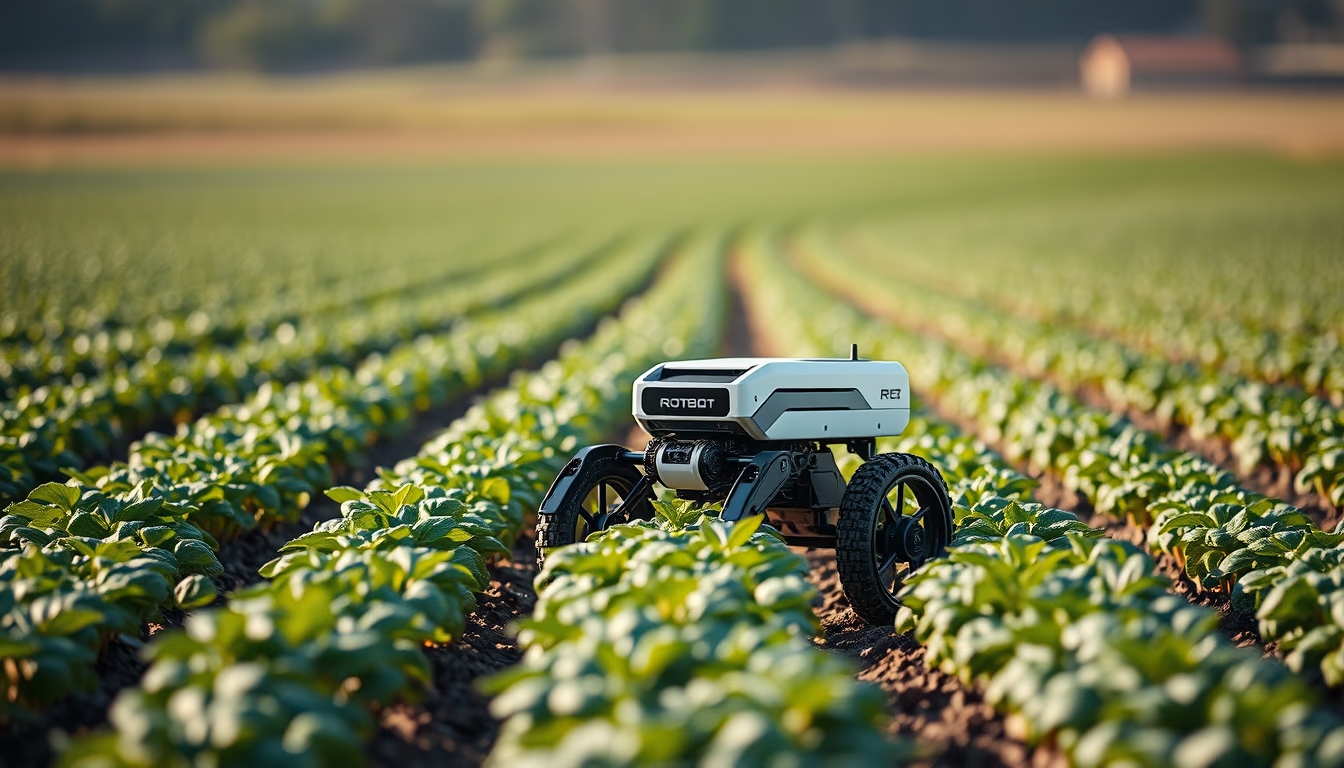
Agricultural robots automate planting, harvesting, and crop monitoring, boosting efficiency and reducing pesticide use.
About this subject
Agricultural robots, or agrobots, are autonomous or semi-autonomous machines designed to perform tasks in the field. They use sensors, cameras, and artificial intelligence to identify plants, measure soil conditions, and apply inputs with precision. Unlike traditional tractors, these robots can operate 24/7 in adverse conditions, making them key to precision agriculture.
The technology is already deployed across various crops. Blue River Technology's See & Spray (acquired by John Deere) uses computer vision to spot weeds and deliver micro-doses of herbicide, cutting chemical use by up to 90%. Another example is the Harvest CROO robot, specialized in strawberry picking: it detects ripe fruits and harvests them without damage, addressing seasonal labor shortages. In Europe, Bosch's BoniRob navigates between crop rows to weed and apply targeted fertilizer.
The global agricultural robot market was valued at $5.6 billion in 2022 and is expected to grow over 20% annually through 2030. Leading adopters include Japan, the United States, and Germany. Brazil is also testing prototypes for soybeans, sugarcane, and coffee; for instance, Embrapa develops autonomous vehicles for phytosanitary management. Despite advances, high costs, rural connectivity gaps, and traffic regulations on farms remain barriers to widespread adoption.
Frequently Asked Questions
What are the main types of agricultural robots?
Main types include harvesting robots (e.g., Harvest CROO), selective spraying robots (See & Spray), soil and plant monitoring robots (using drones or ground vehicles), and automated planting and weeding machines.
How do agricultural robots reduce pesticide use?
They apply chemicals only where needed, with millimeter precision. For example, See & Spray cuts herbicide usage by up to 90% by treating only the weeds identified via computer vision.
Is Brazilian agriculture already using robots on a large scale?
Adoption is still limited, but Embrapa and local startups have ongoing initiatives. Major barriers are high costs and lack of rural connectivity, though prototypes for soybeans and sugarcane are being tested.
Direct URL
https://pub-c7d6a6ea828543ac903a74a341ccb2e1.r2.dev/imagens/agricultural-robot-field-minimalist-composition-p11.avifHow to credit
Include a visible link back to UtilizAí. Copy one of the snippets below:
<a href="https://xn--utiliza-eza.com/en/midia/imagens/agricultural-robot-field-minimalist-composition-p11">Agricultural robot field</a> by <a href="https://xn--utiliza-eza.com">UtilizAí</a>, licensed under <a href="https://creativecommons.org/licenses/by/4.0/">CC BY 4.0</a>.
[Agricultural robot field](https://xn--utiliza-eza.com/en/midia/imagens/agricultural-robot-field-minimalist-composition-p11) by [UtilizAí](https://xn--utiliza-eza.com), CC BY 4.0
License: CC-BY-4.0