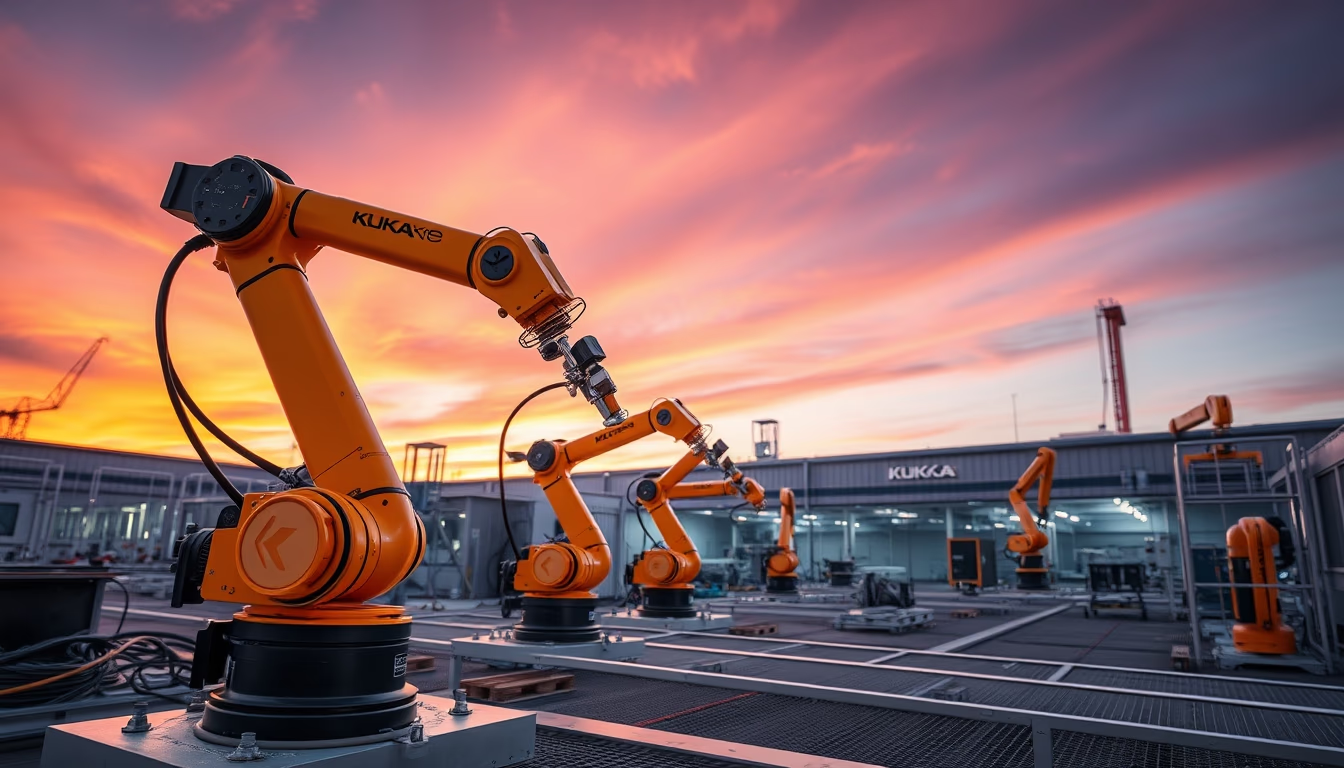
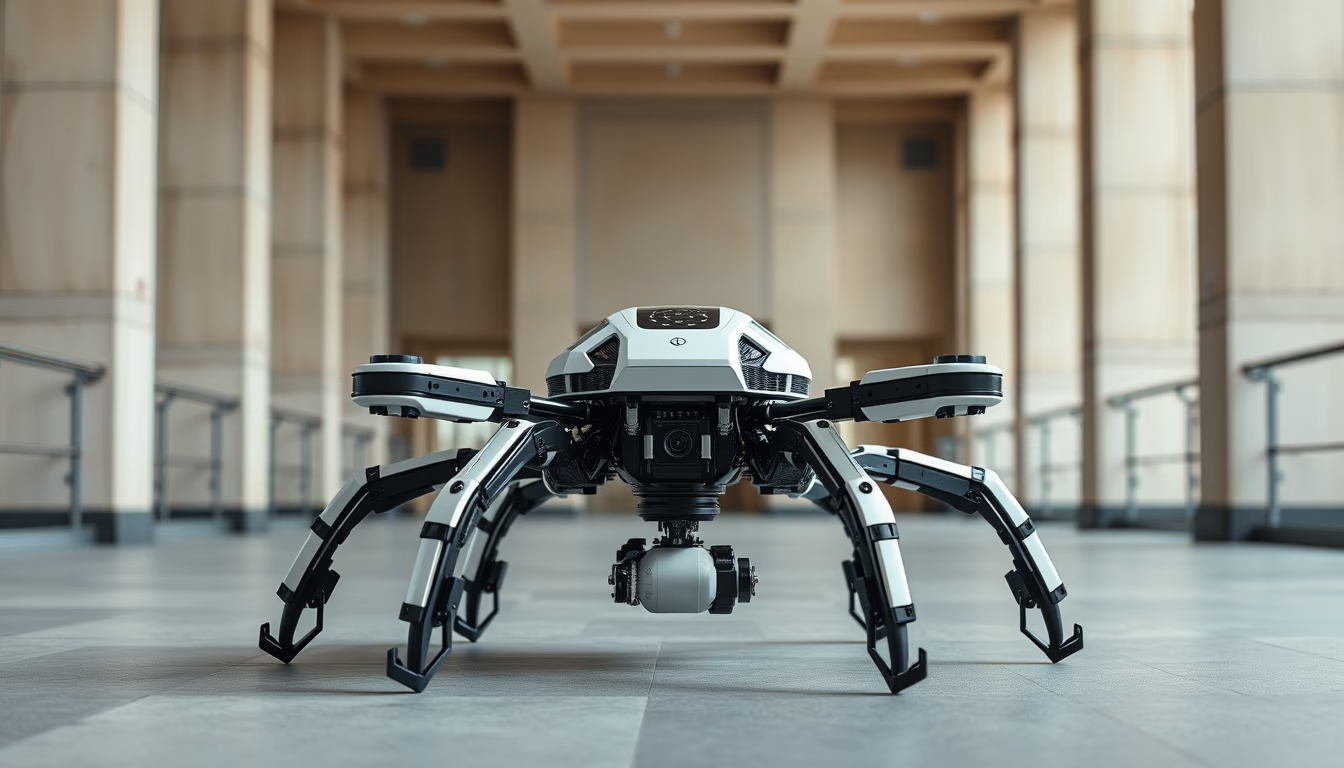
Agricultural robot field
1344×768 · AVIF · CC BY 4.0

Agricultural robots automate planting, harvesting, and monitoring in fields, boosting efficiency and cutting costs.
About this subject
Agricultural robots are autonomous vehicles or equipment designed for field tasks such as planting, irrigation, harvesting, and crop monitoring. They rely on sensors, GPS, computer vision, and artificial intelligence to navigate between crop rows, identify weeds or pests, and apply inputs with precision. This technology can reduce pesticide and fertilizer use by up to 90% in some cases while decreasing the need for intensive manual labor.
Startups and major companies like John Deere and CNH Industrial are developing specialized robots for various crops, from vegetables to soybeans and corn. In Brazil, a global agribusiness leader, adoption is rising: the agricultural robotics market is expected to reach US$ 20 billion by 2025, driven by the need to boost productivity without expanding cultivated land. Examples include the "Ecorobotix" robot that sprays weeds with pinpoint accuracy and autonomous harvesters operating 24/7.
Despite benefits, challenges remain: high upfront costs, adaptation to diverse soil and climate conditions, and the need for rural connectivity. Integration with drones and fixed sensors creates a precision agriculture ecosystem where decisions are made in real-time. Experts predict that within a decade most large farms will employ some form of robotic automation, reshaping the global countryside.
Frequently Asked Questions
What are the main types of agricultural robots?
Main types include planting robots, harvesting robots, precision spraying robots, soil and crop monitoring robots, and autonomous vehicles for input transport. Each is designed for a specific field task.
How do agricultural robots enhance sustainability?
They reduce waste of water and inputs by applying only where needed, minimize soil compaction with lightweight wheels, and avoid excessive pesticide use, contributing to more eco-friendly farming.
What is the average cost of an agricultural robot?
Prices range from US$ 5,000 for small monitoring robots to over US$ 300,000 for autonomous harvesters. The investment can be recouped within 2 to 3 harvests through productivity gains.
Direct URL
https://pub-c7d6a6ea828543ac903a74a341ccb2e1.r2.dev/imagens/agricultural-robot-field-lo-fi-disposable-camera-p0.avifHow to credit
Include a visible link back to UtilizAí. Copy one of the snippets below:
<a href="https://xn--utiliza-eza.com/en/midia/imagens/agricultural-robot-field-lo-fi-disposable-camera-p0">Agricultural robot field</a> by <a href="https://xn--utiliza-eza.com">UtilizAí</a>, licensed under <a href="https://creativecommons.org/licenses/by/4.0/">CC BY 4.0</a>.
[Agricultural robot field](https://xn--utiliza-eza.com/en/midia/imagens/agricultural-robot-field-lo-fi-disposable-camera-p0) by [UtilizAí](https://xn--utiliza-eza.com), CC BY 4.0
License: CC-BY-4.0