Agricultural robot field
1344×768 · AVIF · CC BY 4.0
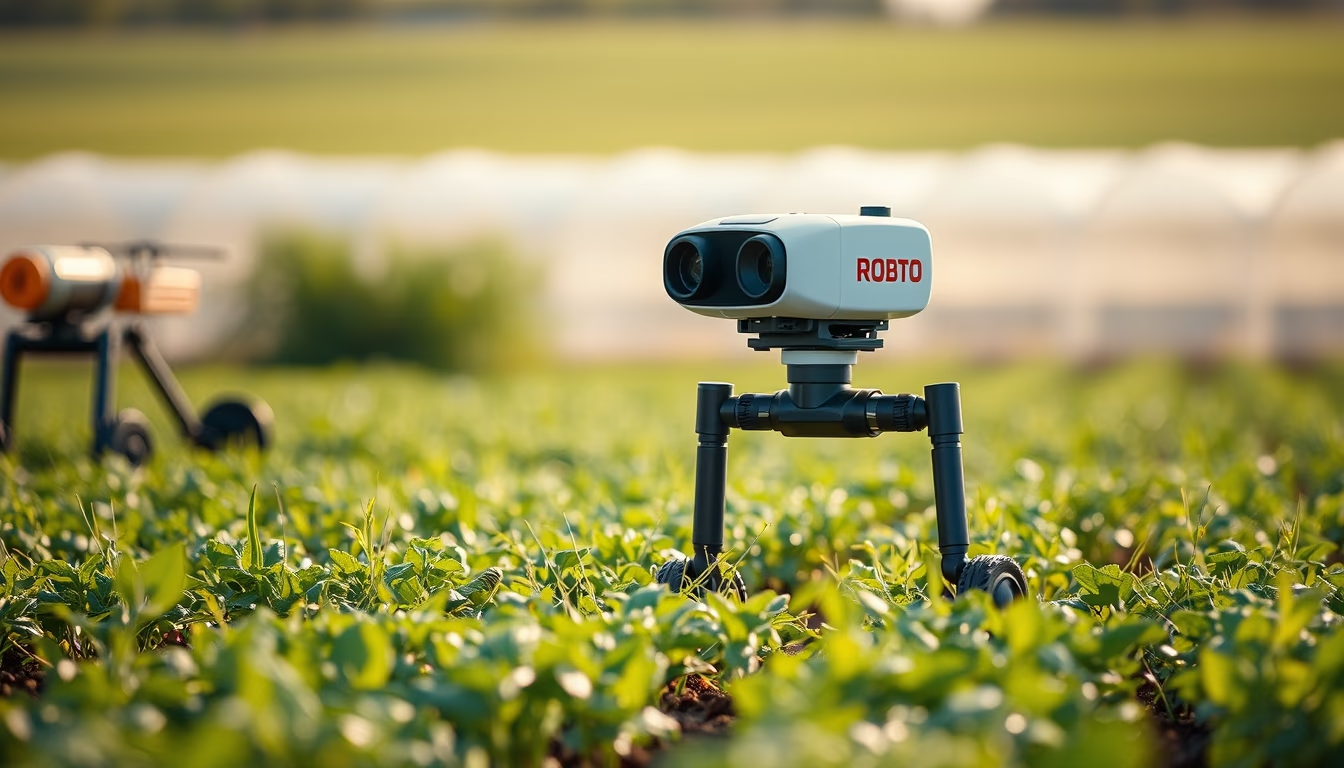
Autonomous agricultural robots are transforming crop cultivation with precision and efficiency, reducing costs and environmental impacts.
About this subject
Agricultural robots represent one of the most promising innovations for modern farming. Equipped with sensors, cameras, and artificial intelligence, these autonomous vehicles perform tasks such as planting, weeding, spraying, and harvesting with high precision. Unlike traditional tractors, many robots are compact and operate in swarms, allowing individualized treatment of each plant. This reduces herbicide and fertilizer use by up to 90% in some crops, as demonstrated by startups like Brazil's Solinftec and America's Blue River Technology.
Global adoption of these machines is growing rapidly. In Europe, robots like FarmBot and AgBot are being tested in vineyards and vegetable gardens. In Brazil, drones and ground robots for crop monitoring are already used in the Cerrado region. The agricultural robotics market is expected to reach $35 billion by 2030, driven by labor shortages and the need for sustainable agriculture. Notably, the first autonomous tractor was patented in 1990 by the University of Illinois, but only in the last five years has the technology become commercially viable.
One major challenge remains adaptation to uneven terrain and adverse weather. Lidar sensors and computer vision must distinguish crops from weeds, diseased plants from soil, all in real time. Agricultural 5G connections help transmit data to control centers. Despite high initial costs, return on investment is quick for large farms, with input savings and productivity increases of 20% to 30%.
Frequently Asked Questions
How do agricultural robots identify weeds?
They use high-resolution cameras and artificial intelligence algorithms to analyze real-time images, distinguishing crops from weeds. This allows them to apply herbicides only where needed, reducing chemical use.
What is the average cost of an agricultural robot?
Prices vary widely: smaller robots for horticulture can cost tens of thousands of dollars, while larger machines for grain crops reach hundreds of thousands. However, savings on inputs and labor often pay back the investment within a few seasons.
Can agricultural robots completely replace human labor?
Not entirely. They automate repetitive and heavy tasks but still require human supervision, maintenance, and strategic decision-making. The trend is for collaborative work with farmers.
Direct URL
https://pub-c7d6a6ea828543ac903a74a341ccb2e1.r2.dev/imagens/agricultural-robot-field-documentary-photography-p6.avifHow to credit
Include a visible link back to UtilizAí. Copy one of the snippets below:
<a href="https://xn--utiliza-eza.com/en/midia/imagens/agricultural-robot-field-documentary-photography-p6">Agricultural robot field</a> by <a href="https://xn--utiliza-eza.com">UtilizAí</a>, licensed under <a href="https://creativecommons.org/licenses/by/4.0/">CC BY 4.0</a>.
[Agricultural robot field](https://xn--utiliza-eza.com/en/midia/imagens/agricultural-robot-field-documentary-photography-p6) by [UtilizAí](https://xn--utiliza-eza.com), CC BY 4.0
License: CC-BY-4.0