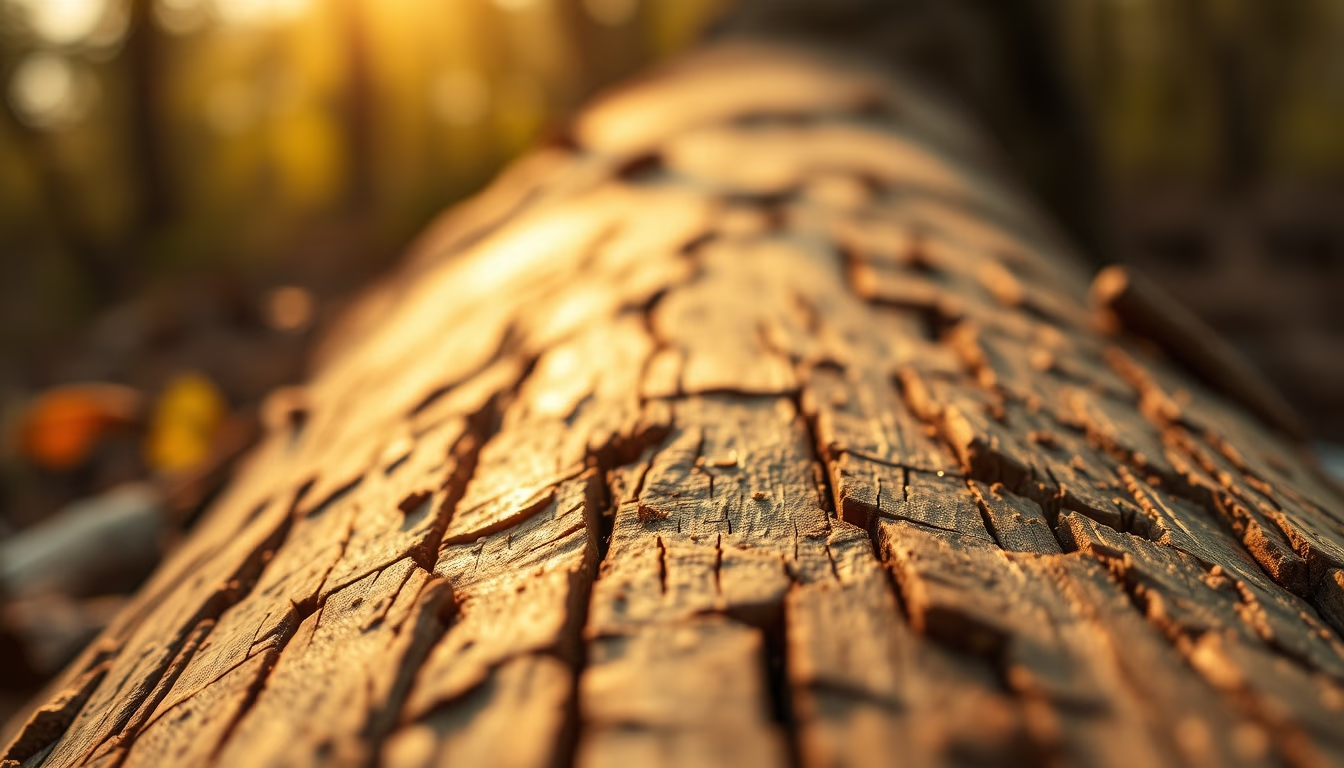
Wood grain dark walnut
1344×768 · AVIF · CC BY 4.0
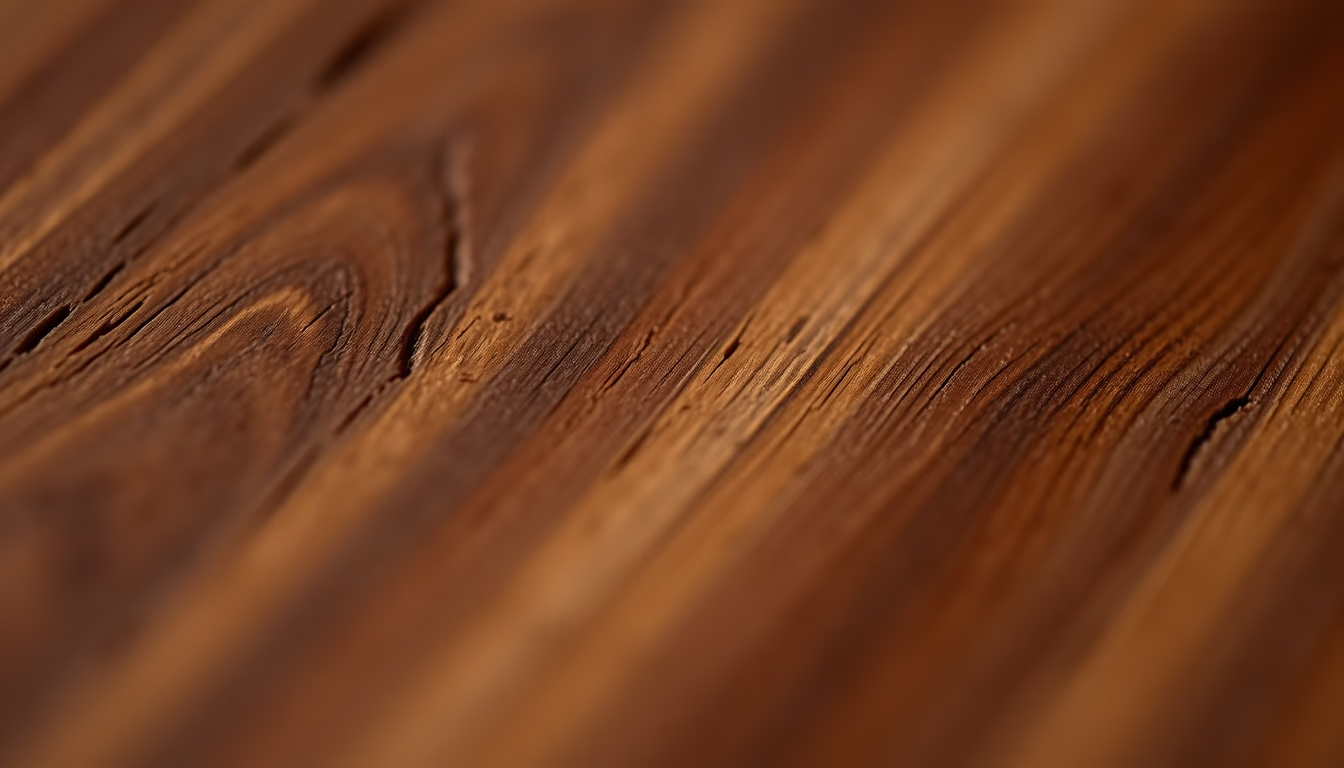
Dark walnut features a straight, uniform grain with wavy curls, ranging from chocolate brown to purplish hues. Its fine texture naturally polishes to a glossy sheen.
About this subject
Dark walnut, derived primarily from the eastern black walnut tree (Juglans nigra), is a premium hardwood native to the eastern United States and parts of Canada. Its heartwood ranges from rich chocolate brown to purplish-black, often darkening with age and UV exposure. The grain is typically straight but can exhibit wavy, curly, or burl patterns, making each piece unique. The wood has a fine, uniform texture and a natural luster that polishes well.
Moderately heavy and hard, dark walnut is prized for its dimensional stability and natural decay resistance. It is extensively used in high-end furniture, flooring, cabinetry, gunstocks, knife handles, and musical instruments such as pianos and organs. The open pores of the heartwood require a pore filler for a smooth finish, while the sapwood is pale yellow and narrow. Walnut wood is also known for its workability, accepting stains and finishes exceptionally well.
In global design trends (notably trending in 2026), dark walnut is favored for its timeless elegance and ability to pair with both modern minimalism and traditional aesthetics. A notable characteristic is juglone, a naturally occurring compound that can stain fabrics and inhibit plant growth under the tree canopy, a trait called allelopathy. For maintenance, avoid excessive direct sunlight to prevent unequal darkening and use specialized oils or waxes to nourish the wood.
Sustainability is a key concern: certified sources (FSC) ensure responsible forestry. Dark walnut’s deep color and distinctive grain make it a top choice for accent walls, statement furniture, and luxury interiors where contrast with metals or light woods is desired.
Frequently Asked Questions
What is the difference between dark walnut and light walnut?
Dark walnut typically comes from black walnut (Juglans nigra) and features deep brown to purplish hues. Light walnut usually refers to English walnut (Juglans regia) or the sapwood of black walnut, appearing lighter and more uniform.
Is dark walnut suitable for flooring?
Yes, it is highly suitable due to its hardness, stability, and wear resistance. Open pores need to be filled, and a durable finish is recommended to protect against scratches.
Why does dark walnut darken over time?
Because it contains phenolic compounds and juglone that react to UV light, deepening the color. This natural aging process does not harm the wood.
Direct URL
https://pub-c7d6a6ea828543ac903a74a341ccb2e1.r2.dev/imagens/wood-grain-dark-walnut-macro-closeup-p2.avifHow to credit
Include a visible link back to UtilizAí. Copy one of the snippets below:
<a href="https://xn--utiliza-eza.com/en/midia/imagens/wood-grain-dark-walnut-macro-closeup-p2">Wood grain dark walnut</a> by <a href="https://xn--utiliza-eza.com">UtilizAí</a>, licensed under <a href="https://creativecommons.org/licenses/by/4.0/">CC BY 4.0</a>.
[Wood grain dark walnut](https://xn--utiliza-eza.com/en/midia/imagens/wood-grain-dark-walnut-macro-closeup-p2) by [UtilizAí](https://xn--utiliza-eza.com), CC BY 4.0
License: CC-BY-4.0