Wax seal stamp
1344×768 · AVIF · CC BY 4.0
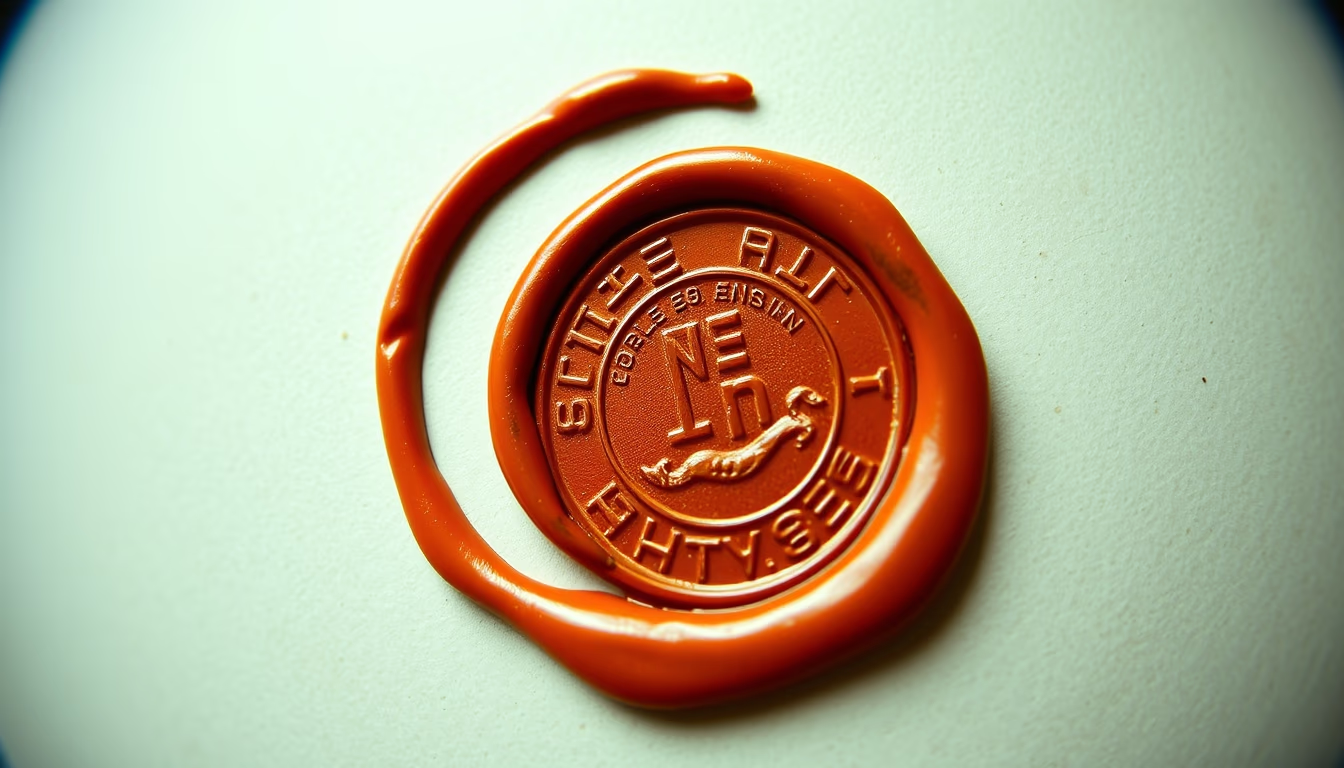
The wax seal stamp, used to seal documents and letters, has ancient origins and is still valued as a decorative and collectible item.
About this subject
The wax seal stamp is an ancient tool used to authenticate and ensure the inviolability of important correspondence and documents. Its origins date back to the civilizations of Mesopotamia, where cylindrical seals were rolled over damp clay. Over time, the seal evolved into a signet ring or stamp, a metal or stone piece with a carved symbol, pressed into hot wax poured over the closure of letters or parchments. In medieval Europe, the use of wax seals became common among nobles, clergy, and merchants, serving as a mark of identity and guarantee of authenticity. Each seal was unique, often incorporating coats of arms, initials, or personal emblems.
Modern production of a wax seal stamp typically involves engraving a design in relief on the head of a handle made of metal, wood, or resin. The sealing process consists of melting a stick of wax (traditionally over a candle flame), dripping a few drops onto the envelope, and while the wax is still pliable, pressing the stamp to imprint the relief. Wax comes in various colors, each with historical symbolic meanings: red for official documents, black for mourning, green for commercial letters, and blue for personal correspondence.
Today, wax sealing is most often used for special occasions such as wedding invitations, formal letters, or handmade stationery projects, keeping alive a tradition that combines functionality and aesthetics. Additionally, collectors value antique seals and historical signets, which offer a glimpse into communication practices and heraldry of past eras. The sealing technique is also taught in calligraphy and mail art courses, perpetuating knowledge about this artifact.
Frequently Asked Questions
How to use a wax seal stamp?
Melt the wax (usually over a candle flame) and let a few drops fall onto the envelope or paper. While the wax is still liquid, press the stamp firmly for a few seconds and lift carefully.
What is the historical origin of the wax seal?
The use of seals to authenticate documents dates back to Mesopotamia, but the wax seal as we know it became popular in medieval Europe, where seals with coats of arms or initials were pressed into melted wax to seal letters and documents.
What types of wax are used for seals?
Traditionally, sealing wax is made from shellac, which is brittle. Nowadays, synthetic or additive-enhanced waxes are available for greater flexibility. Common colors include red, black, green, and blue, each with historical meanings.
Direct URL
https://pub-c7d6a6ea828543ac903a74a341ccb2e1.r2.dev/imagens/wax-seal-stamp-fish-eye-wide-angle-p3.avifHow to credit
Include a visible link back to UtilizAí. Copy one of the snippets below:
<a href="https://xn--utiliza-eza.com/en/midia/imagens/wax-seal-stamp-fish-eye-wide-angle-p3">Wax seal stamp</a> by <a href="https://xn--utiliza-eza.com">UtilizAí</a>, licensed under <a href="https://creativecommons.org/licenses/by/4.0/">CC BY 4.0</a>.
[Wax seal stamp](https://xn--utiliza-eza.com/en/midia/imagens/wax-seal-stamp-fish-eye-wide-angle-p3) by [UtilizAí](https://xn--utiliza-eza.com), CC BY 4.0
License: CC-BY-4.0