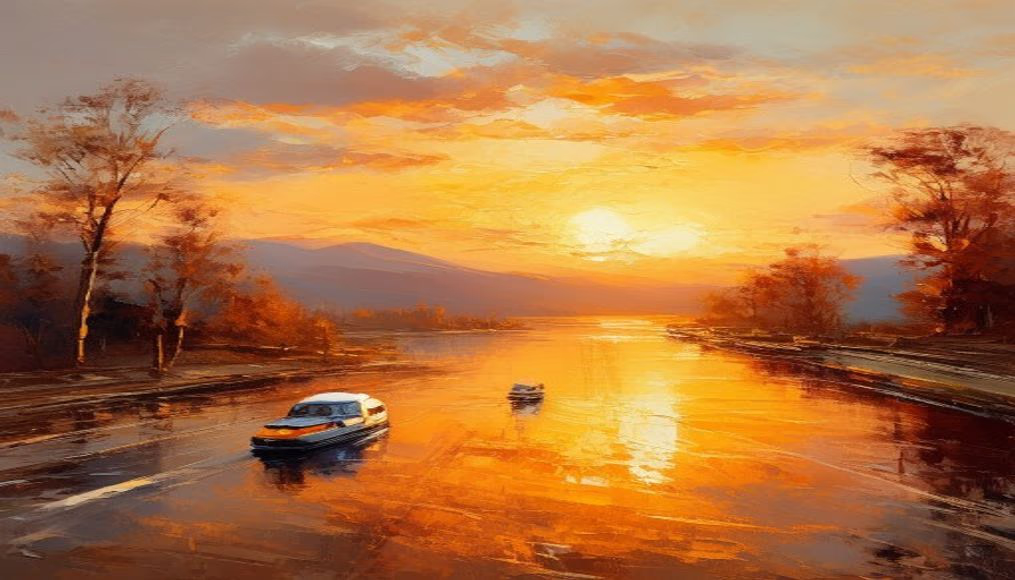
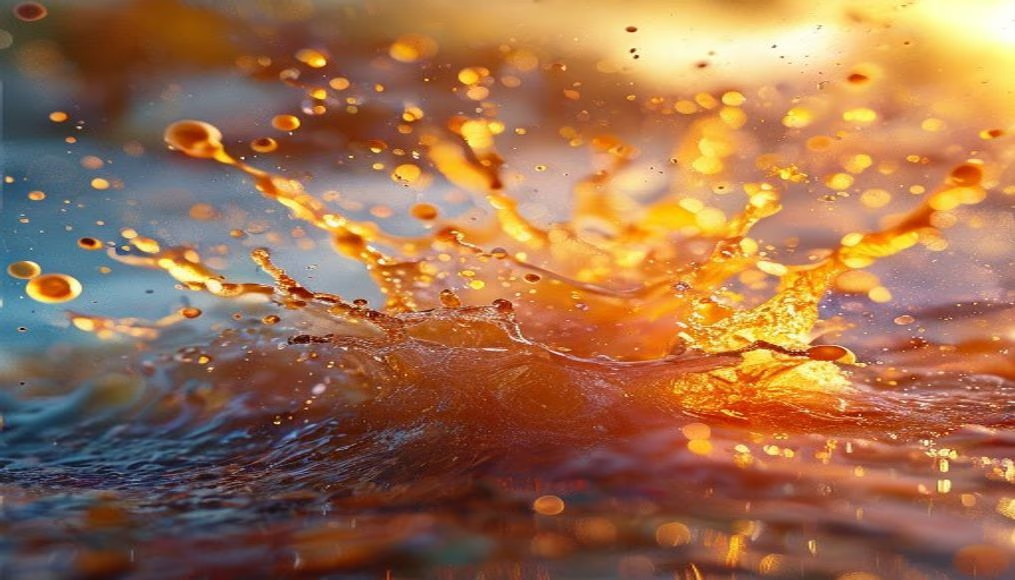
Watercolor splash
1344×768 · AVIF · CC BY 4.0
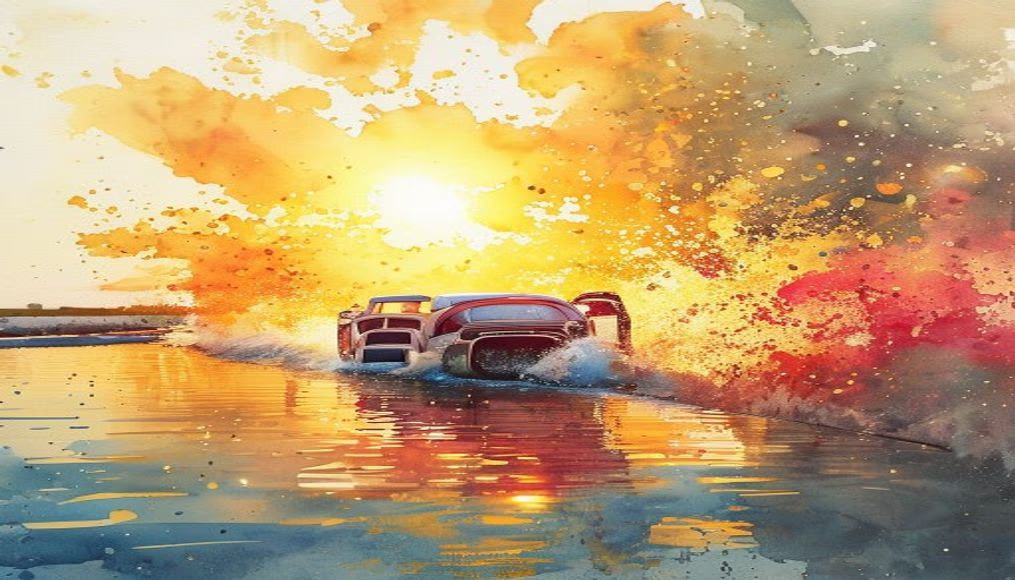
Watercolor, an ancient painting technique using pigments diluted in water, allows the creation of splashes and stains that evoke movement and lightness, widely used in travel illustrations.
About this subject
Watercolor originates from ancient China, where ink was used on silk. In the 18th century, it gained popularity in Europe, especially in England, with artists like J.M.W. Turner and Thomas Girtin using washes to capture landscapes and natural phenomena. The transparency and fluidity made it ideal for scientific expeditions and travel sketches, replacing heavy oil paints in field notebooks.
The splash effect is achieved by tapping a loaded brush against fingers or using a toothbrush to spray droplets onto paper. This technique adds texture and dynamism, common in works depicting water movement, wind, or fleeting scenes. Contemporary artists like Alvaro Castagnet and Joseph Zbukvic use splashes to convey atmosphere and spontaneity in urban and rural scenes.
In travel photography, watercolor is often digitally simulated or used in collages to mimic an artisanal, nostalgic feel. The paint splash can symbolize the unpredictability of travel or the burst of colors a destination offers. The technique is popular in online tutorials for creating abstract compositions that evoke real landscapes.
Interestingly, watercolor paper must be water-resistant with a high grammage, usually above 300 g/m², to avoid warping. Pigments can be mineral or synthetic, each behaving differently when mixed with water. Watercolor's versatility allows for detailed portraits to bold, loose strokes, making it a beloved medium for capturing light and atmosphere.
Frequently Asked Questions
What is watercolor technique?
Watercolor is a painting technique where pigments are diluted in water and applied on paper. Its main features are transparency and fluidity, allowing color overlays and light effects.
How to create splash effects in watercolor?
To create splashes, load a brush with paint and tap it against your finger or use a toothbrush to flick droplets onto dry or wet paper. The intensity varies with water amount and motion force.
Why is watercolor popular for travel illustrations?
Watercolor is lightweight, dries quickly, and allows fast outdoor sketches. Its transparency captures light and atmosphere well, historically used by travelers and naturalists to document places and cultures.
Direct URL
https://pub-c7d6a6ea828543ac903a74a341ccb2e1.r2.dev/imagens/watercolor-splash-travel-photography-v10.avifHow to credit
Include a visible link back to UtilizAí. Copy one of the snippets below:
<a href="https://xn--utiliza-eza.com/en/midia/imagens/watercolor-splash-travel-photography-v10">Watercolor splash</a> by <a href="https://xn--utiliza-eza.com">UtilizAí</a>, licensed under <a href="https://creativecommons.org/licenses/by/4.0/">CC BY 4.0</a>.
[Watercolor splash](https://xn--utiliza-eza.com/en/midia/imagens/watercolor-splash-travel-photography-v10) by [UtilizAí](https://xn--utiliza-eza.com), CC BY 4.0
License: CC-BY-4.0