Watercolor splash
1344×768 · AVIF · CC BY 4.0
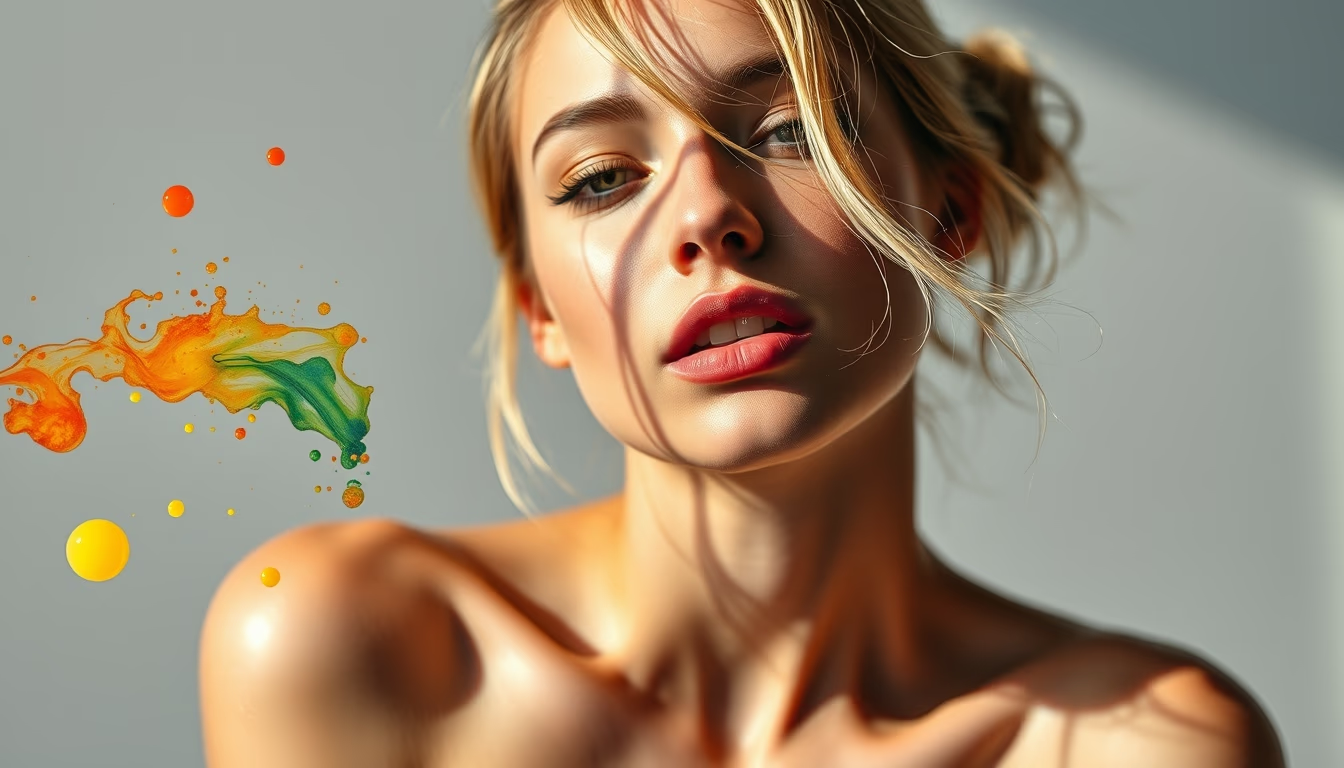
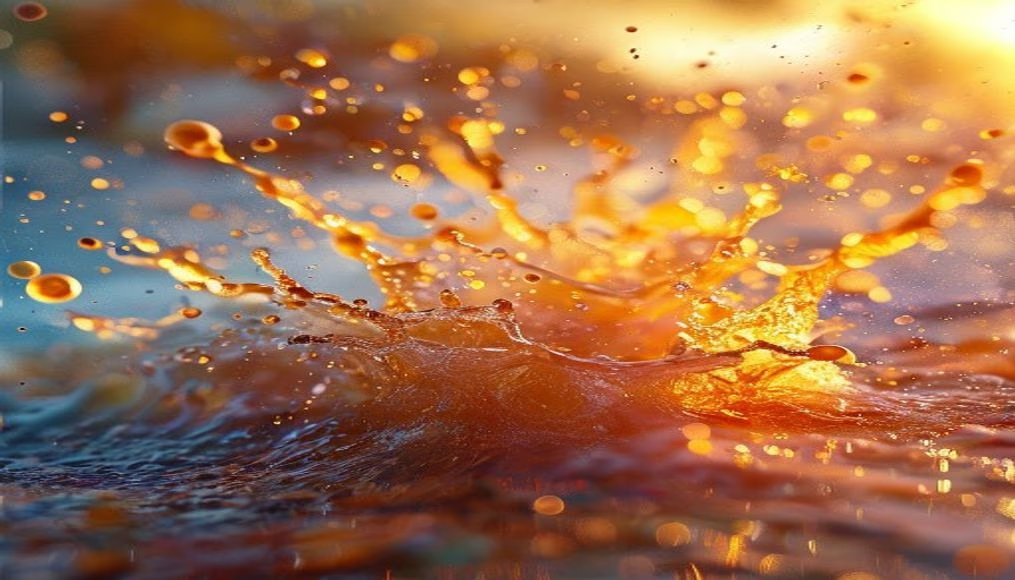
A burst of colors in watercolor captured mid-creative process. Discover the technique and history of this fluid, translucent art form.
About this subject
Watercolor is an artistic technique using water-based paints, renowned for its transparency and dynamism. With roots in ancient Chinese and Egyptian civilizations, it was refined in Europe during the Renaissance. The method allows unique effects, such as naturally blending colors on paper, depending on humidity and pressure applied.
A distinctive feature of watercolor is its unpredictability: the artist must anticipate how colors will spread, making each piece a blend of planning and improvisation. Widely used in landscapes, portraits, and illustrations, the technique also attracts contemporary artists for abstract experiments. In Brazil, figures like Lasar Segall and Cândido Portinari used watercolor to capture the country's cultural and natural essence.
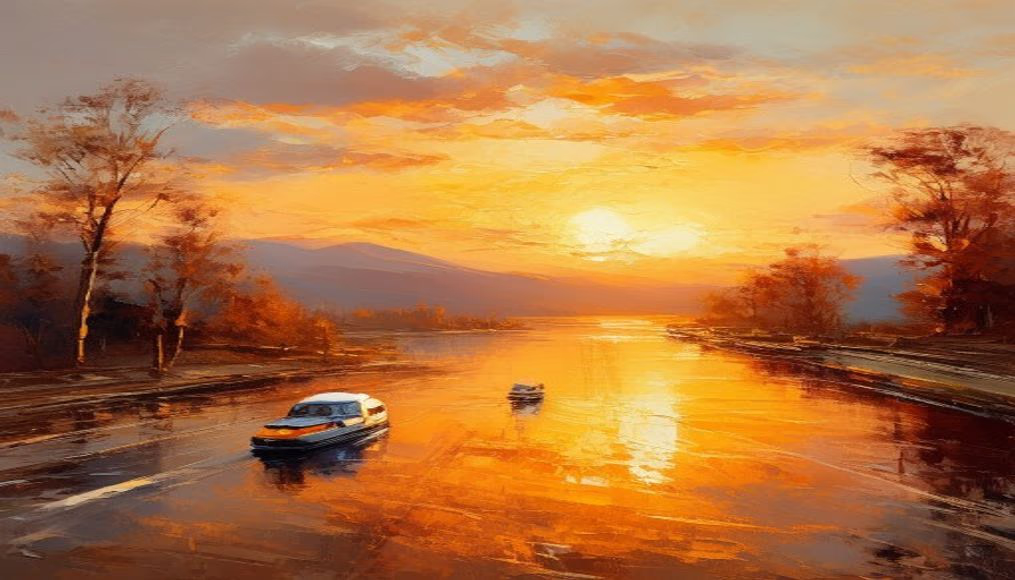
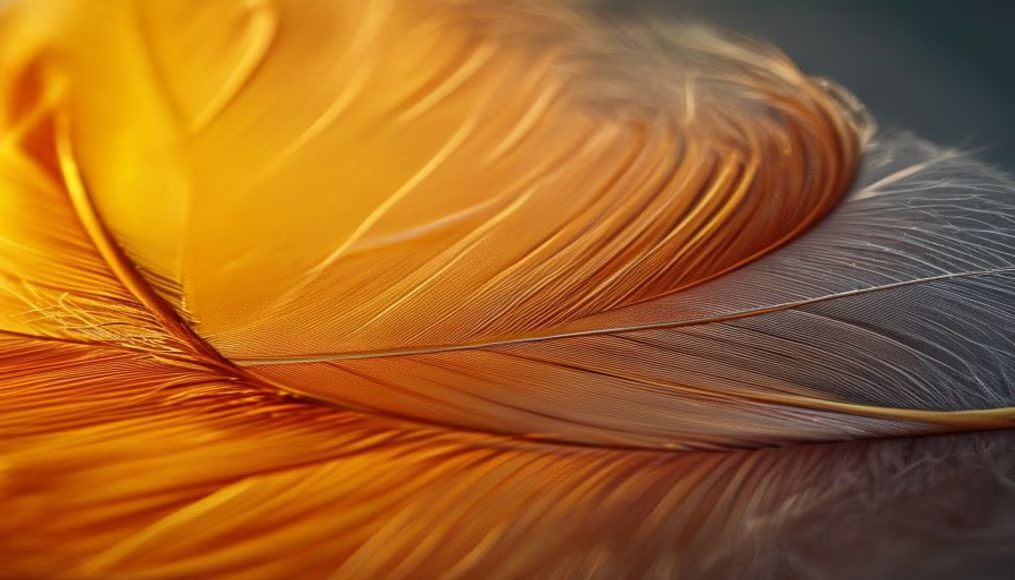
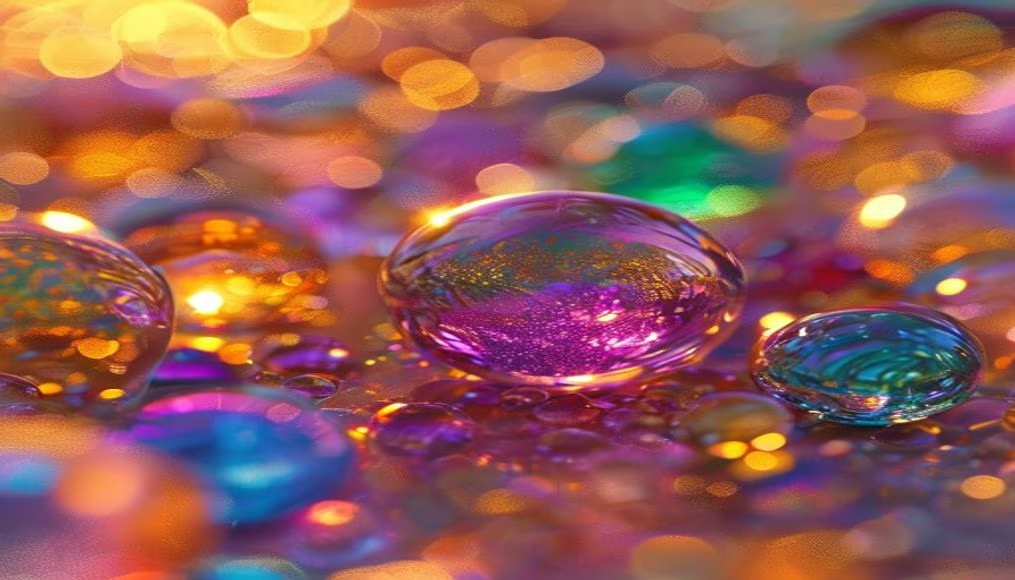
The image depicts the creative process in action, with visible water and color movement. This fluidity symbolizes watercolor's expressive freedom, where control is partial, and the final result depends on the balance between technique and intuition. Watercolor art is also sustainable, using natural materials and avoiding aggressive chemicals.
Frequently Asked Questions
What differentiates watercolor from other painting techniques?
Watercolor stands out for its transparency and the dynamics of water flow. Color is diluted in water and applied in light layers, allowing the white paper to show through. This creates a luminous effect that techniques like oil or acrylic cannot easily replicate.
What challenges are involved in painting with watercolor?
Key challenges include the unpredictability of the final result due to paper absorption and color layer interaction. The technique also demands mastery of effects like wet-on-wet and dry brushing, which require practice to avoid accidents.
Can watercolor be used in large formats?
Yes, but the paper must be high weight and mounted on a rigid surface to support the water quantity used. Artists like David Hockney have used watercolor in large formats to explore scale and fluidity.
Direct URL
https://pub-c7d6a6ea828543ac903a74a341ccb2e1.r2.dev/imagens/watercolor-splash-magazine-editorial-v8.avifHow to credit
Include a visible link back to UtilizAí. Copy one of the snippets below:
<a href="https://xn--utiliza-eza.com/en/midia/imagens/watercolor-splash-magazine-editorial-v8">Watercolor splash</a> by <a href="https://xn--utiliza-eza.com">UtilizAí</a>, licensed under <a href="https://creativecommons.org/licenses/by/4.0/">CC BY 4.0</a>.
[Watercolor splash](https://xn--utiliza-eza.com/en/midia/imagens/watercolor-splash-magazine-editorial-v8) by [UtilizAí](https://xn--utiliza-eza.com), CC BY 4.0
License: CC-BY-4.0