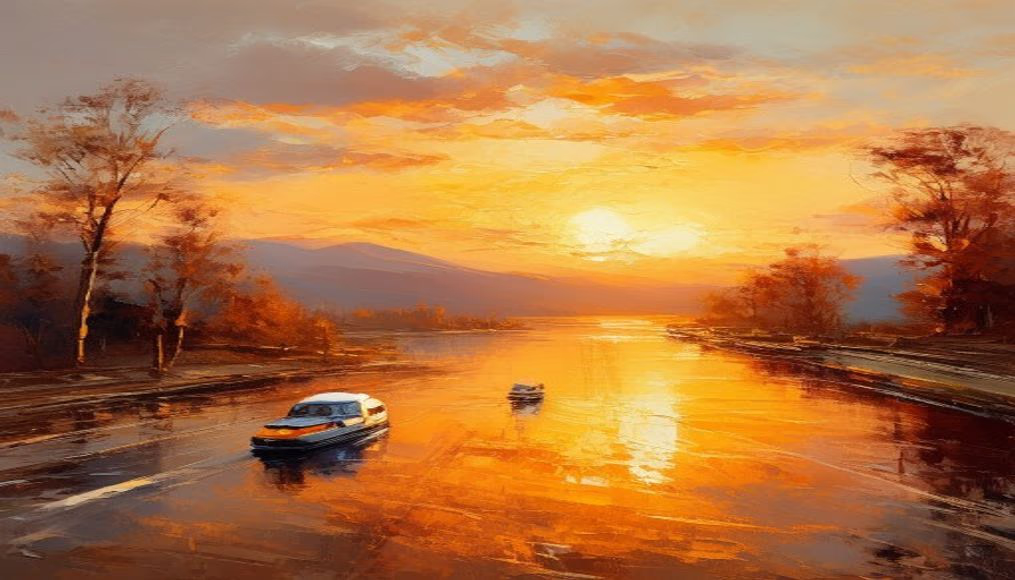
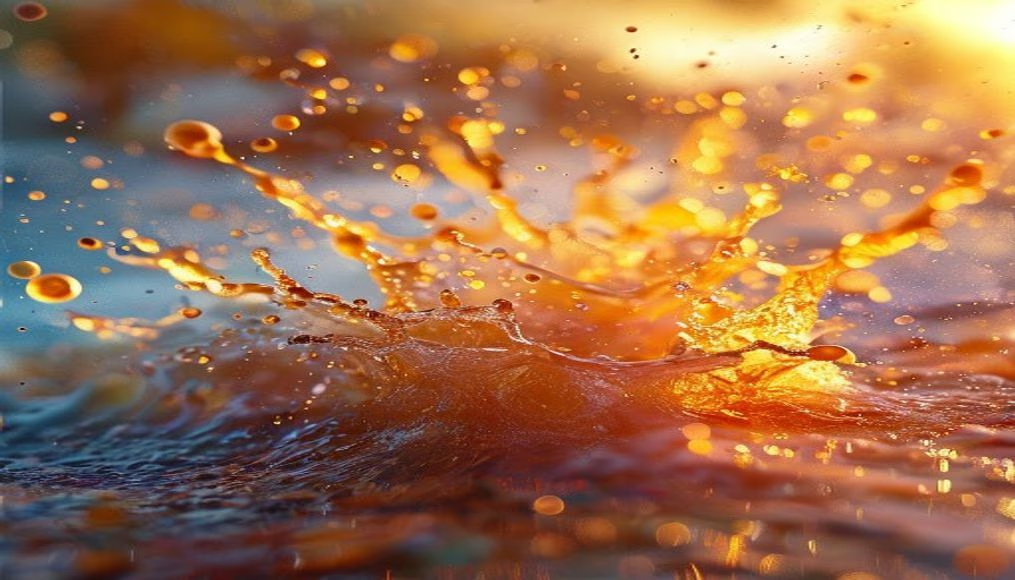
Watercolor splash
1344×768 · AVIF · CC BY 4.0
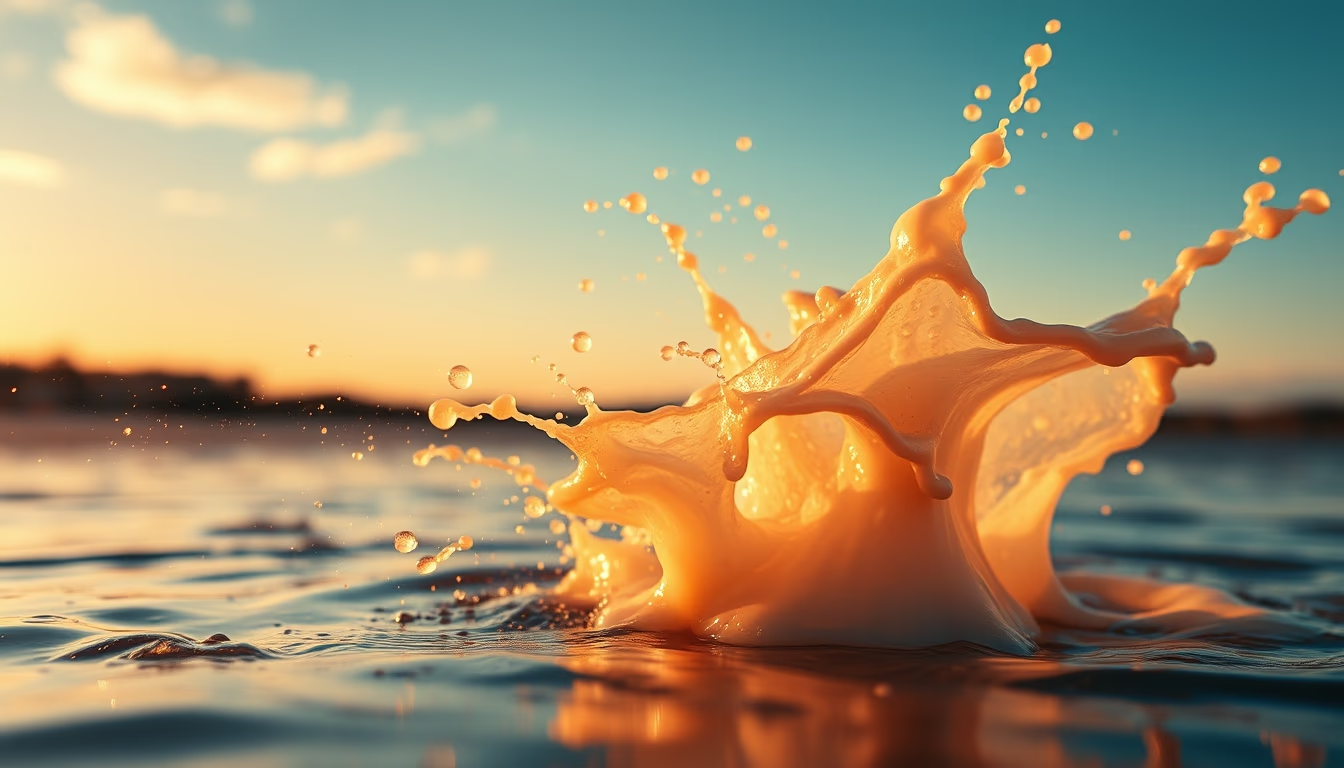
Watercolor is an ancient technique using water-soluble pigments to create artworks with transparency and fluidity.
About this subject
Watercolor is a painting technique that uses pigments suspended in a water-based vehicle. Unlike oil or acrylic, watercolor relies on the transparency of layers and the white of the paper to create luminosity. Its origins date back to ancient civilizations such as Egypt and China, where natural pigments were mixed with water and applied to papyrus or silk. However, the technique as we know it today was developed in Europe during the Renaissance, gaining prominence with artists like Albrecht Dürer, who used watercolor for botanical studies and landscapes.
The most striking feature of watercolor is its unpredictability: water can cause pigment to spread in unique ways, creating organic effects and textures that are hard to replicate. For this reason, many artists consider it one of the most challenging techniques. The movement of water on paper can be controlled through techniques like “wet-on-wet” (applying paint to wet paper) or “wet-on-dry” (applying to dry paper), each yielding distinct results. Great masters like J.M.W. Turner and John Singer Sargent elevated watercolor to high art, capturing light and atmosphere masterfully.
In Brazil, watercolor was introduced by Portuguese colonizers and gained strength in the 19th century with the French Artistic Mission, which brought artists like Jean-Baptiste Debret, who recorded everyday Brazilian scenes in watercolors. Today, the technique is widely used in scientific illustration, architecture, and contemporary art. Watercolor's versatility allows for everything from quick studies to complex works, and its popularity has grown with the internet, where artists share tutorials and creative processes.
Interestingly, watercolor is also used in art restoration due to its relative reversibility. Modern pigments offer greater lightfastness, but the essence of the technique remains the same: the dance between water and color, requiring patience and skill. For beginners, a basic set of watercolors and cotton paper are enough to explore this fascinating universe.
Frequently Asked Questions
What is the difference between watercolor and gouache?
Watercolor is transparent, allowing the white of the paper to show through, while gouache is opaque and covers the surface completely. Gouache also uses water-soluble pigments but with higher pigment concentration and additives that make it thicker.
What type of paper is best for watercolor?
The ideal is to use watercolor-specific paper, made of cotton or cellulose, with a weight above 200 gsm. Cotton papers are more absorbent and durable, while cellulose ones are more affordable. Texture can be cold-pressed (medium grain) or hot-pressed (smooth).
How to fix mistakes in watercolor?
Mistakes can be corrected with a damp brush to lift wet paint, or with absorbent paper to remove excess. After drying, you can wash the area with clean water and a brush, but this may damage the paper. For small adjustments, use opaque paint like gouache.
Direct URL
https://pub-c7d6a6ea828543ac903a74a341ccb2e1.r2.dev/imagens/watercolor-splash-cinematic-wide-shot.avifHow to credit
Include a visible link back to UtilizAí. Copy one of the snippets below:
<a href="https://xn--utiliza-eza.com/en/midia/imagens/watercolor-splash-cinematic-wide-shot">Watercolor splash</a> by <a href="https://xn--utiliza-eza.com">UtilizAí</a>, licensed under <a href="https://creativecommons.org/licenses/by/4.0/">CC BY 4.0</a>.
[Watercolor splash](https://xn--utiliza-eza.com/en/midia/imagens/watercolor-splash-cinematic-wide-shot) by [UtilizAí](https://xn--utiliza-eza.com), CC BY 4.0
License: CC-BY-4.0