Warehouse robot agv
1344×768 · AVIF · CC BY 4.0
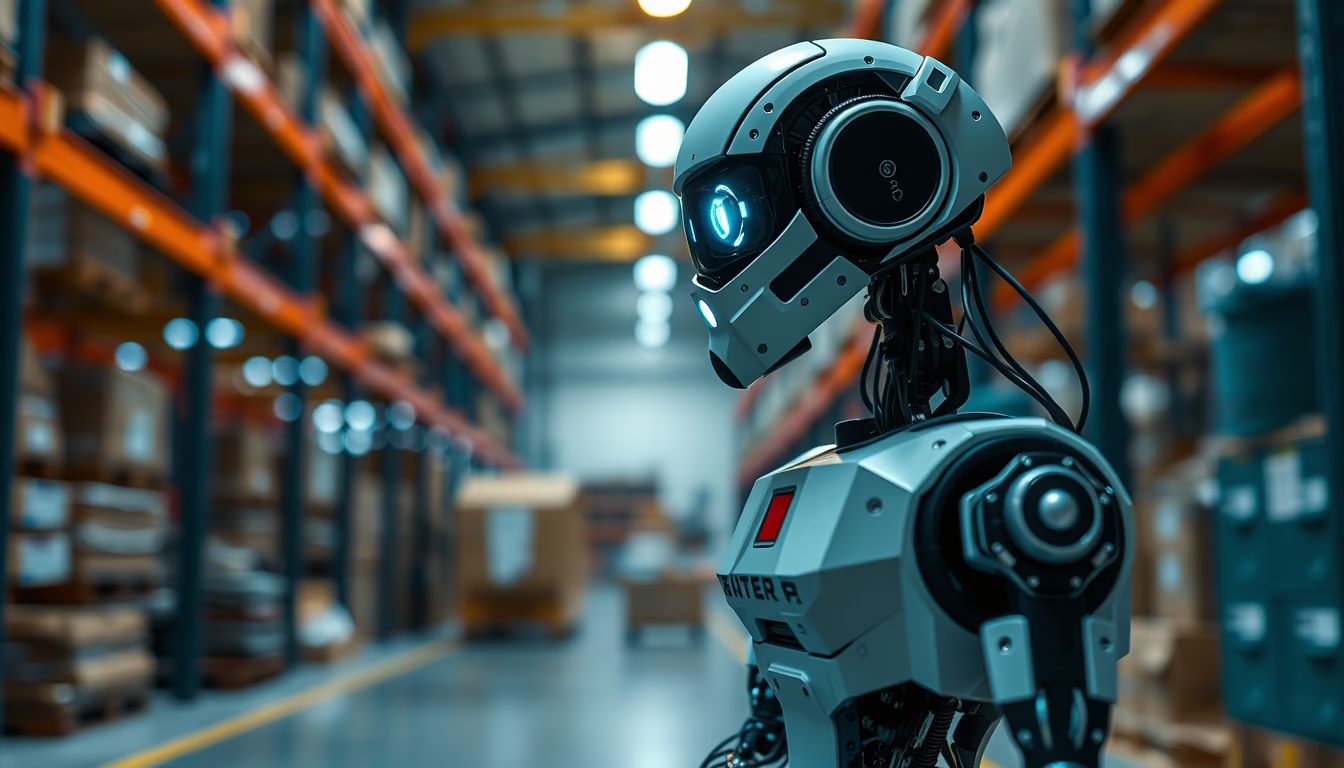
AGV robots revolutionize warehouse logistics, transporting loads with precision and efficiency. Learn how they work.
About this subject
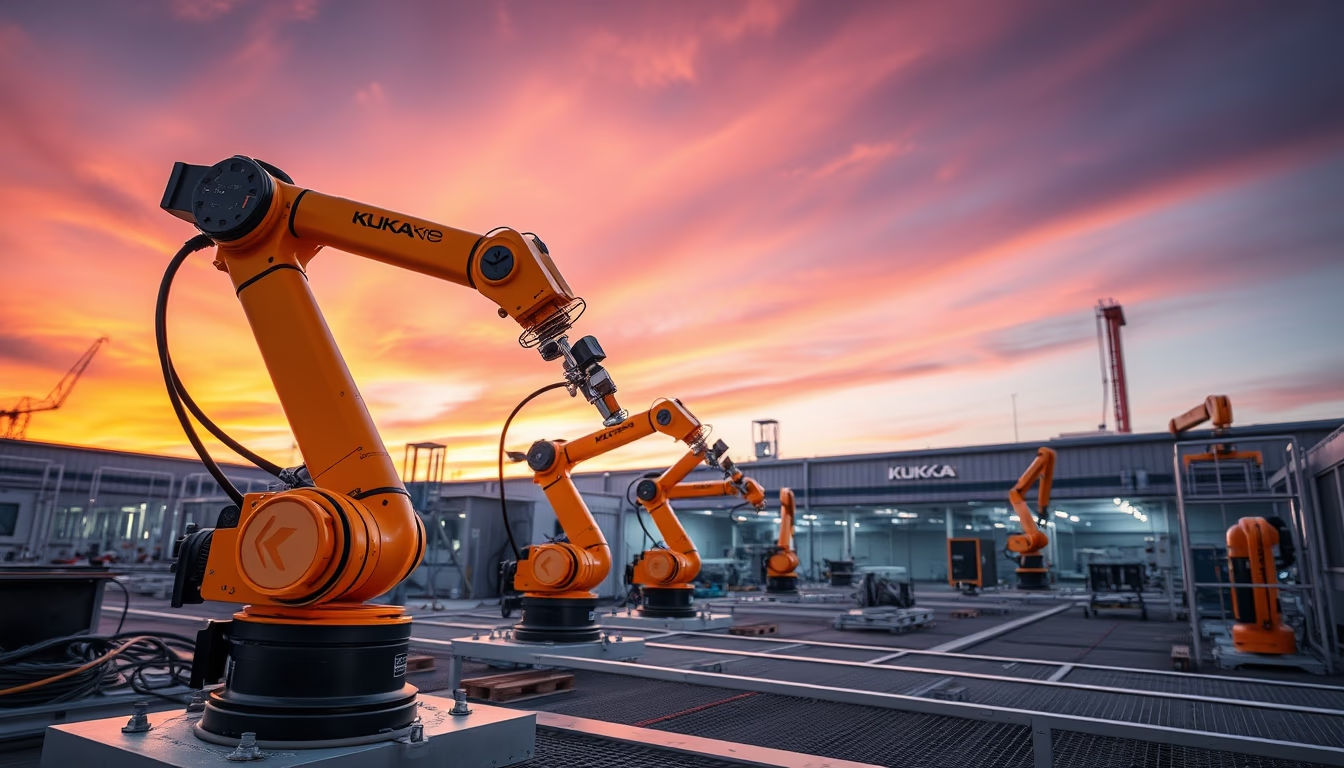
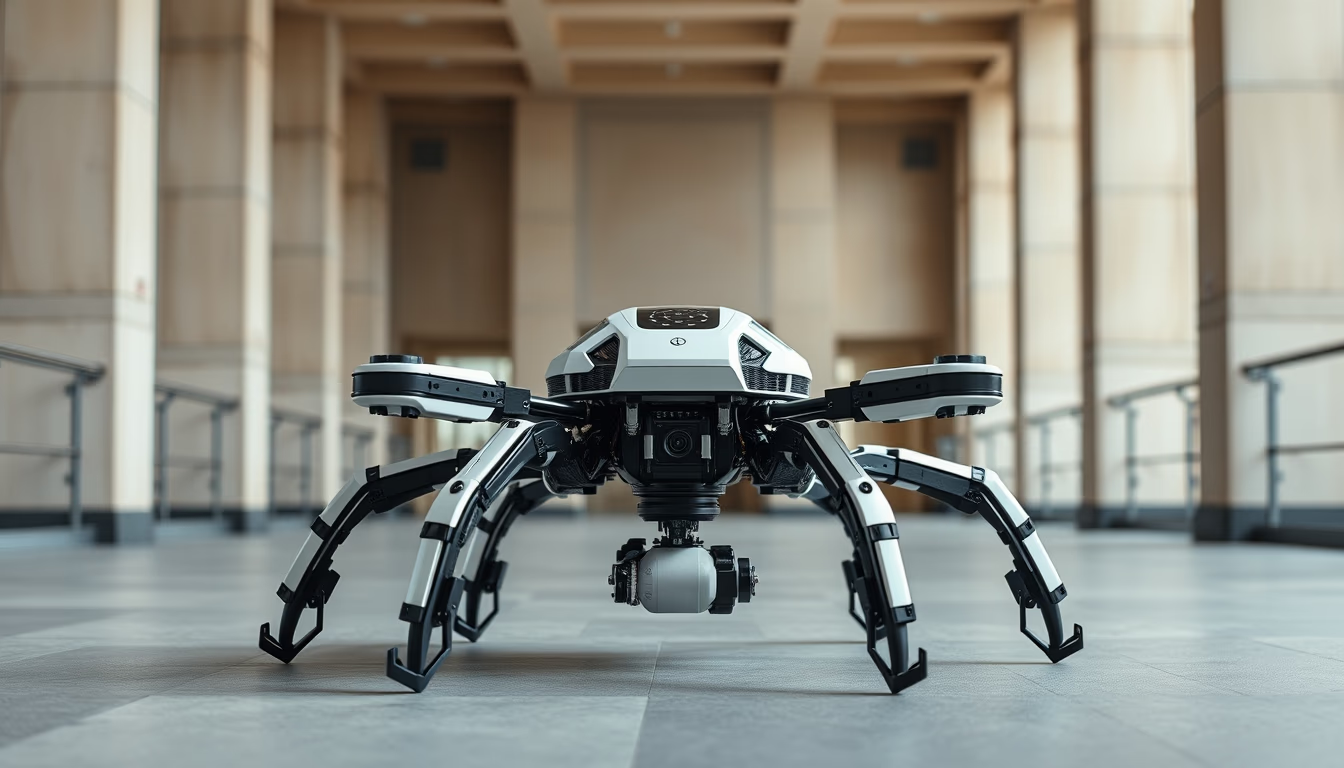
Automated Guided Vehicles (AGVs) are mobile robots used in warehouses and factories to transport materials without human intervention. Unlike conveyor belts or manual forklifts, AGVs follow predefined routes using sensors, lasers, or magnetic tapes. They originated in the 1950s as simple wire-guided carts, evolving into autonomous systems capable of dynamic navigation in complex environments.
Today, major distribution centers like Amazon and Mercado Livre employ thousands of AGVs to move inventory. The most common navigation technology is SLAM (Simultaneous Localization and Mapping), which allows the robot to create real-time maps to avoid obstacles. Modern models can carry hundreds of kilograms at speeds up to 2 m/s, operating 24 hours a day.
A curiosity is that AGVs are often confused with AMRs (Autonomous Mobile Robots). While AGVs follow fixed paths, AMRs have greater autonomy to choose alternative routes. The choice between them depends on layout and flexibility needs. The cost of a basic AGV ranges from $20,000 to $100,000, but the return on investment occurs in less than two years due to reduced errors and increased productivity.
In Brazil, AGV adoption grows in sectors such as automotive, food, and pharmaceuticals. The Port Modernization Law (Lei 12.815/2013) encouraged automation, and terminals like the Port of Santos already use AGVs to move containers. The trend is for artificial intelligence to make these robots even more integrated, with the ability to predict demand and optimize routes in real time.
Frequently Asked Questions
What is the difference between an AGV and an AMR?
AGVs follow fixed paths (usually with wires or magnetic tapes) and stop if they encounter an obstacle. AMRs use sensors and maps to navigate autonomously, avoiding obstacles in real time.
How much does a warehouse AGV robot cost?
A basic AGV costs between $20,000 and $100,000, depending on load capacity and technology. Return on investment can occur in less than two years.
Which sectors use AGVs most in Brazil?
The automotive, food and beverage, pharmaceutical, and port logistics sectors are the largest adopters of AGVs. The Port of Santos, for example, uses AGVs for container handling.
Direct URL
https://pub-c7d6a6ea828543ac903a74a341ccb2e1.r2.dev/imagens/warehouse-robot-agv-tilt-shift-miniature-p4.avifHow to credit
Include a visible link back to UtilizAí. Copy one of the snippets below:
<a href="https://xn--utiliza-eza.com/en/midia/imagens/warehouse-robot-agv-tilt-shift-miniature-p4">Warehouse robot agv</a> by <a href="https://xn--utiliza-eza.com">UtilizAí</a>, licensed under <a href="https://creativecommons.org/licenses/by/4.0/">CC BY 4.0</a>.
[Warehouse robot agv](https://xn--utiliza-eza.com/en/midia/imagens/warehouse-robot-agv-tilt-shift-miniature-p4) by [UtilizAí](https://xn--utiliza-eza.com), CC BY 4.0
License: CC-BY-4.0