Warehouse robot agv
1344×768 · AVIF · CC BY 4.0
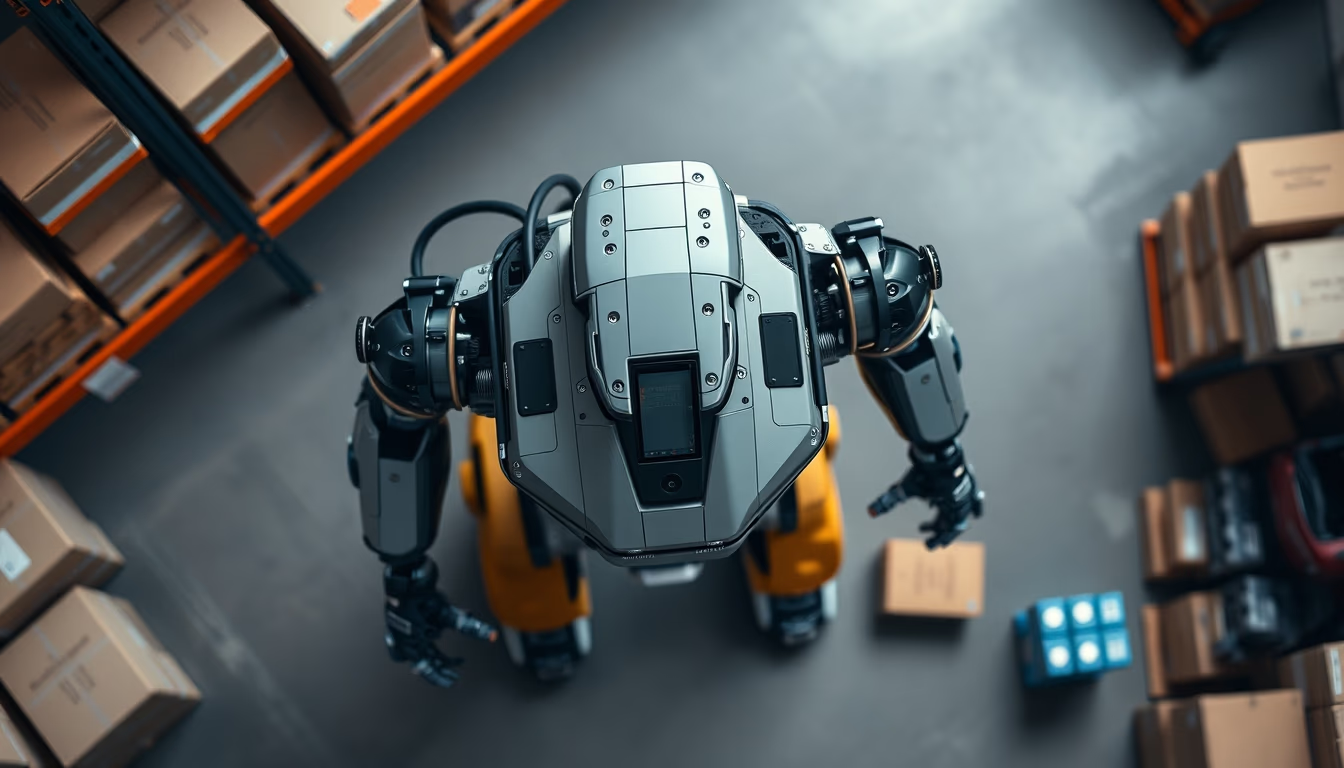
Automated guided vehicles (AGVs) are mobile robots that transport loads in warehouses and factories without human intervention.
About this subject
Automated guided vehicles, or AGVs, are mobile robots designed to transport materials within logistics and industrial facilities. They follow predefined paths using navigation systems such as magnetic wires on the floor, reflective tapes, lasers, or computer vision. Unlike AMRs (autonomous mobile robots), traditional AGVs rely on fixed infrastructure for guidance, but modern models already incorporate SLAM for dynamic mapping.
The history of AGVs began in the 1950s when Barrett Electronics introduced the first system to tow loads in a supermarket. Since then, technology has evolved rapidly. Companies like Amazon Robotics (formerly Kiva Systems) popularized the use of AGVs in distribution centers, with thousands of robots moving entire shelves of products. A typical AGV can operate 24/7, increasing productivity by up to 30% compared to manual carts.
AGVs are critical to modern supply chain efficiency. They reduce operational costs, minimize transport errors, and improve safety by eliminating collisions with people or equipment. Beyond logistics, they are used in automotive, pharmaceutical, and food industries to move raw materials and finished goods. Integration with WMS (Warehouse Management System) enables intelligent routing and flow optimization.
Interestingly, the first AGV was not autonomous in the current sense: it followed a buried wire emitting a radio signal. Today, AGVs can handle loads up to 2 tons and navigate narrow aisles with millimeter precision. With advances in artificial intelligence, these robots are becoming increasingly autonomous, eliminating physical markings and adapting to dynamic environments.
Frequently Asked Questions
How do AGVs navigate without colliding with obstacles?
Traditional AGVs use physical guides (wires, tapes) or lasers to follow fixed routes. Modern models employ sensors like lidar and cameras to detect obstacles and avoid them, combined with traffic management software.
Which industries use AGVs most frequently?
AGVs are widely used in e-commerce warehouses, automotive assembly, pharmaceuticals, food and beverage, and any industry that needs to move repetitive loads efficiently.
What is the difference between an AGV and an AMR?
AGVs follow fixed paths and rely on external infrastructure. AMRs (autonomous mobile robots) navigate dynamically using internal maps and sensors, without the need for physical guides.
Direct URL
https://pub-c7d6a6ea828543ac903a74a341ccb2e1.r2.dev/imagens/warehouse-robot-agv-isometric-flat-lay-p2.avifHow to credit
Include a visible link back to UtilizAí. Copy one of the snippets below:
<a href="https://xn--utiliza-eza.com/en/midia/imagens/warehouse-robot-agv-isometric-flat-lay-p2">Warehouse robot agv</a> by <a href="https://xn--utiliza-eza.com">UtilizAí</a>, licensed under <a href="https://creativecommons.org/licenses/by/4.0/">CC BY 4.0</a>.
[Warehouse robot agv](https://xn--utiliza-eza.com/en/midia/imagens/warehouse-robot-agv-isometric-flat-lay-p2) by [UtilizAí](https://xn--utiliza-eza.com), CC BY 4.0
License: CC-BY-4.0