Underwater robot submersible
1344×768 · AVIF · CC BY 4.0
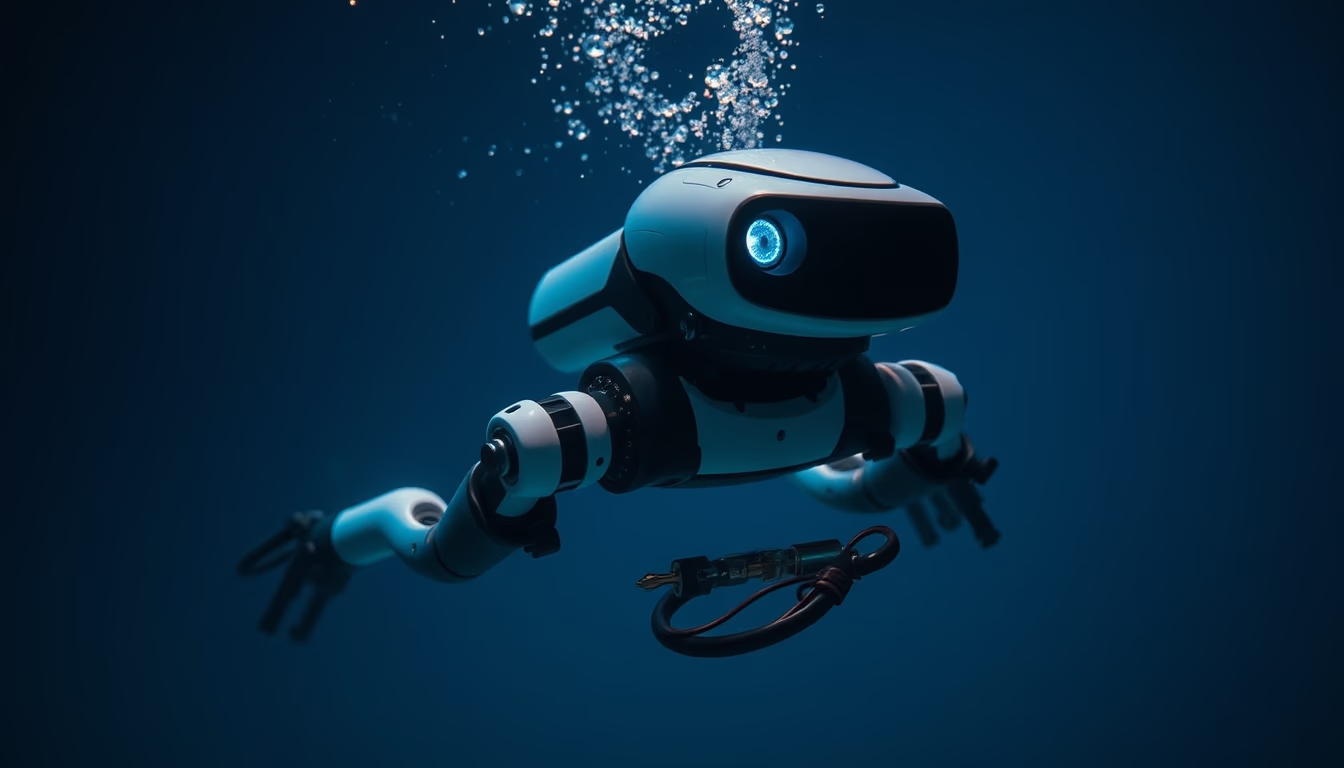
Underwater robot submersibles explore oceans at depths inaccessible to humans, collecting scientific data and maintaining submarine infrastructure.
About this subject
Underwater robot submersibles, also known as remotely operated vehicles (ROVs) or autonomous underwater vehicles (AUVs), are robotic equipment designed to operate underwater. They are widely used in oceanography, oil and gas exploration, inspection of submarine cables and pipelines, and search and rescue missions. The first prototypes emerged in the 1950s with vehicles like the Piscador, used by the US Navy. Since then, technology has advanced significantly, with modern models capable of reaching depths over 10,000 meters, such as the Nereus, which explored the Mariana Trench in 2009.
These robots fall into two main categories: ROVs, which are tethered to a surface vessel via a cable, enabling real-time video and command transmission, and AUVs, which operate independently following pre-programmed routes without physical connection. ROVs are often employed in precision tasks like offshore platform maintenance, while AUVs are more common for large-scale seafloor mapping, such as collecting bathymetric data for submarine cartography.
In Brazil, the use of underwater submersibles has increased, particularly in the oil industry, with Petrobras operating ROVs in deep waters of the Santos and Campos basins. Research institutions like USP and INPE develop AUVs for environmental studies, including coral reef monitoring and marine pollution tracking. Interestingly, submersibles are also used in underwater archaeology, such as exploring historical shipwrecks, reaching difficult sites without damaging artifacts.
Frequently Asked Questions
What is the difference between an ROV and an AUV?
An ROV (Remotely Operated Vehicle) is tethered to a surface vessel via a cable, enabling real-time control and data transmission. An AUV (Autonomous Underwater Vehicle) operates independently following pre-programmed routes without a cable.
How deep can an underwater submersible robot go?
Vehicles like Nereus have reached over 10,000 meters. Most commercial ROVs operate between 1,000 and 3,000 meters, but specialized versions can explore extreme oceanic trenches.
Are underwater submersibles used in Brazil?
Yes, mainly in the oil industry (Petrobras) and scientific research. Institutions like USP and INPE develop AUVs for environmental monitoring and marine studies.
Direct URL
https://pub-c7d6a6ea828543ac903a74a341ccb2e1.r2.dev/imagens/underwater-robot-submersible-fine-art-photography-p10.avifHow to credit
Include a visible link back to UtilizAí. Copy one of the snippets below:
<a href="https://xn--utiliza-eza.com/en/midia/imagens/underwater-robot-submersible-fine-art-photography-p10">Underwater robot submersible</a> by <a href="https://xn--utiliza-eza.com">UtilizAí</a>, licensed under <a href="https://creativecommons.org/licenses/by/4.0/">CC BY 4.0</a>.
[Underwater robot submersible](https://xn--utiliza-eza.com/en/midia/imagens/underwater-robot-submersible-fine-art-photography-p10) by [UtilizAí](https://xn--utiliza-eza.com), CC BY 4.0
License: CC-BY-4.0