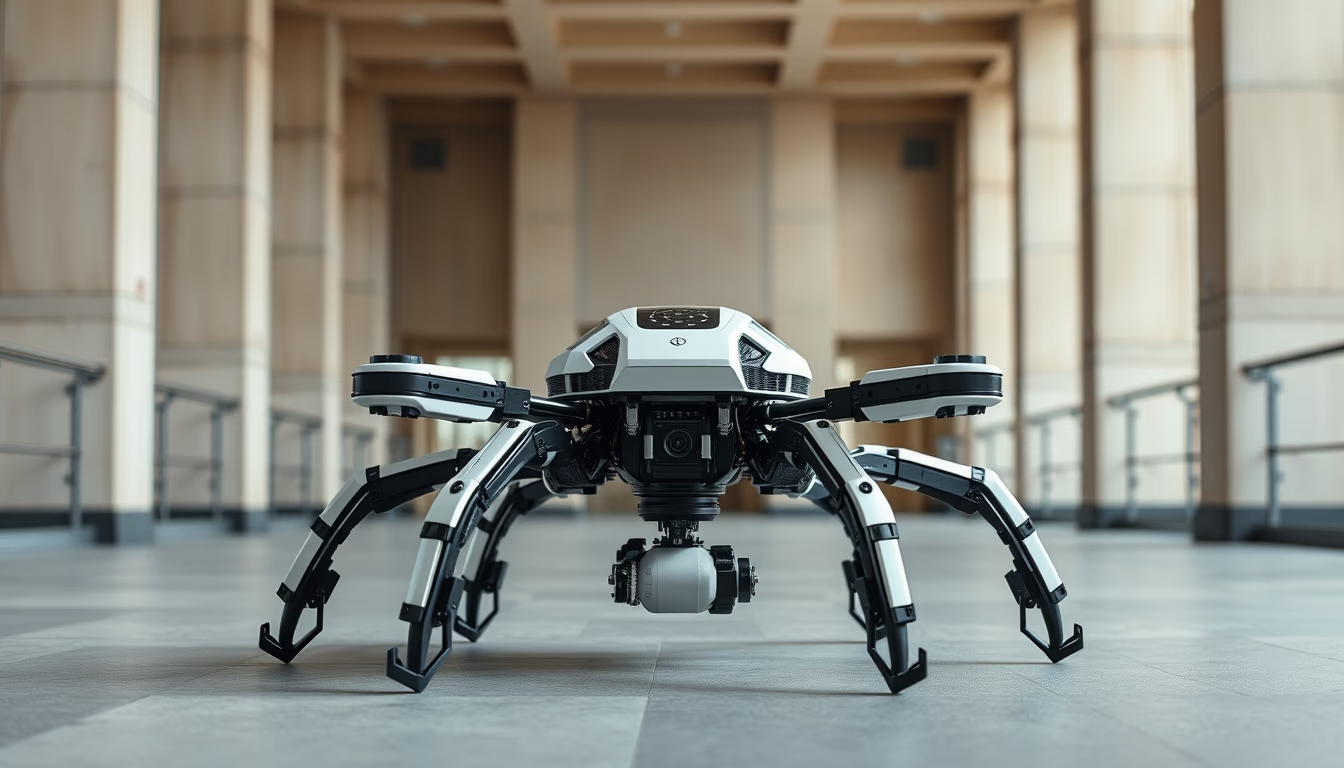
Underwater robot submersible
1344×768 · AVIF · CC BY 4.0
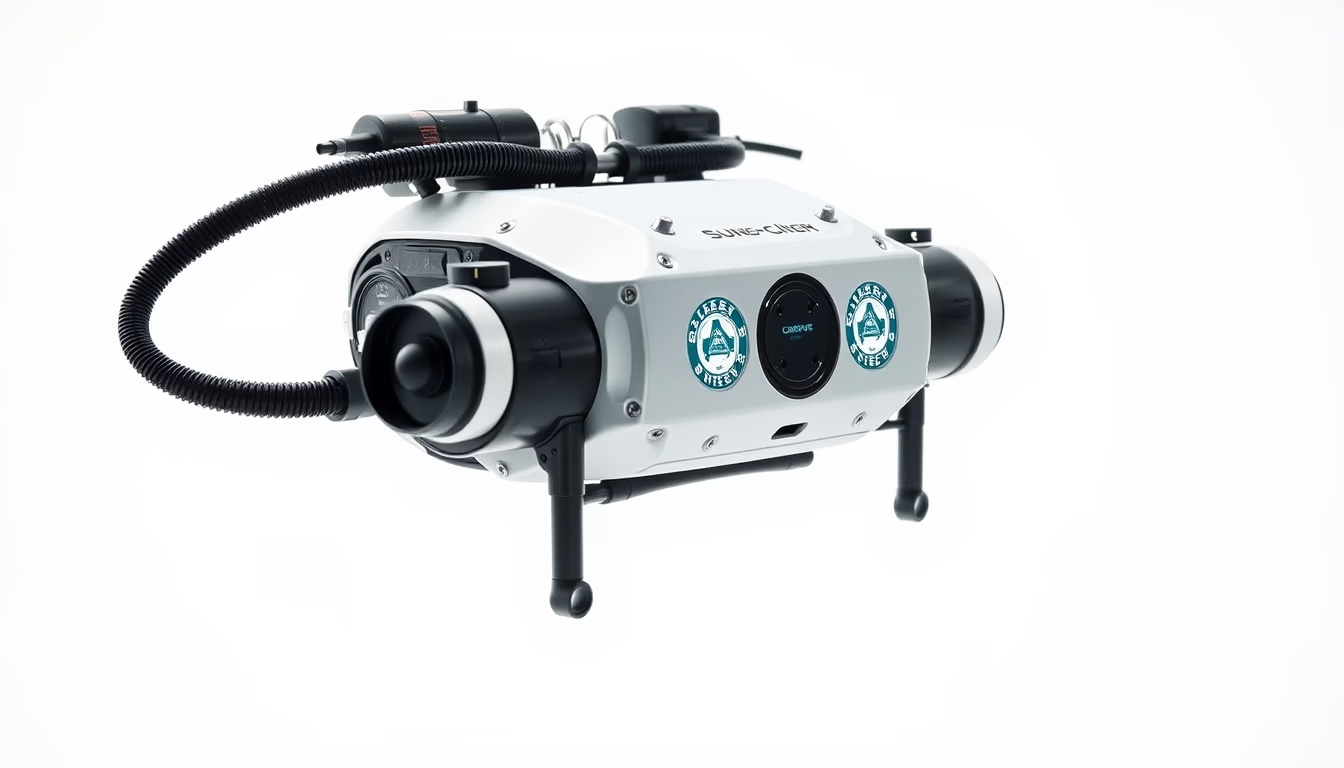
Underwater robots submersibles explore ocean depths for scientific research, industrial inspection, and resource extraction, operating in high-pressure environments.
About this subject
Underwater submersible robots are unmanned vehicles designed to operate in aquatic environments. They fall into two main categories: remotely operated vehicles (ROVs), controlled via tethered cables from the surface, and autonomous underwater vehicles (AUVs), which navigate without direct human intervention. Notable examples include the ROV Jason, used by the Woods Hole Oceanographic Institution to study hydrothermal vents, and the AUV Sentry, capable of high-resolution seafloor mapping. These devices have revolutionized oceanography, enabling access to depths of up to 6,000 meters, where pressures exceed 600 atmospheres.
In industry, underwater robots are vital for inspection and maintenance of subsea infrastructure. Oil and gas companies deploy ROVs to check pipelines, risers, and platforms on offshore fields, reducing human risk and operational costs. They are also used for installing submarine telecommunications and power cables, as well as in search and recovery operations. The precision of sensors and robotic arms allows complex tasks such as underwater welding and sample collection.
Key technical challenges include overcoming extreme pressure, limited communication underwater (radio waves do not propagate), and energy autonomy. ROVs rely on umbilical cables for power and real-time data; AUVs use rechargeable batteries and store data onboard. Materials like titanium and specialized polymers resist corrosion and pressure. Acoustic signals with low bandwidth remain the primary means of subsea communication, posing a bottleneck.
The future of underwater robots includes exploration of hydrothermal vents, polymetallic nodule mining, and marine ecosystem monitoring. The first ROV, CURV, was developed by the US Navy in the 1960s to retrieve lost torpedoes. Since then, technology has evolved into increasingly intelligent vehicles with onboard artificial intelligence for image processing and autonomous decision-making. The global subsea robotics market is expected to exceed $6 billion by 2026, driven by demand for offshore energy and environmental conservation.
Frequently Asked Questions
What is the difference between an ROV and an AUV?
An ROV (remotely operated vehicle) is controlled via a tether linking it to a surface station, providing power and real-time communication. An AUV (autonomous underwater vehicle) navigates via preprogrammed instructions or artificial intelligence without a tether, using onboard batteries and storing data for later retrieval.
How are underwater robots used in the oil industry?
They inspect pipelines, platforms, and subsea equipment, detect corrosion or leaks, perform maintenance, and assist in offshore infrastructure installation, minimizing diver risk and reducing operational costs.
What are the biggest challenges in operating underwater robots?
Key challenges include extreme pressure at great depths, requiring robust structures; limited communication, as radio waves do not propagate underwater, relying on acoustic signals or cables; and energy autonomy, since AUVs have limited mission time.
Direct URL
https://pub-c7d6a6ea828543ac903a74a341ccb2e1.r2.dev/imagens/underwater-robot-submersible-commercial-product-photography-p12.avifHow to credit
Include a visible link back to UtilizAí. Copy one of the snippets below:
<a href="https://xn--utiliza-eza.com/en/midia/imagens/underwater-robot-submersible-commercial-product-photography-p12">Underwater robot submersible</a> by <a href="https://xn--utiliza-eza.com">UtilizAí</a>, licensed under <a href="https://creativecommons.org/licenses/by/4.0/">CC BY 4.0</a>.
[Underwater robot submersible](https://xn--utiliza-eza.com/en/midia/imagens/underwater-robot-submersible-commercial-product-photography-p12) by [UtilizAí](https://xn--utiliza-eza.com), CC BY 4.0
License: CC-BY-4.0