Tilapia tanks indoor
1344×768 · AVIF · CC BY 4.0
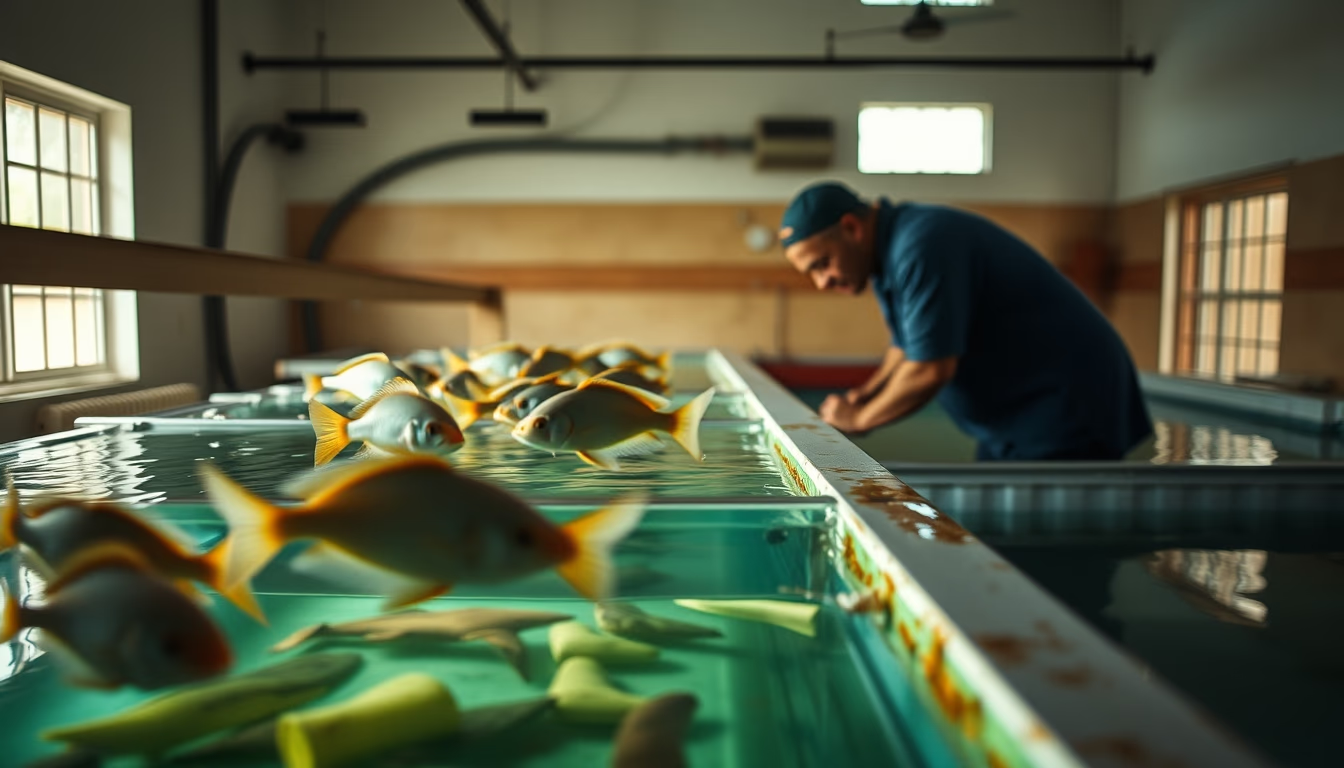
Indoor tilapia farming tanks: an intensive system revolutionizing Brazilian aquaculture with high productivity and environmental control.
About this subject
Tilapia (Oreochromis niloticus) is the most farmed fish in Brazil, accounting for over 60% of national aquaculture production. Indoor tanks, or Recirculating Aquaculture Systems (RAS), allow cultivation in controlled environments regardless of external weather. In these systems, water is constantly filtered and reoxygenated, reducing water consumption by up to 90% compared to traditional earthen ponds. Additionally, control over temperature, pH, and nutrients enables faster production cycles and disease prevention, resulting in higher-quality fillets.
Brazil is one of the world's largest tilapia producers, with highlights in the states of Paraná, São Paulo, and Santa Catarina. Indoor technology is expanding mainly in regions where land is scarce or where environmental restrictions limit pond construction. Companies like GeneSeas and Tilápia do Brasil invest in modular systems that can be installed in warehouses, allowing production close to consumer centers. This model reduces logistics costs and the carbon footprint of the final product.
A little-known fact is that tilapia is native to Africa and was introduced to Brazil in the 1970s for biological algae control. Today, the country is a reference in tilapia genetics, with strains selected for fast growth and cold tolerance. In indoor tanks, stocking density can reach 100 kg/m³, while in open ponds it ranges from 2 to 5 kg/m³. This efficiency requires rigorous water quality management and balanced feeding, usually with high-protein extruded feed.
The indoor tilapia market also has social impact: it creates specialized technical jobs in biology, aquaculture engineering, and environmental management. Controlled production allows certifications like the sustainable seafood label, meeting international market requirements. However, the high implementation cost (around R$1,500 to R$3,000 per cubic meter of tank) remains a barrier for small producers, being more common in medium to large enterprises.
Frequently Asked Questions
What are the main advantages of indoor tilapia tanks?
Advantages include up to 90% water reduction, full environmental control, higher stocking density, faster production cycles, and lower disease incidence.
Is indoor tilapia farming more expensive than traditional methods?
Yes, initial setup costs are high (R$1,500 to R$3,000 per m³), but operational costs can be offset by higher productivity and premium product prices.
Is indoor-farmed tilapia considered sustainable?
When well managed, indoor systems reduce environmental impact, save water, and allow sustainability certifications. However, they require electricity for pumping and filtration.
Direct URL
https://pub-c7d6a6ea828543ac903a74a341ccb2e1.r2.dev/imagens/tilapia-tanks-indoor-documentary-photography-fresh18.avifHow to credit
Include a visible link back to UtilizAí. Copy one of the snippets below:
<a href="https://xn--utiliza-eza.com/en/midia/imagens/tilapia-tanks-indoor-documentary-photography-fresh18">Tilapia tanks indoor</a> by <a href="https://xn--utiliza-eza.com">UtilizAí</a>, licensed under <a href="https://creativecommons.org/licenses/by/4.0/">CC BY 4.0</a>.
[Tilapia tanks indoor](https://xn--utiliza-eza.com/en/midia/imagens/tilapia-tanks-indoor-documentary-photography-fresh18) by [UtilizAí](https://xn--utiliza-eza.com), CC BY 4.0
License: CC-BY-4.0