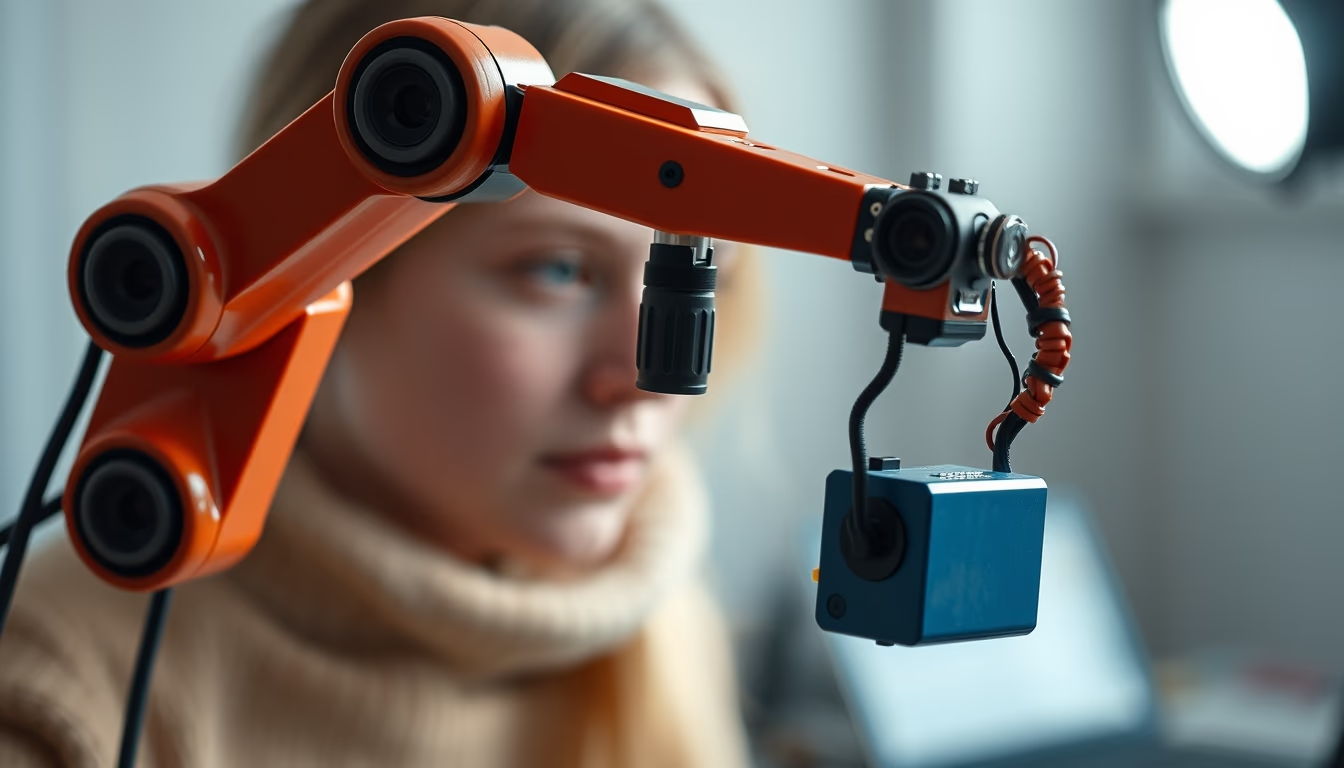
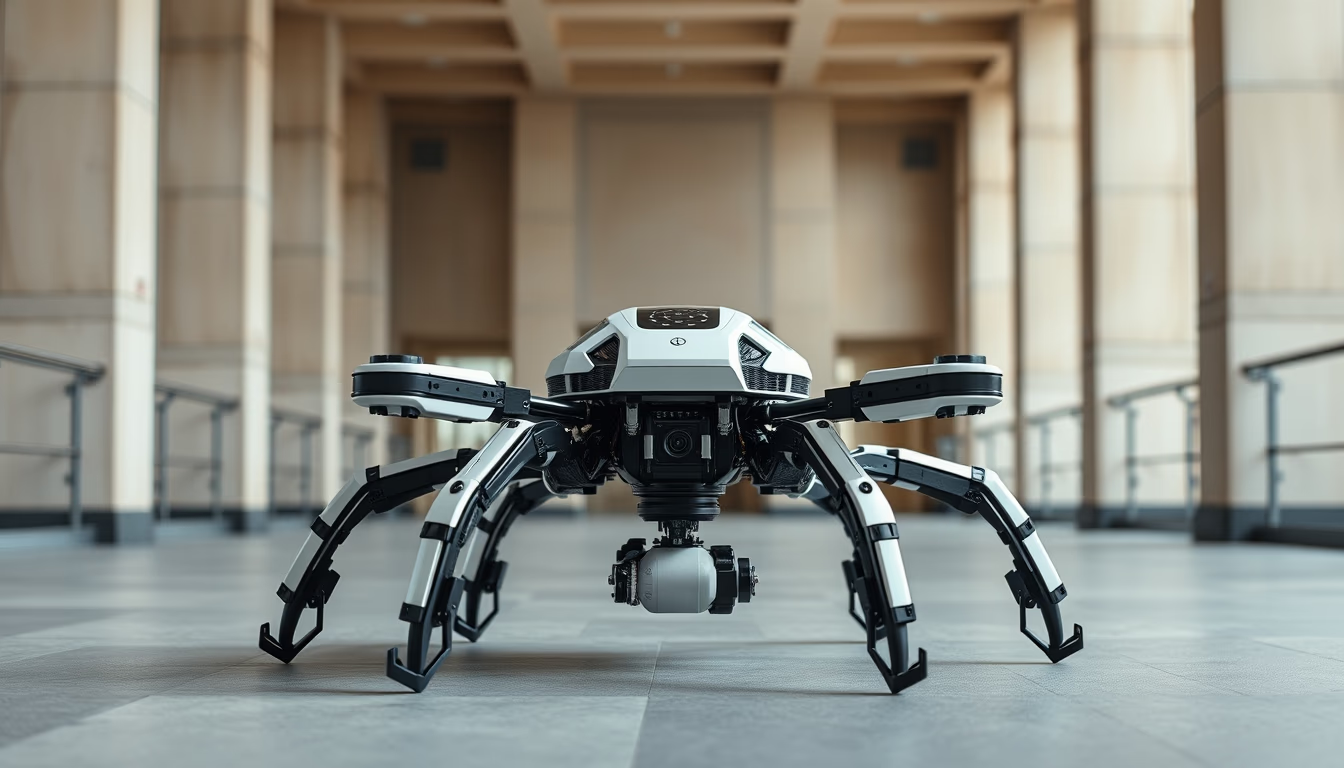
Surgical robot da vinci
1344×768 · AVIF · CC BY 4.0

The da Vinci surgical robot revolutionized medicine by enabling minimally invasive surgeries with millimeter precision and is widely used in Brazil.
About this subject
The da Vinci surgical system, developed by the American company Intuitive Surgical, is one of the world's most advanced robots for minimally invasive procedures. Composed of a surgeon console, robotic arms, and articulated instruments, it allows the surgeon to operate with natural hand movements translated into precise actions of the instruments inside the patient's body. The three-dimensional high-definition vision and magnification of up to 10 times provide a detailed view of the operative field.
Since its FDA approval in 2000, da Vinci has been used in over 10 million surgeries worldwide, covering areas such as urology, gynecology, cardiac and thoracic surgery. In Brazil, the robot is present in reference hospitals like Hospital Sírio-Libanês and Albert Einstein, where it is used for highly complex procedures such as prostatectomies and oncological surgeries. The technology reduces recovery time, bleeding, and postoperative complications, benefiting thousands of patients.
The robotic arms have joints that mimic the human wrist, allowing greater dexterity in confined spaces. Additionally, the system filters natural hand tremors, increasing safety. Each year, new software and hardware updates expand da Vinci's capabilities, including integration with artificial intelligence for real-time image analysis. Despite the high cost, estimated at around 2 million dollars per unit, the system has become more accessible through financing programs and public-private partnerships in Brazil.
Frequently Asked Questions
What are the main advantages of the da Vinci robot compared to traditional surgery?
The da Vinci robot offers greater precision, 3D magnified vision, articulated movements that surpass human limitations, and tremor filtering. This results in smaller incisions, less pain, faster recovery, and lower risk of complications.
Is the da Vinci robot used in Brazil? Where?
Yes, it is present in reference hospitals such as Hospital Sírio-Libanês, Albert Einstein, and Hospital das Clínicas de São Paulo. It is mainly used in urology, gynecology, and oncologic surgery.
How much does a robotic surgery with da Vinci cost?
The cost varies by hospital and complexity, but is generally higher than conventional surgery due to equipment and maintenance. In Brazil, the value can range from R$30,000 to R$100,000 depending on the procedure.
Direct URL
https://pub-c7d6a6ea828543ac903a74a341ccb2e1.r2.dev/imagens/surgical-robot-da-vinci-lo-fi-disposable-camera-p4.avifHow to credit
Include a visible link back to UtilizAí. Copy one of the snippets below:
<a href="https://xn--utiliza-eza.com/en/midia/imagens/surgical-robot-da-vinci-lo-fi-disposable-camera-p4">Surgical robot da vinci</a> by <a href="https://xn--utiliza-eza.com">UtilizAí</a>, licensed under <a href="https://creativecommons.org/licenses/by/4.0/">CC BY 4.0</a>.
[Surgical robot da vinci](https://xn--utiliza-eza.com/en/midia/imagens/surgical-robot-da-vinci-lo-fi-disposable-camera-p4) by [UtilizAí](https://xn--utiliza-eza.com), CC BY 4.0
License: CC-BY-4.0