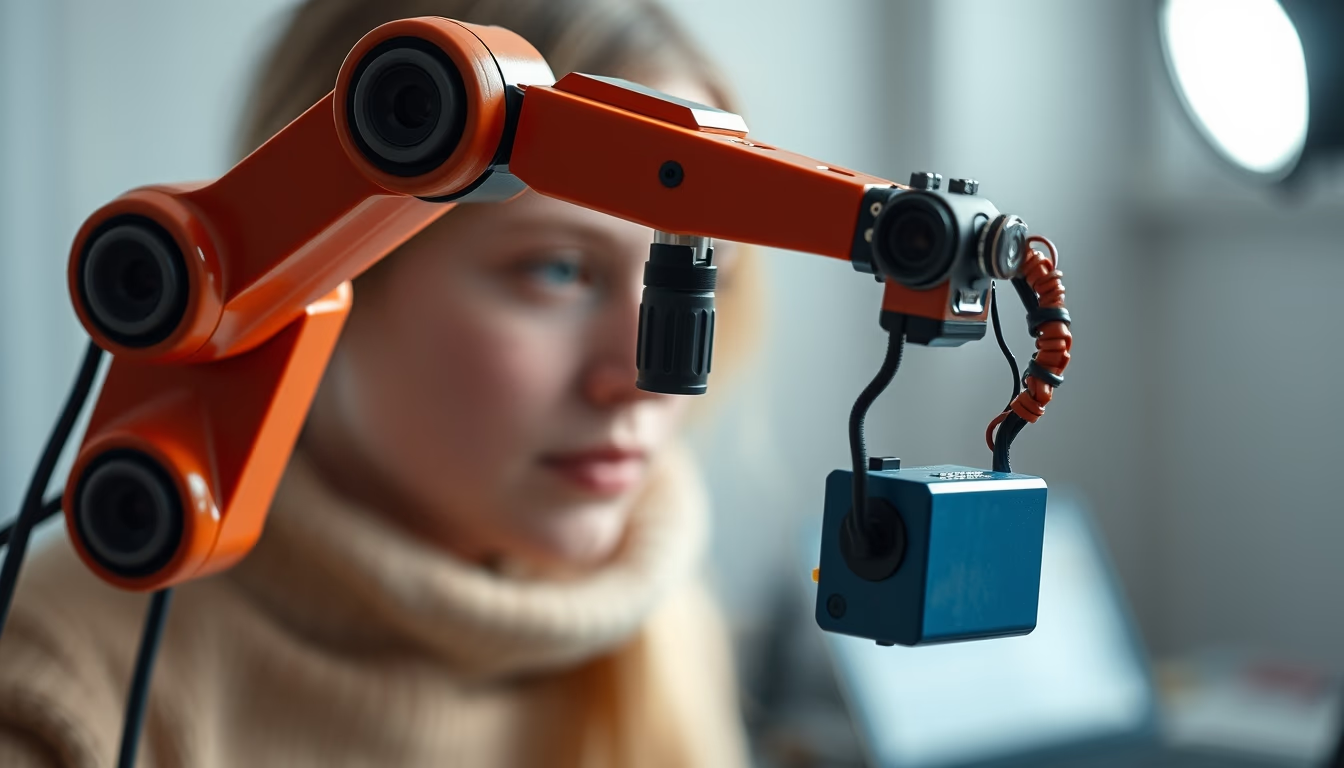
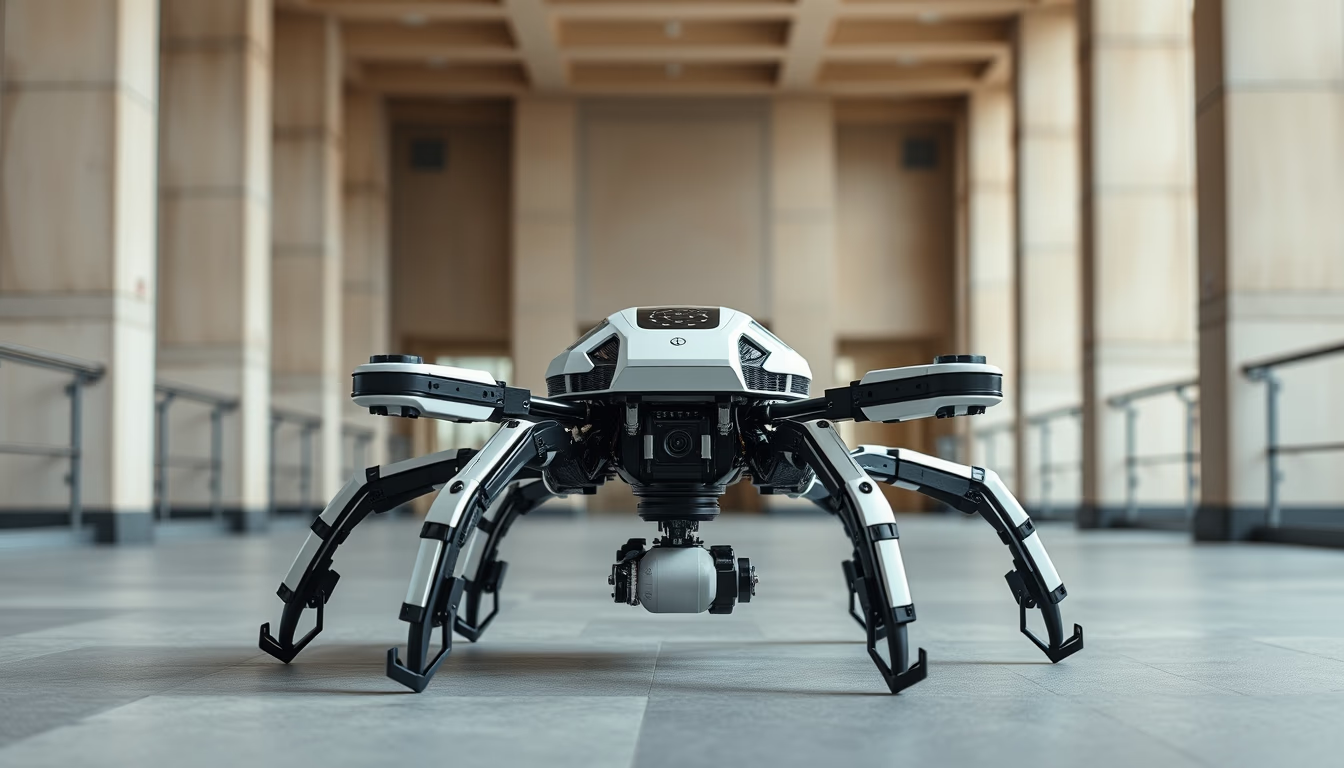
Surgical robot da vinci
1344×768 · AVIF · CC BY 4.0

The Da Vinci surgical robot is a high-precision robotic system used in minimally invasive surgeries, FDA-approved in 2000 and widely adopted globally.
About this subject
The Da Vinci surgical system, developed by Intuitive Surgical, has transformed surgical practice since its FDA approval in 2000. It enables surgeons to perform complex procedures through minimal incisions using articulated robotic arms and high-definition three-dimensional vision. The platform consists of a console where the surgeon sits, controlling the instruments with submillimeter precision, and a vision tower that provides magnified images of the operative field. Common applications include prostatectomies, hysterectomies, and cardiac and thoracic surgeries.
Da Vinci operates through robot-assisted surgery, translating the surgeon's natural hand movements into more precise, filtered motions of the instruments. This reduces tremors and allows greater dexterity in confined spaces. Studies show that patients undergoing Da Vinci surgeries often experience less pain, less blood loss, and faster recovery compared to traditional open surgery. As of 2023, over 7,000 Da Vinci systems are installed worldwide, with more than 10 million procedures performed.
The system's evolution includes models like the Da Vinci X, Xi, and SP, the latter featuring a single articulated arm for access to hard-to-reach areas. Despite benefits, high equipment costs (US$0.5 million to US$2.5 million) and the need for specialized training limit its adoption in developing countries. In Brazil, leading hospitals such as Hospital Sírio-Libanês and Albert Einstein use the system, primarily in urology and gynecology. The technology continues to advance, incorporating artificial intelligence and augmented reality to further enhance precision and safety.
Frequently Asked Questions
What are the main advantages of the Da Vinci robot over traditional surgery?
The Da Vinci offers smaller incisions, less blood loss, reduced postoperative pain, and faster recovery. The magnified 3D view and precise movements lower risks and complications.
In which medical specialties is the Da Vinci robot most commonly used?
It is widely used in urology (prostatectomy), gynecology (hysterectomy), cardiac, thoracic, and general surgery, as well as head and neck procedures.
Does the Da Vinci robot completely replace the surgeon?
No. The surgeon fully controls the robot from the console. The system replicates their movements with greater precision, but decision-making and medical expertise remain human.
Direct URL
https://pub-c7d6a6ea828543ac903a74a341ccb2e1.r2.dev/imagens/surgical-robot-da-vinci-high-fashion-editorial-p1.avifHow to credit
Include a visible link back to UtilizAí. Copy one of the snippets below:
<a href="https://xn--utiliza-eza.com/en/midia/imagens/surgical-robot-da-vinci-high-fashion-editorial-p1">Surgical robot da vinci</a> by <a href="https://xn--utiliza-eza.com">UtilizAí</a>, licensed under <a href="https://creativecommons.org/licenses/by/4.0/">CC BY 4.0</a>.
[Surgical robot da vinci](https://xn--utiliza-eza.com/en/midia/imagens/surgical-robot-da-vinci-high-fashion-editorial-p1) by [UtilizAí](https://xn--utiliza-eza.com), CC BY 4.0
License: CC-BY-4.0