Stained glass window light
1344×768 · AVIF · CC BY 4.0
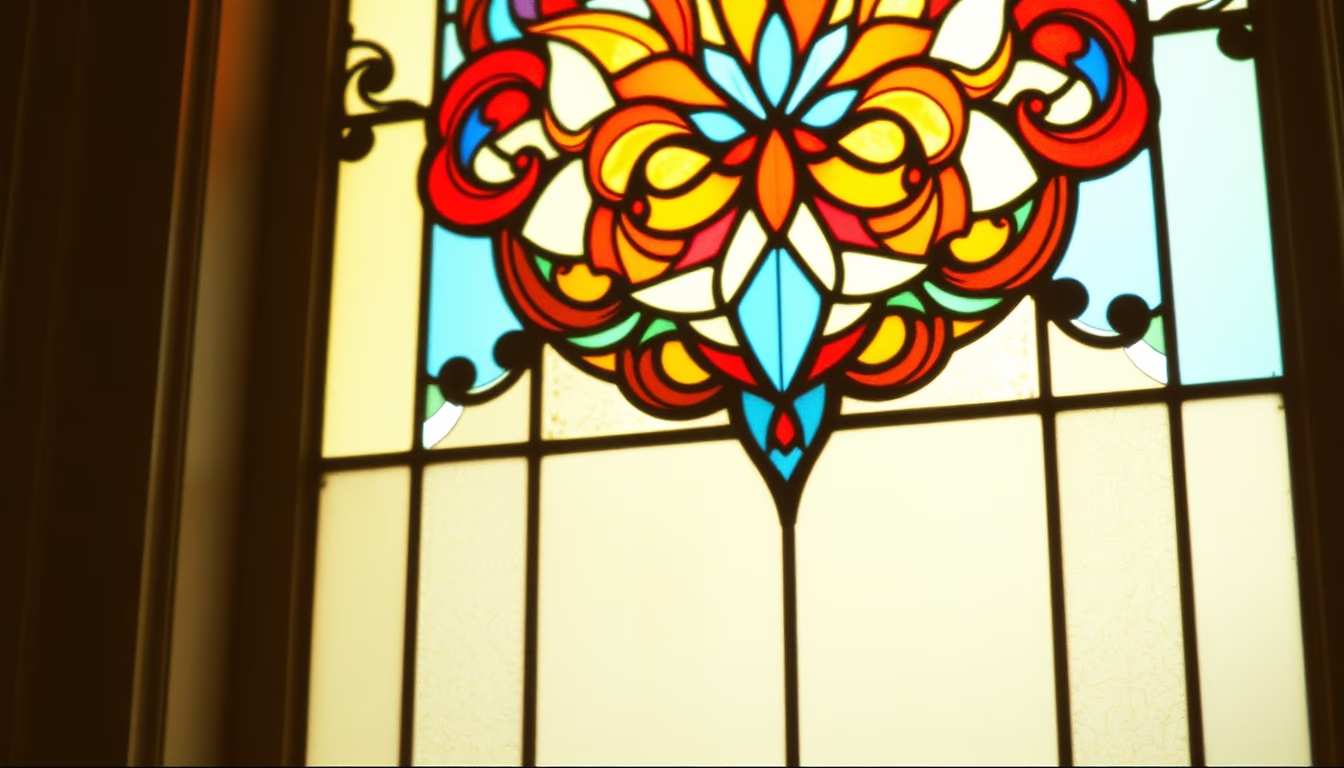
Colorful stained glass windows create luminous effects that transform sacred and secular spaces, blending art and faith with centuries-old techniques.
About this subject
Stained glass windows are panels of colored glass held together by lead strips, primarily used in churches and cathedrals since the Middle Ages. The technique reached its peak in Europe between the 12th and 16th centuries, with famous examples such as the rose windows of Notre-Dame Cathedral in Paris (13th century) and the Sainte-Chapelle, also in Paris, which features 15 windows covering 600 m² of surface. Each color was obtained by adding metallic oxides to molten glass: cobalt for blue, manganese for purple, gold for red.
Beyond aesthetics, medieval stained glass served a didactic purpose: it told biblical stories to a largely illiterate population. In Brazil, stained glass developed mainly during the Neo-Gothic period, notably in the São Paulo Cathedral (inaugurated in 1964 with windows by German artist Hans U. K. Schiller) and the Candelária Church in Rio de Janeiro. The handmade craft declined with industrialization but saw a revival in the Arts & Crafts movement and Art Nouveau, with artists like Louis Comfort Tiffany in the USA, who created opalescent sheets and the copper foil method.
Natural light passing through stained glass produces a changing chromatic spectacle throughout the day, influenced by the sun's position and glass thickness. This phenomenon has inspired contemporary artists to use stained glass not only in religious buildings but also in museums and public spaces. The lo-fi disposable camera effect, popular on social media, evokes the grainy texture and desaturated colors reminiscent of light filtered through old glass, creating a nostalgic feel.
Frequently Asked Questions
How are stained glass windows made?
Traditionally, colored glass is cut into shapes, assembled with lead H-shaped channels, and soldered at joints. The panel is then installed in openings with metal supports. Modern techniques include copper foil and glass fusing.
What was the original purpose of stained glass in medieval churches?
Besides decoration, stained glass educated illiterate congregations by depicting biblical scenes and saints. It also symbolized divine light and created a reverent atmosphere.
Where are the most famous stained glass windows in Brazil?
At the São Paulo Cathedral and Candelária Church in Rio de Janeiro. Notable examples also exist at the Palácio do Planalto (Brasília) and the Church of São Francisco de Assis in Belo Horizonte.
Direct URL
https://pub-c7d6a6ea828543ac903a74a341ccb2e1.r2.dev/imagens/stained-glass-window-light-lo-fi-disposable-camera-p2.avifHow to credit
Include a visible link back to UtilizAí. Copy one of the snippets below:
<a href="https://xn--utiliza-eza.com/en/midia/imagens/stained-glass-window-light-lo-fi-disposable-camera-p2">Stained glass window light</a> by <a href="https://xn--utiliza-eza.com">UtilizAí</a>, licensed under <a href="https://creativecommons.org/licenses/by/4.0/">CC BY 4.0</a>.
[Stained glass window light](https://xn--utiliza-eza.com/en/midia/imagens/stained-glass-window-light-lo-fi-disposable-camera-p2) by [UtilizAí](https://xn--utiliza-eza.com), CC BY 4.0
License: CC-BY-4.0