Stained glass window light
1344×768 · AVIF · CC BY 4.0
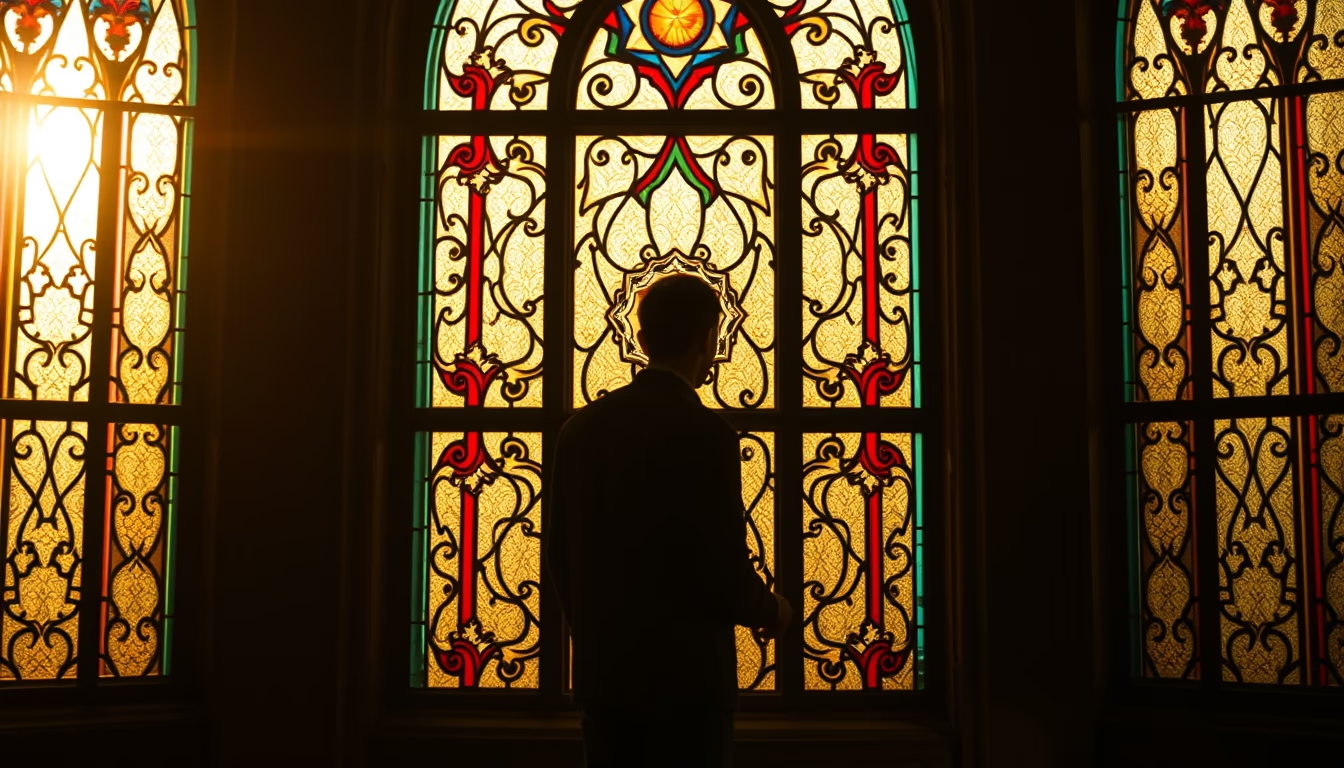
Colorful stained glass filters natural light, creating luminous effects that transform architectural spaces and tell stories.
About this subject
Stained glass art dates back to the Middle Ages, when Gothic cathedrals like Chartres in France used colored glass panels to narrate biblical stories to a largely illiterate population. The technique involves cutting pieces of glass tinted with metal oxides (cobalt for blue, manganese for purple, iron for green) and joining them with lead strips to form complex designs. St. Peter's Basilica in Vatican City features a massive circular stained glass window called the Rose Window, symbolizing divine light. In Brazil, the Pampulha Church in Belo Horizonte, designed by Oscar Niemeyer, boasts abstract stained glass by Austrian artist Conrad Fetcher, introducing a modern style that breaks with traditional religious iconography. Warm colors like red and gold dominate Baroque stained glass, while deep blues characterize the Gothic period. Natural light passing through the glass shifts throughout the day, creating a dynamic and contemplative atmosphere. Contemporary artists such as Dale Chihuly have expanded the technique into sculptures and installations, but the essence remains: transforming light into color and emotion. Stained glass is also common in subway stations, such as Luz Station in São Paulo, which honors Japanese immigration with glass panels. Preserving these works requires knowledge of chemistry and restoration, as ancient glass is thicker and contains impurities that give it a unique texture.
Frequently Asked Questions
How were stained glass windows made in the Middle Ages?
Craftsmen cut glass colored with metal oxides, joined pieces with lead strips, and mounted the panel in an iron frame. It was then installed in church windows.
What is the importance of stained glass in Gothic architecture?
Beyond decoration, stained glass served a didactic purpose, telling biblical stories to the faithful. It also symbolized divine light and enhanced the spiritual atmosphere of cathedrals.
Are there famous stained glass works in Brazil?
Yes, notably the stained glass at Pampulha Church in Belo Horizonte by Conrad Fetcher and at Luz Station in São Paulo's subway, featuring themes of Japanese immigration.
Direct URL
https://pub-c7d6a6ea828543ac903a74a341ccb2e1.r2.dev/imagens/stained-glass-window-light-cinematic-wide-shot-p4.avifHow to credit
Include a visible link back to UtilizAí. Copy one of the snippets below:
<a href="https://xn--utiliza-eza.com/en/midia/imagens/stained-glass-window-light-cinematic-wide-shot-p4">Stained glass window light</a> by <a href="https://xn--utiliza-eza.com">UtilizAí</a>, licensed under <a href="https://creativecommons.org/licenses/by/4.0/">CC BY 4.0</a>.
[Stained glass window light](https://xn--utiliza-eza.com/en/midia/imagens/stained-glass-window-light-cinematic-wide-shot-p4) by [UtilizAí](https://xn--utiliza-eza.com), CC BY 4.0
License: CC-BY-4.0