Spray paint graffiti
1344×768 · AVIF · CC BY 4.0
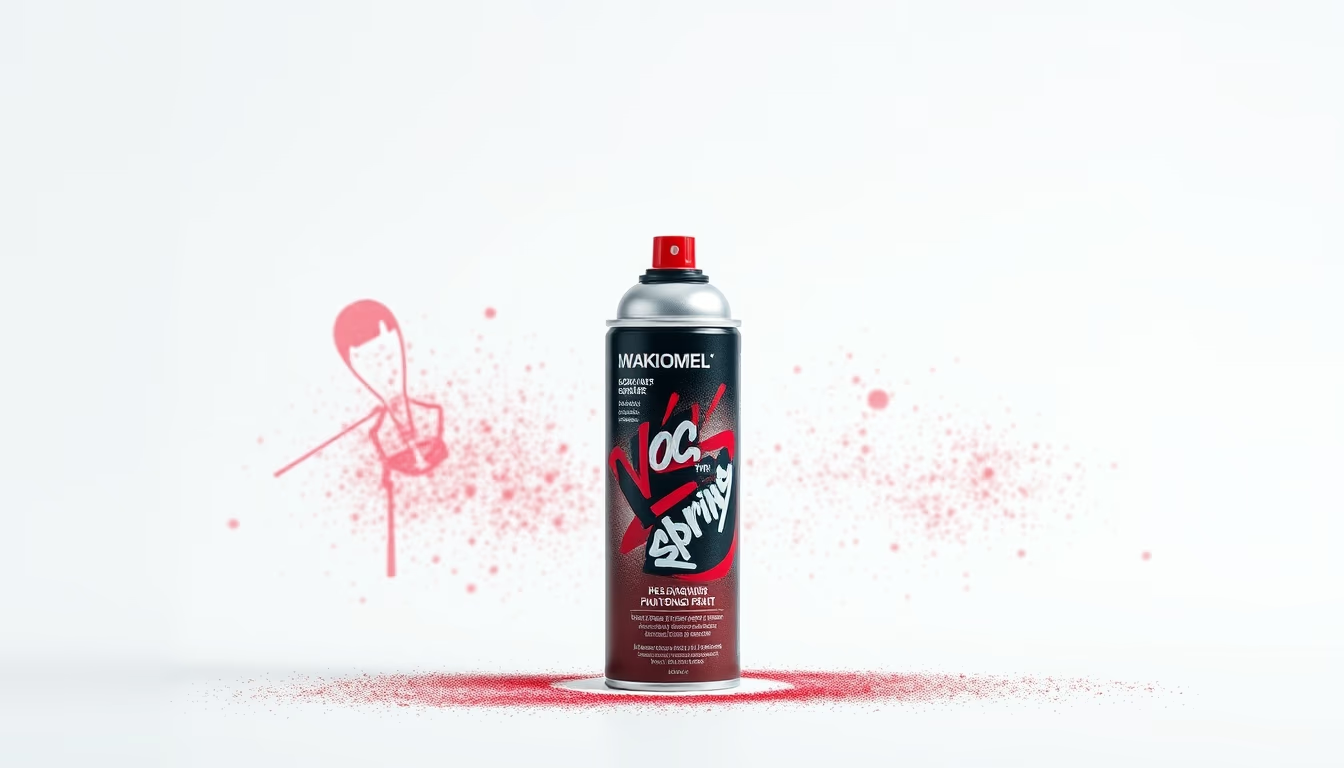
Spray paint graffiti is an urban art form that turns walls and façades into vibrant canvases, carrying social messages and creative expression.
About this subject
Spray paint graffiti, a technique using aerosol cans to create images on urban surfaces, emerged in Philadelphia and New York during the 1960s and 1970s. Initially linked to hip-hop culture and gang territory marking, it evolved into a recognized contemporary art form, with exhibitions in galleries and museums. Artists like Basquiat and Keith Haring elevated spray art to high culture, while in Brazil, names like Os Gêmeos and Eduardo Kobra transformed cityscapes with giant, colorful murals.
The technique requires mastery of pressure, distance, and movement to control paint flow, allowing everything from fine lines to broad fills. Modern aerosols feature high-quality pigments and adjustable valves, enabling precision and varied effects such as gradients and textures. A work's durability depends on surface preparation and protective sealants, but many graffiti pieces are ephemeral, subject to weather or removal by authorities.
Culturally, spray paint graffiti is a tool for protest and identity affirmation. During apartheid in South Africa, it served as visual resistance. In Europe, the Berlin Wall was covered in political and artistic messages. Today, festivals like Meeting of Styles promote global artist exchange, and cities such as São Paulo and Berlin are considered graffiti capitals. Legalization of specific walls has reduced stigma, transforming taggers into recognized artists.
Interestingly, spray paint was invented in 1949 for industrial use, and its artistic application was pioneered by Mexican muralist David Alfaro Siqueiros, who experimented with airbrushes. The market for artistic spray paints grows annually, with brands like Montana Colors and MTN developing specialized colors and caps. Despite its popularity, graffiti still faces legal challenges and prejudice in many cities, sparking debates about public property and free expression.
Frequently Asked Questions
What is the difference between graffiti and tagging?
Graffiti typically involves figurative imagery, stylized letters, and colors, often considered urban art. Tagging focuses on signatures or quick messages, usually with protest or vandalism connotations.
Which spray paint brands are most used by graffiti artists?
Brands like Montana Colors, MTN (Montana Cans), and Molotow are popular for high pigmentation, color variety, and interchangeable caps that allow different line widths.
Is graffiti legal anywhere?
Yes. Many cities create legal murals or free graffiti zones, such as the Berlin Wall East Side Gallery and Beco do Batman in São Paulo, where artists can paint without prior permission.
Direct URL
https://pub-c7d6a6ea828543ac903a74a341ccb2e1.r2.dev/imagens/spray-paint-graffiti-commercial-product-photography-p2.avifHow to credit
Include a visible link back to UtilizAí. Copy one of the snippets below:
<a href="https://xn--utiliza-eza.com/en/midia/imagens/spray-paint-graffiti-commercial-product-photography-p2">Spray paint graffiti</a> by <a href="https://xn--utiliza-eza.com">UtilizAí</a>, licensed under <a href="https://creativecommons.org/licenses/by/4.0/">CC BY 4.0</a>.
[Spray paint graffiti](https://xn--utiliza-eza.com/en/midia/imagens/spray-paint-graffiti-commercial-product-photography-p2) by [UtilizAí](https://xn--utiliza-eza.com), CC BY 4.0
License: CC-BY-4.0