Solar panel farm in dry Brazilian landscape
1344×768 · AVIF · CC BY 4.0
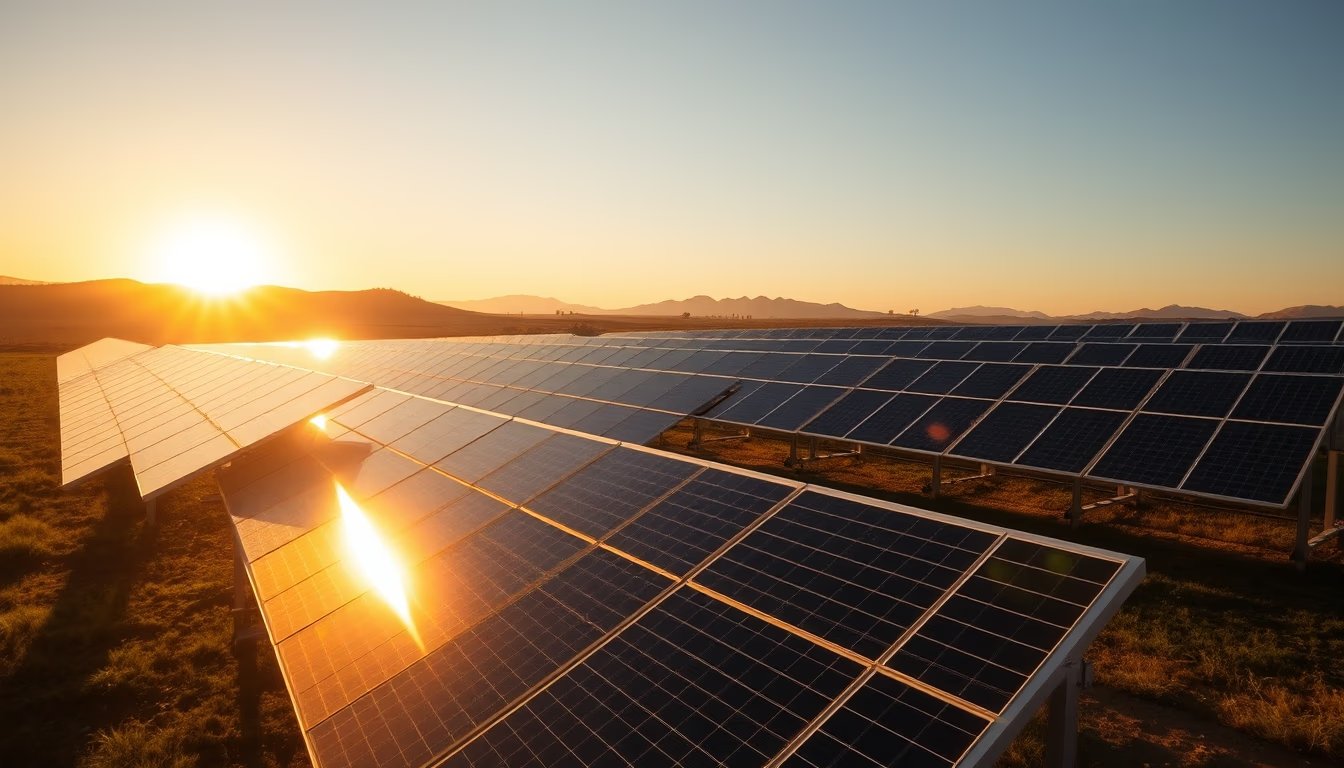
Solar photovoltaic farm in the Brazilian semi-arid region generates renewable energy and contributes to the national electricity grid.
About this subject
The Brazilian sertão, a semi-arid region covering much of the Northeast, has become a hub for photovoltaic solar energy generation. Solar farms installed in this area take advantage of high solar radiation levels, exceeding 2,000 kWh/m² per year in some locations, among the highest in the world. The deployment of these parks not only diversifies Brazil's electricity matrix, which is predominantly hydroelectric, but also promotes economic development in historically underserved regions.
Solar energy in Brazil has grown exponentially over the past decade. According to the Brazilian Solar Photovoltaic Energy Association (ABSOLAR), by 2023 the country surpassed 30 GW of installed capacity, including centralized and distributed generation. Large-scale plants in the sertão, such as those in Juazeiro (Bahia) and Pirapora (Minas Gerais), exemplify projects combining cutting-edge technology with adaptation to the dry climate. Panels are mounted on fixed structures or trackers that follow the sun, and the region's characteristic dust requires periodic cleaning systems to maintain efficiency.
Beyond environmental benefits, solar power in the semi-arid region reduces reliance on fossil-fuel thermal plants, which are activated during prolonged droughts when hydroelectric dams operate at low capacity. Solar generation also complements wind power, as northeastern winds are stronger at night while the sun shines during the day. This creates a more stable generation profile for the National Interconnected System (SIN).
Interestingly, the sertão is not only an energy production site but also a natural laboratory for research on panel efficiency under high temperatures. Studies show that extreme heat can reduce photovoltaic cell performance, spurring the development of cooling technologies and more resilient materials. Thus, the arid landscape of the sertão, once associated solely with drought and poverty, becomes a symbol of innovation and sustainability.
Frequently Asked Questions
Why is the Brazilian sertão ideal for solar energy?
The sertão receives high solar radiation, exceeding 2,000 kWh/m² per year, and has low cloud cover, maximizing photovoltaic generation. Additionally, the availability of flat, low-cost land facilitates the installation of large plants.
What is Brazil's installed solar energy capacity?
By 2023, Brazil surpassed 30 GW of installed solar capacity, including centralized (large plants) and distributed generation (rooftops and small systems). The country is a global leader in the sector.
How does dust in the sertão affect solar panels?
Accumulated dust reduces panel efficiency by blocking sunlight. Therefore, plants in the sertão have periodic cleaning systems, which may use water or automated robots to maintain optimal performance.
Direct URL
https://pub-c7d6a6ea828543ac903a74a341ccb2e1.r2.dev/imagens/solar-panel-farm-in-brazilian-sertao-landscape-wide-late-afternoon-2.avifHow to credit
Include a visible link back to UtilizAí. Copy one of the snippets below:
<a href="https://xn--utiliza-eza.com/en/midia/imagens/solar-panel-farm-in-brazilian-sertao-landscape-wide-late-afternoon-2">Solar panel farm in dry Brazilian landscape</a> by <a href="https://xn--utiliza-eza.com">UtilizAí</a>, licensed under <a href="https://creativecommons.org/licenses/by/4.0/">CC BY 4.0</a>.
[Solar panel farm in dry Brazilian landscape](https://xn--utiliza-eza.com/en/midia/imagens/solar-panel-farm-in-brazilian-sertao-landscape-wide-late-afternoon-2) by [UtilizAí](https://xn--utiliza-eza.com), CC BY 4.0
License: CC-BY-4.0