Solar panel farm in dry Brazilian landscape
1344×768 · AVIF · CC BY 4.0
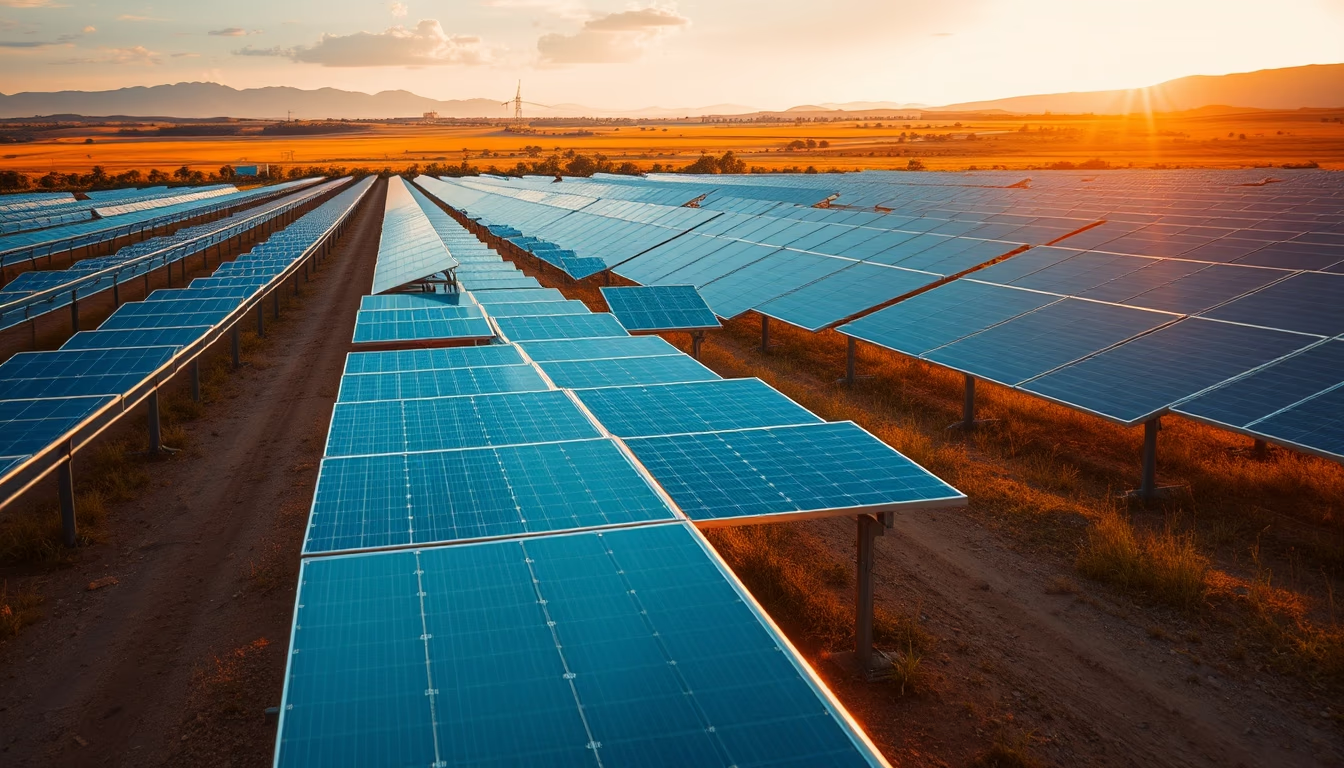
Solar photovoltaic plant in Brazil's semi-arid hinterland, leveraging high irradiation to generate clean energy and boost the local economy.
About this subject
Brazil's sertão, a semi-arid region covering much of the Northeast, has become a hub for solar energy due to its high solar radiation levels, among the highest in the world. Solar photovoltaic plants, like the one depicted, occupy vast tracts of land, often in areas previously considered unproductive for agriculture. These installations convert sunlight directly into electricity using silicon panels, contributing to Brazil's energy matrix, which is already one of the most renewable globally.
The deployment of solar farms in the sertão brings significant socioeconomic impacts. It creates jobs during construction and operation, attracts investment, and can reduce dependence on hydroelectric plants during droughts. Brazil's Northeast region concentrates over half of the country's installed solar capacity, according to data from the National Electric Energy Agency (ANEEL). Moreover, the generated energy is often transmitted to distant consumer centers, such as São Paulo and Rio de Janeiro, via high-voltage transmission lines.
The sertão landscape, with its caatinga vegetation and hot, dry climate, offers ideal conditions for solar generation. Low cloud cover and minimal seasonal variation in insolation ensure stable year-round production. However, dust and sand can reduce panel efficiency, requiring periodic cleaning. Solar tracking technologies, which follow the sun's movement, are common in these parks to maximize energy capture, increasing efficiency by up to 25% compared to fixed systems.
The growth of solar energy in Brazil is driven by energy auctions and incentive policies, such as tax reductions for photovoltaic equipment. In 2023, solar power surpassed 30 GW of installed capacity in the country, according to the Brazilian Solar Photovoltaic Energy Association (ABSOLAR). The sertão, with its abundant sunshine, has become a symbol of the energy transition, turning a climatic challenge into an opportunity for sustainable development.
Frequently Asked Questions
Why is the Brazilian sertão ideal for solar energy?
The sertão has high solar radiation levels, low cloud cover, and minimal seasonal variation in insolation, ensuring stable year-round generation. These conditions are among the best in the world for photovoltaic production.
What are the economic benefits of solar energy in the sertão?
Solar farms create direct and indirect jobs, attract investments, increase municipal tax revenue, and can reduce energy costs for local consumers, while diversifying the regional energy matrix.
Does solar energy in the sertão face environmental challenges?
Yes, dust and sand can reduce panel efficiency, requiring frequent cleaning. Additionally, installing large plants requires planning to minimize impacts on native caatinga vegetation and local wildlife.
Direct URL
https://pub-c7d6a6ea828543ac903a74a341ccb2e1.r2.dev/imagens/solar-panel-farm-in-brazilian-sertao-landscape-wide-late-afternoon.avifHow to credit
Include a visible link back to UtilizAí. Copy one of the snippets below:
<a href="https://xn--utiliza-eza.com/en/midia/imagens/solar-panel-farm-in-brazilian-sertao-landscape-wide-late-afternoon">Solar panel farm in dry Brazilian landscape</a> by <a href="https://xn--utiliza-eza.com">UtilizAí</a>, licensed under <a href="https://creativecommons.org/licenses/by/4.0/">CC BY 4.0</a>.
[Solar panel farm in dry Brazilian landscape](https://xn--utiliza-eza.com/en/midia/imagens/solar-panel-farm-in-brazilian-sertao-landscape-wide-late-afternoon) by [UtilizAí](https://xn--utiliza-eza.com), CC BY 4.0
License: CC-BY-4.0