Solar panel farm in dry Brazilian landscape
1344×768 · AVIF · CC BY 4.0
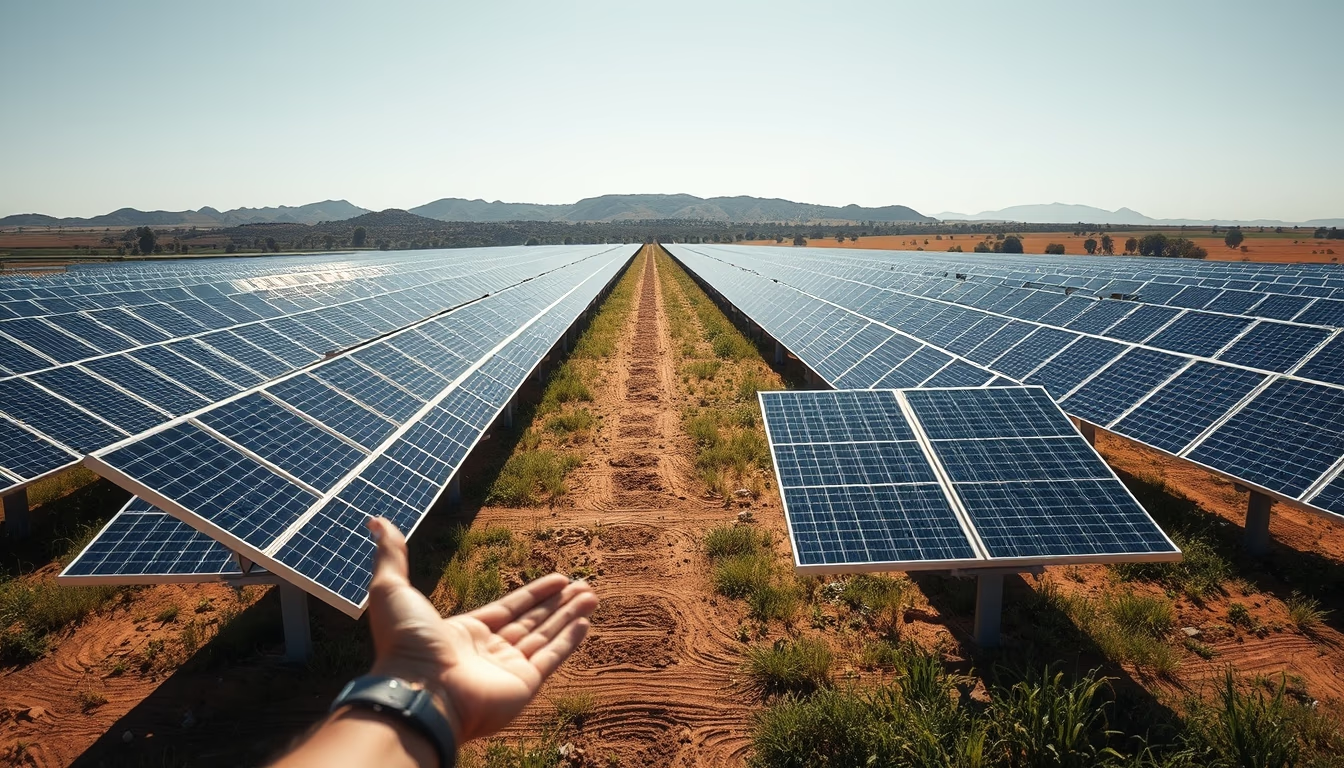
Solar panel farm in the Brazilian sertão, generating renewable energy amidst the arid, sun-drenched landscape.
About this subject
The Brazilian sertão, a semi-arid region covering much of the Northeast, is known for its dry climate, caatinga vegetation, and high solar incidence. This characteristic makes the area ideal for photovoltaic energy generation, turning a climatic challenge into a sustainable opportunity. Large solar plants, such as those installed in the states of Bahia, Pernambuco, and Piauí, harness intense solar radiation to produce electricity, contributing to the national energy matrix.
Solar energy in Brazil has grown exponentially. In 2023, the country surpassed 30 GW of installed capacity, with solar farms representing a significant share. The sertão, with low population density and available land, hosts large-scale projects that generate local jobs and regional development. Installing solar panels also helps reduce dependence on hydroelectric plants, especially during prolonged droughts.
Interestingly, the implementation of solar farms in the sertão can coexist with traditional activities such as livestock and rainfed agriculture. In some cases, sheep grazing is done between rows of panels, controlling vegetation without harming generation. This integration demonstrates how technology can adapt to the local environment, respecting the caatinga ecosystem and culture.
Beyond energy benefits, solar parks in the sertão have a striking visual impact: symmetrical rows of bluish panels contrast with the reddish soil and clear sky. This landscape, once dominated by drought, now symbolizes innovation and sustainability, attracting investments and positioning Brazil as a protagonist in the global energy transition.
Frequently Asked Questions
Why is the sertão suitable for solar farms?
The sertão has high solar incidence year-round, low cloud cover, and vast, flat, low-cost land ideal for photovoltaic panel installation.
How does solar energy impact the development of the Northeast?
It creates direct and indirect jobs, attracts investments, diversifies the energy matrix, and reduces dependence on hydroelectric plants affected by droughts.
Can solar farms coexist with livestock?
Yes, in agrivoltaic systems, sheep graze between panels, controlling vegetation and providing extra income for farmers.
Direct URL
https://pub-c7d6a6ea828543ac903a74a341ccb2e1.r2.dev/imagens/solar-panel-farm-in-brazilian-sertao-landscape-symmetric-bright-midday-5.avifHow to credit
Include a visible link back to UtilizAí. Copy one of the snippets below:
<a href="https://xn--utiliza-eza.com/en/midia/imagens/solar-panel-farm-in-brazilian-sertao-landscape-symmetric-bright-midday-5">Solar panel farm in dry Brazilian landscape</a> by <a href="https://xn--utiliza-eza.com">UtilizAí</a>, licensed under <a href="https://creativecommons.org/licenses/by/4.0/">CC BY 4.0</a>.
[Solar panel farm in dry Brazilian landscape](https://xn--utiliza-eza.com/en/midia/imagens/solar-panel-farm-in-brazilian-sertao-landscape-symmetric-bright-midday-5) by [UtilizAí](https://xn--utiliza-eza.com), CC BY 4.0
License: CC-BY-4.0