Solar panel farm in dry Brazilian landscape
1344×768 · AVIF · CC BY 4.0
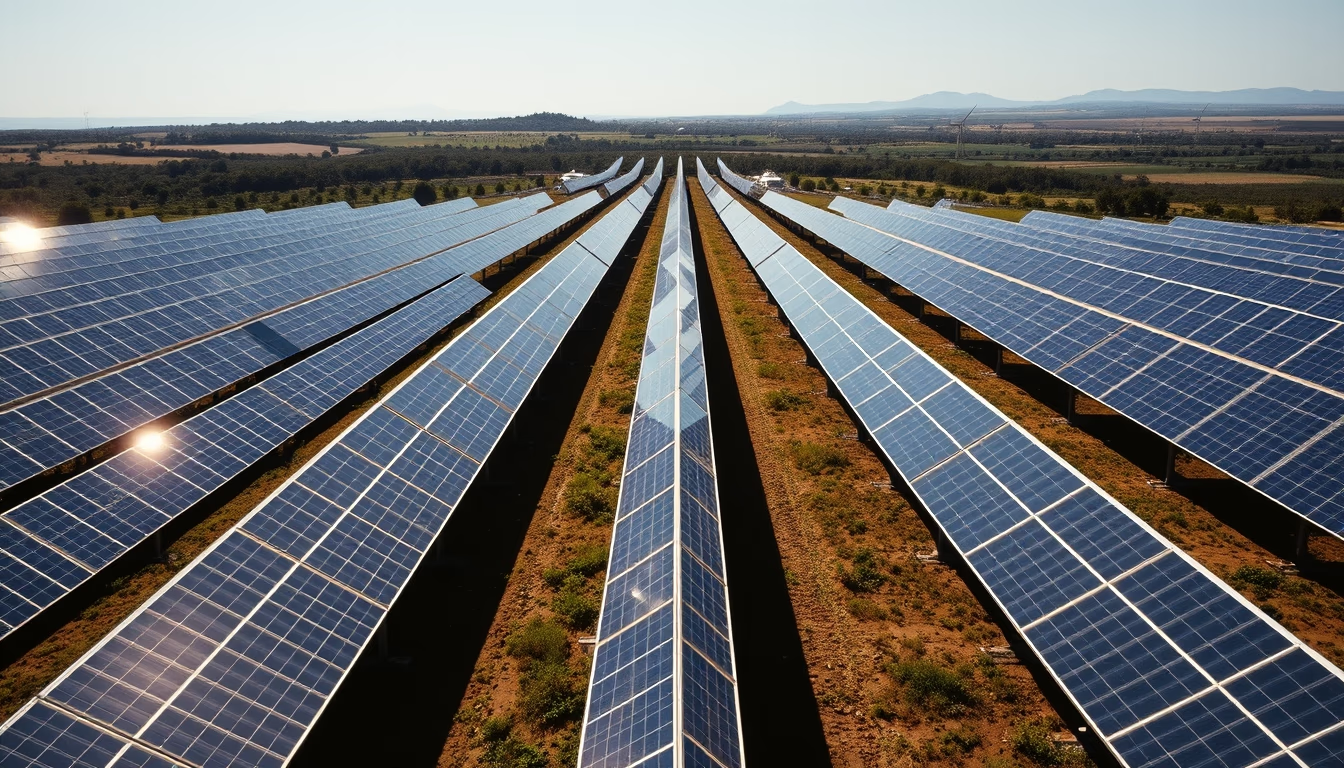
Solar farm in the Brazilian sertão: clean energy transforms the semi-arid landscape with symmetric photovoltaic panels under the intense midday sun.
About this subject
The Brazilian sertão, a semi-arid region covering much of the Northeast, has become a strategic hub for solar energy generation. With average solar irradiation exceeding 2,000 kWh/m² per year, the sertão offers ideal conditions for large-scale photovoltaic farms. The image depicts a typical solar plant, with symmetric rows of panels arranged on flat, arid land under the intense midday sun, when generation peaks.
Installing solar parks in the sertão represents an economic and social transformation. Previously dependent on subsistence agriculture and plagued by prolonged droughts, the region now attracts renewable energy investments. Projects such as the Janaúba Solar Complex in Minas Gerais and the São Gonçalo Solar Plant in Piauí are among the largest in Latin America. These ventures generate local jobs, income for landowners, and power for the National Interconnected System.
The choice of the sertão for solar farms is no coincidence. Low cloud cover, high direct solar radiation, and vast expanses of flat, low-cost land make the region globally competitive. Moreover, solar energy helps diversify Brazil's electricity matrix, historically reliant on hydroelectric dams. During droughts that reduce hydro capacity, solar generation partially offsets the shortfall, enhancing the country's energy security.
Interestingly, the sertão also holds one of Brazil's largest wind potentials, and hybrid parks (solar + wind) are being developed. Combining these complementary sources optimizes transmission infrastructure and reduces intermittency. With continuously falling photovoltaic panel costs, solar capacity expansion in the sertão is expected to accelerate in coming years, solidifying the region as a clean energy hub.
Frequently Asked Questions
Why is the Brazilian sertão ideal for solar energy?
The sertão has high solar irradiation (over 2,000 kWh/m²/year), low cloud cover, and vast flat areas at low cost, perfect conditions for photovoltaic plants.
What are the largest solar parks in the sertão?
Examples include the Janaúba Solar Complex (MG) and the São Gonçalo Solar Plant (PI), both among the largest in Latin America, with hundreds of megawatts of capacity.
How does solar energy benefit the local economy?
It creates jobs in construction and operation, pays land leases to rural owners, and attracts investments that diversify the economy, previously dependent on rain-fed agriculture.
Direct URL
https://pub-c7d6a6ea828543ac903a74a341ccb2e1.r2.dev/imagens/solar-panel-farm-in-brazilian-sertao-landscape-symmetric-bright-midday-3.avifHow to credit
Include a visible link back to UtilizAí. Copy one of the snippets below:
<a href="https://xn--utiliza-eza.com/en/midia/imagens/solar-panel-farm-in-brazilian-sertao-landscape-symmetric-bright-midday-3">Solar panel farm in dry Brazilian landscape</a> by <a href="https://xn--utiliza-eza.com">UtilizAí</a>, licensed under <a href="https://creativecommons.org/licenses/by/4.0/">CC BY 4.0</a>.
[Solar panel farm in dry Brazilian landscape](https://xn--utiliza-eza.com/en/midia/imagens/solar-panel-farm-in-brazilian-sertao-landscape-symmetric-bright-midday-3) by [UtilizAí](https://xn--utiliza-eza.com), CC BY 4.0
License: CC-BY-4.0