Solar panel farm in dry Brazilian landscape
1344×768 · AVIF · CC BY 4.0
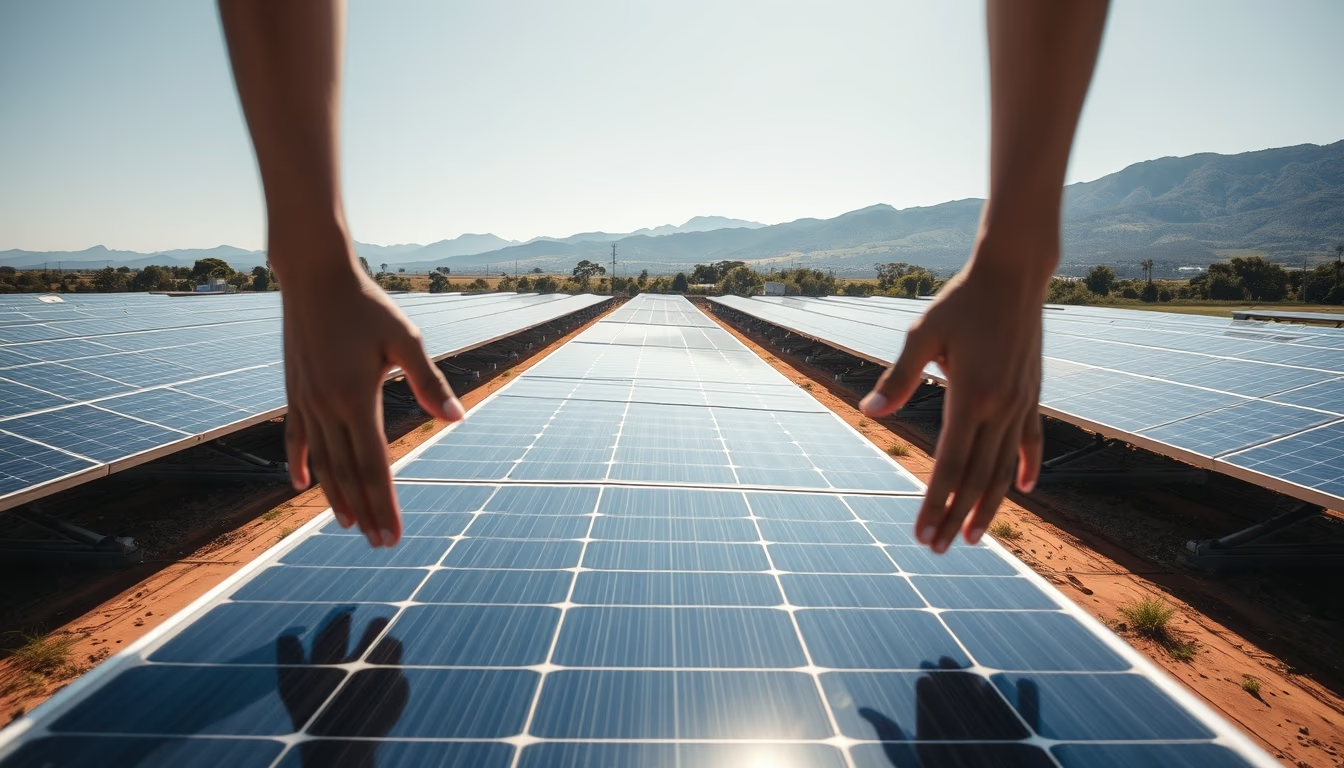
Solar photovoltaic farm in the Brazilian sertão harnesses high irradiation to generate renewable energy in a semi-arid region.
About this subject
The Brazilian sertão, a semi-arid region covering much of the Northeast, has one of the highest solar energy generation potentials in the world due to high solar radiation year-round. Solar farms installed in this landscape take advantage of vast flat lands and dry climate to maximize energy capture. Brazil's first large-scale solar plant was inaugurated in 2017 in Juazeiro, Bahia, and since then the country has significantly expanded its installed capacity, becoming a global leader in solar energy. The sertão, historically marked by severe droughts and poverty, sees this infrastructure as an opportunity for sustainable economic development. Besides generating clean electricity, solar farms create local jobs during construction and operation and can coexist with family farming in agrivoltaic systems. The energy produced is fed into the National Interconnected System (SIN), supplying distant urban centers. The choice of the sertão for these projects is no accident: the average annual solar radiation in the region can exceed 6.0 kWh/m²/day, surpassing the average of countries like Germany, a reference in solar energy. However, challenges such as frequent panel cleaning due to dust and maintenance logistics in remote areas require innovative solutions.
Frequently Asked Questions
Why is the Brazilian sertão ideal for solar farms?
The sertão has high solar radiation year-round, with an annual average exceeding 6.0 kWh/m²/day, along with vast flat areas and low cloud cover, ideal conditions for photovoltaic generation.
What was Brazil's first large-scale solar plant?
Brazil's first large-scale solar plant was inaugurated in 2017 in Juazeiro, Bahia, with an initial capacity of 158 MW.
Does the energy generated in the sertão only supply the Northeast region?
No. The energy is fed into the National Interconnected System (SIN) and can be transmitted to any region of the country, helping to meet demand in distant urban centers.
Direct URL
https://pub-c7d6a6ea828543ac903a74a341ccb2e1.r2.dev/imagens/solar-panel-farm-in-brazilian-sertao-landscape-symmetric-bright-midday-2.avifHow to credit
Include a visible link back to UtilizAí. Copy one of the snippets below:
<a href="https://xn--utiliza-eza.com/en/midia/imagens/solar-panel-farm-in-brazilian-sertao-landscape-symmetric-bright-midday-2">Solar panel farm in dry Brazilian landscape</a> by <a href="https://xn--utiliza-eza.com">UtilizAí</a>, licensed under <a href="https://creativecommons.org/licenses/by/4.0/">CC BY 4.0</a>.
[Solar panel farm in dry Brazilian landscape](https://xn--utiliza-eza.com/en/midia/imagens/solar-panel-farm-in-brazilian-sertao-landscape-symmetric-bright-midday-2) by [UtilizAí](https://xn--utiliza-eza.com), CC BY 4.0
License: CC-BY-4.0