Solar panel farm in dry Brazilian landscape
1344×768 · AVIF · CC BY 4.0
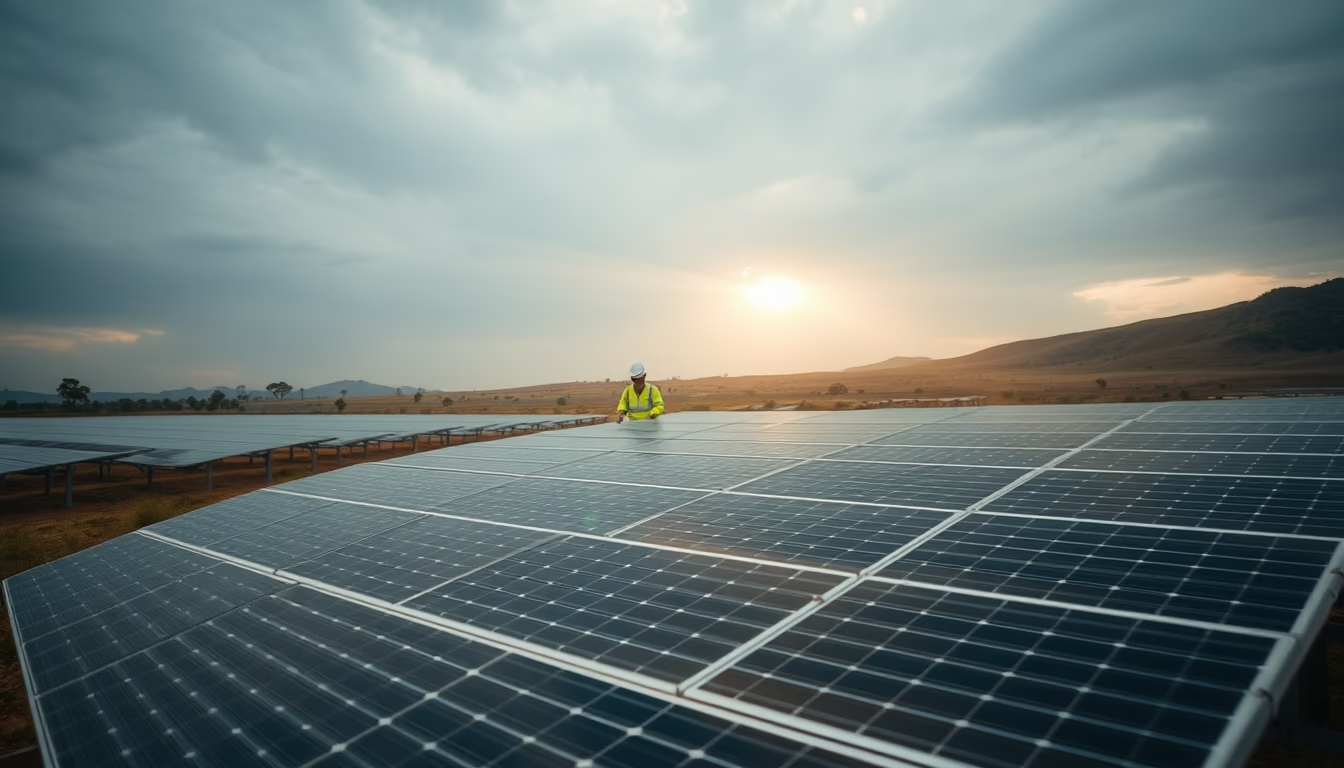
Solar panel farm in the Brazilian sertão generates renewable energy amidst the semi-arid landscape.
About this subject
The Brazilian sertão, a semi-arid region covering much of the Northeast, has become a strategic hub for solar energy generation. With one of the highest solar radiation rates in the country, the area provides ideal conditions for large-scale solar farms. These installations, like the one depicted, convert abundant sunlight into clean electricity, helping diversify the national energy matrix. Deploying photovoltaic panels in the sertão also offers economic development opportunities for local communities often affected by prolonged drought.
Choosing the sertão for solar projects is not random. Studies by Brazil's National Institute for Space Research (INPE) indicate the region receives over 2,000 hours of sunlight per year, with average irradiation exceeding 5.5 kWh/m²/day. Companies such as Enel Green Power and Canadian Solar already operate parks in Bahia, Pernambuco, and Piauí. For instance, the São Gonçalo solar complex in Piauí has an installed capacity of 475 MW, enough to power about 600,000 homes.
Beyond energy benefits, solar farms in the sertão help mitigate climate change by reducing greenhouse gas emissions. Native caatinga vegetation, adapted to dry conditions, coexists with the panels, which can even reduce soil evaporation. Research projects, such as those from the Solar Energy Laboratory at the Federal University of Pernambuco, investigate agrivoltaic systems that combine agriculture and solar generation.
The image captures an overcast day, reducing instantaneous output but not negating the site's potential. On clear days, generation peaks. The contrast between modern technology and the arid landscape symbolizes Brazil's energy transition, seeking renewable sources to ensure water and electricity security in the semi-arid region.
Frequently Asked Questions
Why is the Brazilian sertão suitable for solar power plants?
The sertão receives high solar radiation, over 2,000 hours of sunlight per year, and has vast flat areas. This makes it one of Brazil's most promising regions for photovoltaic solar energy.
Can solar energy in the sertão help fight drought?
Indirectly, yes. Local solar generation reduces reliance on hydropower plants, which suffer from low water levels. Additionally, panels can reduce soil evaporation, benefiting agriculture.
What are the main challenges for solar farms in the sertão?
Challenges include logistics for transporting equipment, the need for investment in transmission lines, and training local workers for new technologies.
Direct URL
https://pub-c7d6a6ea828543ac903a74a341ccb2e1.r2.dev/imagens/solar-panel-farm-in-brazilian-sertao-landscape-editorial-overcast-daytime-6.avifHow to credit
Include a visible link back to UtilizAí. Copy one of the snippets below:
<a href="https://xn--utiliza-eza.com/en/midia/imagens/solar-panel-farm-in-brazilian-sertao-landscape-editorial-overcast-daytime-6">Solar panel farm in dry Brazilian landscape</a> by <a href="https://xn--utiliza-eza.com">UtilizAí</a>, licensed under <a href="https://creativecommons.org/licenses/by/4.0/">CC BY 4.0</a>.
[Solar panel farm in dry Brazilian landscape](https://xn--utiliza-eza.com/en/midia/imagens/solar-panel-farm-in-brazilian-sertao-landscape-editorial-overcast-daytime-6) by [UtilizAí](https://xn--utiliza-eza.com), CC BY 4.0
License: CC-BY-4.0