Solar panel farm in dry Brazilian landscape
1344×768 · AVIF · CC BY 4.0
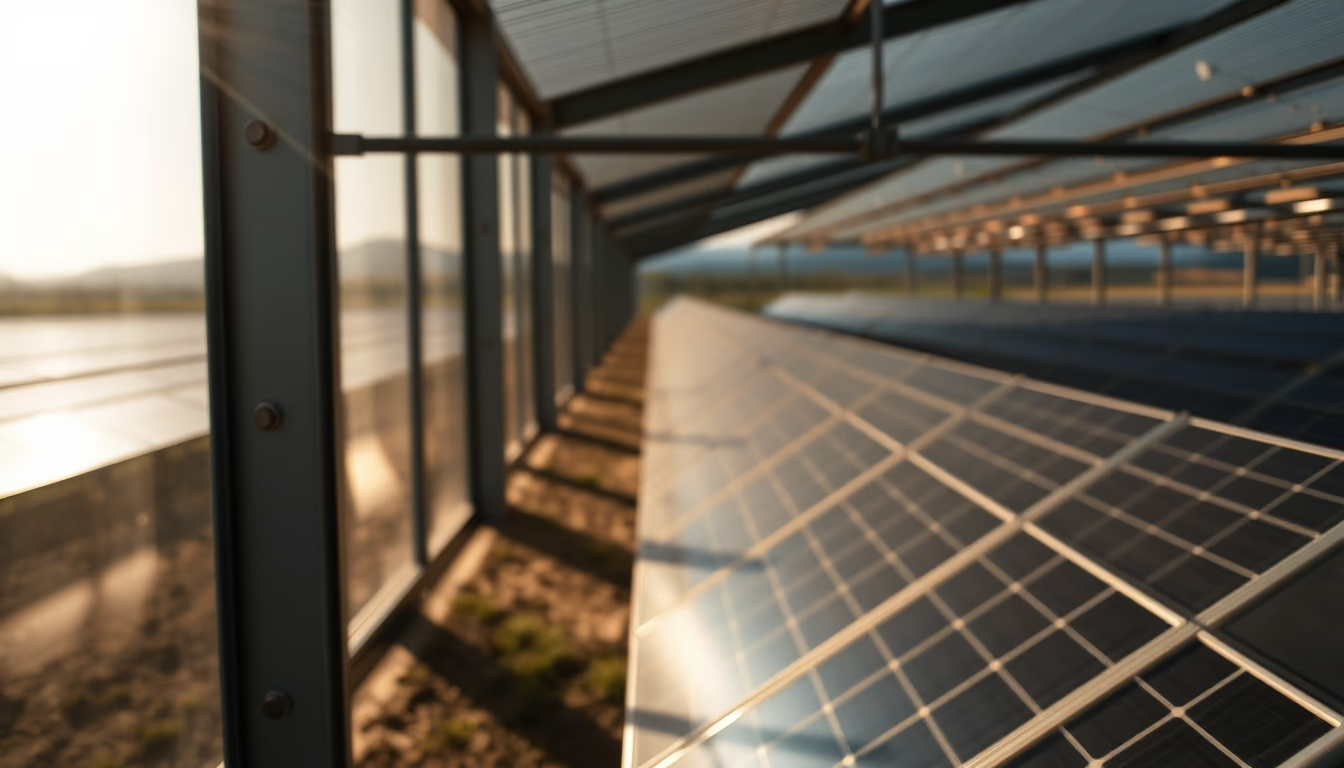
Solar panel farm in Brazil's semi-arid region generates renewable energy in the Caatinga biome, turning the sertão into a sustainability hub.
About this subject
Brazil has one of the largest solar energy potentials in the world, especially in the northeastern sertão, where solar irradiation is among the highest on the planet. This image shows a solar panel farm installed in the typical Caatinga landscape, a biome exclusive to Brazil covering about 10% of the national territory. This region, historically marked by severe droughts and water challenges, has become a strategic hub for clean energy generation.
Major projects such as the Juazeiro Solar Complex in Bahia and the Pirapora Solar Park in Minas Gerais already operate with capacities exceeding 400 MW each. In the sertão, solar energy not only leverages abundant sunlight but also contributes to local economic diversification, generating jobs and income in areas previously dependent on subsistence farming. Installing panels on Caatinga soil requires environmental care, such as managing native vegetation and preserving threatened species.
Interestingly, solar energy in Brazil grew over 50% in 2023, according to Absolar, and the country has surpassed 30 GW of installed capacity. Photovoltaic technology is also used in desalination projects and water pumping for rural communities, integrating sustainability and social development. This documentary image captures the encounter between modern technology and the arid environment, symbolizing the resilience and innovation of the Brazilian sertão.
Frequently Asked Questions
What is the Caatinga and why is it important for solar energy?
The Caatinga is a unique Brazilian biome with high solar irradiation and low cloud cover, ideal for photovoltaic generation. Its preservation is crucial as it hosts endemic species.
What are the largest solar parks in the Brazilian sertão?
The Juazeiro Solar Complex (BA) and Pirapora Solar Park (MG) are among the largest, each with over 400 MW capacity. Other projects are expanding in the Northeast interior.
How does solar energy benefit local communities in the semi-arid region?
Besides creating jobs in construction and maintenance, solar energy powers water pumping and desalination systems, improving access to drinking water.
Direct URL
https://pub-c7d6a6ea828543ac903a74a341ccb2e1.r2.dev/imagens/solar-panel-farm-in-brazilian-sertao-landscape-documentary-morning-4.avifHow to credit
Include a visible link back to UtilizAí. Copy one of the snippets below:
<a href="https://xn--utiliza-eza.com/en/midia/imagens/solar-panel-farm-in-brazilian-sertao-landscape-documentary-morning-4">Solar panel farm in dry Brazilian landscape</a> by <a href="https://xn--utiliza-eza.com">UtilizAí</a>, licensed under <a href="https://creativecommons.org/licenses/by/4.0/">CC BY 4.0</a>.
[Solar panel farm in dry Brazilian landscape](https://xn--utiliza-eza.com/en/midia/imagens/solar-panel-farm-in-brazilian-sertao-landscape-documentary-morning-4) by [UtilizAí](https://xn--utiliza-eza.com), CC BY 4.0
License: CC-BY-4.0