Solar panel farm in dry Brazilian landscape
1344×768 · AVIF · CC BY 4.0
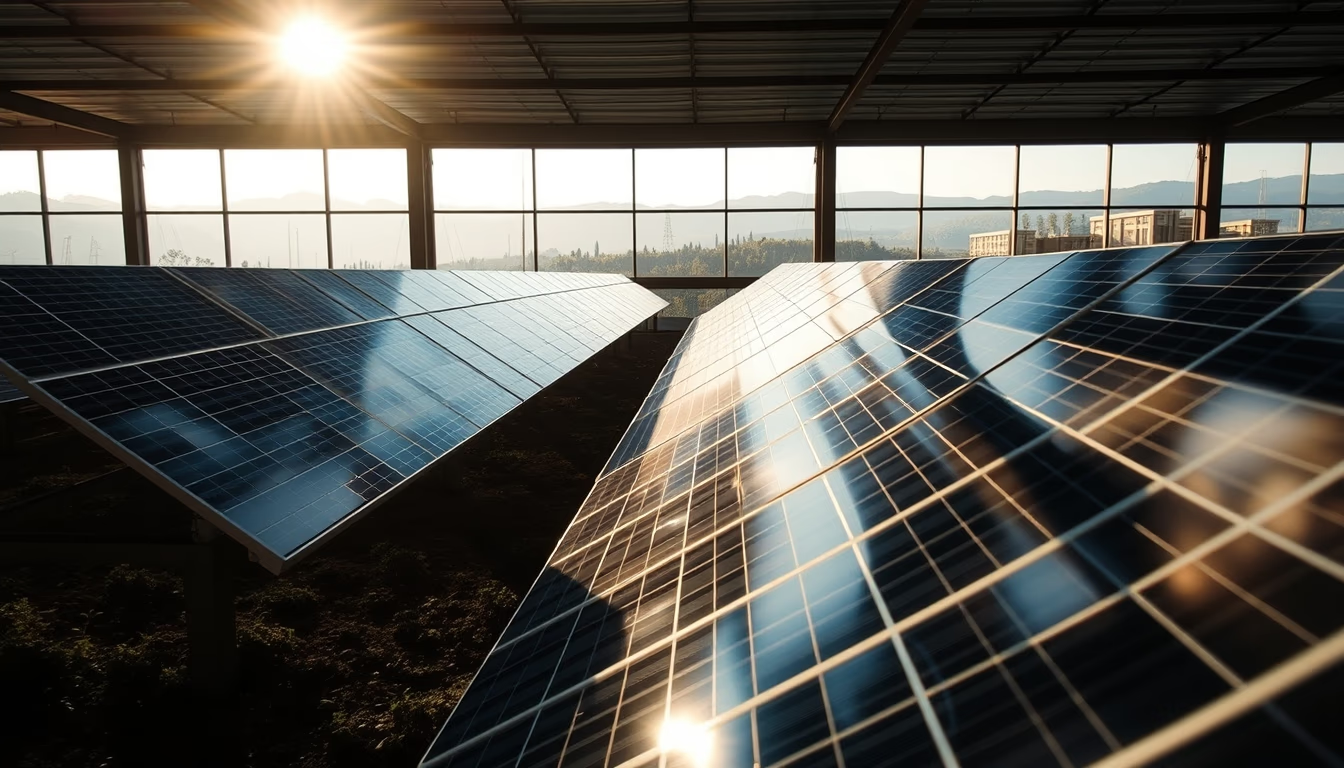
Solar panel farm in the Brazilian sertão harnesses high irradiation for renewable energy generation.
About this subject
The Brazilian sertão, a semi-arid region covering much of the Northeast, receives one of the highest solar irradiation levels in the country, with annual averages exceeding 2,000 kWh/m². This characteristic makes the area ideal for large-scale photovoltaic solar farms. The image depicts a typical solar farm, with thousands of panels arranged in rows on dry soil and low-lying vegetation typical of the Caatinga biome.
Brazil has significantly invested in solar energy in recent years. According to the Brazilian Solar Photovoltaic Energy Association (ABSOLAR), the installed solar capacity surpassed 30 GW in 2023, with large parks concentrated in the Northeast. The São Gonçalo plant in Piauí, for example, is one of the largest in Latin America, with a capacity of 475 MW. These projects generate local jobs and contribute to diversifying Brazil's energy matrix, still dominated by hydroelectric power.
The choice of the sertão for these projects is not random. Besides high irradiation, the region has vast areas of low-cost land with low population density, facilitating implementation. The generated energy is transmitted to consumer centers in the Southeast and Northeast through the National Interconnected System (SIN). However, challenges such as the need for transmission lines and impacts on local flora and fauna are points of attention for sustainable development.
Solar energy in the sertão also benefits isolated rural communities that previously relied on diesel generators. Mini and micro solar projects bring electricity to schools, health centers, and homes, improving quality of life. The combination of abundant natural resources and incentive policies, such as tax exemptions for equipment, has boosted the sector, positioning Brazil as a global leader in solar energy.
Frequently Asked Questions
Why is the Brazilian sertão ideal for solar energy?
The sertão has high solar irradiation, with annual averages above 2,000 kWh/m², plus vast areas of low-cost land and low population density, facilitating the installation of large plants.
What is Brazil's installed solar energy capacity?
In 2023, Brazil surpassed 30 GW of installed solar photovoltaic capacity, with large parks concentrated in the Northeast, such as the São Gonçalo plant (475 MW) in Piauí.
What are the environmental impacts of solar farms in the sertão?
Main impacts include the need for transmission lines, land use change, and potential effects on Caatinga flora and fauna. Mitigation measures like ecological corridors are implemented to reduce harm.
Direct URL
https://pub-c7d6a6ea828543ac903a74a341ccb2e1.r2.dev/imagens/solar-panel-farm-in-brazilian-sertao-landscape-documentary-morning-3.avifHow to credit
Include a visible link back to UtilizAí. Copy one of the snippets below:
<a href="https://xn--utiliza-eza.com/en/midia/imagens/solar-panel-farm-in-brazilian-sertao-landscape-documentary-morning-3">Solar panel farm in dry Brazilian landscape</a> by <a href="https://xn--utiliza-eza.com">UtilizAí</a>, licensed under <a href="https://creativecommons.org/licenses/by/4.0/">CC BY 4.0</a>.
[Solar panel farm in dry Brazilian landscape](https://xn--utiliza-eza.com/en/midia/imagens/solar-panel-farm-in-brazilian-sertao-landscape-documentary-morning-3) by [UtilizAí](https://xn--utiliza-eza.com), CC BY 4.0
License: CC-BY-4.0