Solar panel array desert
1344×768 · AVIF · CC BY 4.0
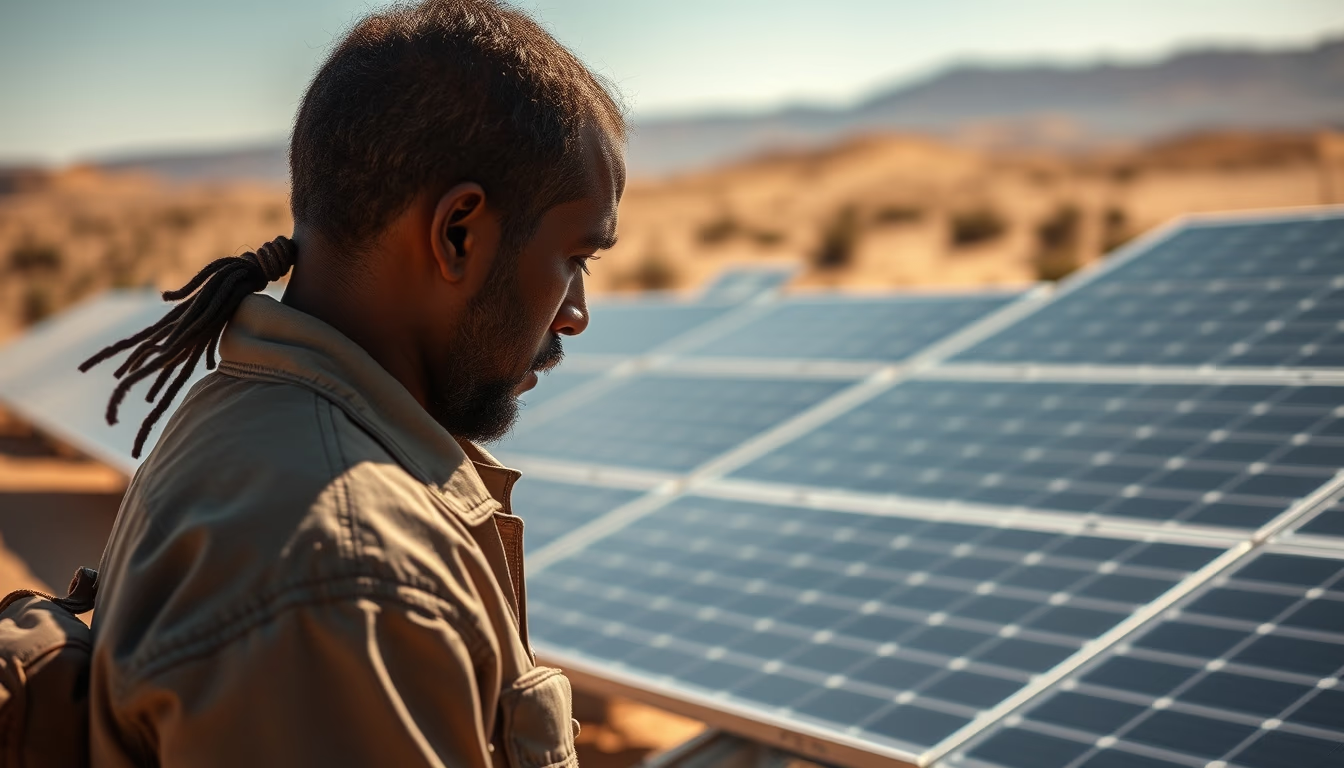
Solar farms in deserts combine high solar irradiance with vast flat areas, generating clean energy on an industrial scale.
About this subject
Solar power plants in desert regions are a cornerstone of the global energy transition. Deserts such as the Sahara, Mojave, and Atacama receive up to 10 kWh/m² of solar radiation per day, twice that of temperate regions. This abundance allows solar parks to reach capacities exceeding 500 MW, such as the Noor plant in Morocco (580 MW) and the Solar Star complex in the USA (579 MW).
Installing photovoltaic panels in deserts requires specific technical solutions. Extreme heat reduces solar cell efficiency (about 0.5% per °C above 25°C), so cooling systems or bifacial panels are common. Dust is also a challenge: in arid regions, robotic cleaning or anti-soiling coatings can increase output by up to 30%. Additionally, long-distance transmission infrastructure is crucial, connecting remote areas to urban centers.
Environmentally, desert solar farms occupy large areas (about 2 hectares per MW), but can coexist with fragile ecosystems if properly planned. Projects like Benban in Egypt (1.5 GW) include ecological corridors for local fauna. Solar generation in deserts also helps reduce CO₂ emissions: a 1 GW plant avoids about 1.5 million tons of CO₂ per year, equivalent to removing 300,000 cars from the road.
Interestingly, some countries are combining solar energy with agriculture (agrivoltaics) in deserts. In regions like the Negev desert in Israel, elevated panels allow cultivation of shade-tolerant plants such as lettuce and tomatoes, reducing water evaporation by up to 50%. This integration shows that desert solar energy can go beyond electricity generation, promoting food and water security.
Frequently Asked Questions
Why are deserts ideal for solar farms?
Deserts receive high solar radiation (up to 10 kWh/m²/day) and have vast flat, unobstructed areas, allowing large solar parks with lower land costs and little competition for use.
What are the main technical challenges of solar panels in the desert?
Extreme heat reduces cell efficiency by up to 0.5% per °C above 25°C. Accumulated dust can block light, requiring frequent cleaning. Long-distance energy transmission also needs robust infrastructure.
Do desert solar farms harm the environment?
They can affect fragile ecosystems if poorly planned, but modern projects include ecological corridors and use degraded land. The clean energy generated offsets the impact, avoiding millions of tons of CO₂ annually.
Direct URL
https://pub-c7d6a6ea828543ac903a74a341ccb2e1.r2.dev/imagens/solar-panel-array-desert-street-photography.avifHow to credit
Include a visible link back to UtilizAí. Copy one of the snippets below:
<a href="https://xn--utiliza-eza.com/en/midia/imagens/solar-panel-array-desert-street-photography">Solar panel array desert</a> by <a href="https://xn--utiliza-eza.com">UtilizAí</a>, licensed under <a href="https://creativecommons.org/licenses/by/4.0/">CC BY 4.0</a>.
[Solar panel array desert](https://xn--utiliza-eza.com/en/midia/imagens/solar-panel-array-desert-street-photography) by [UtilizAí](https://xn--utiliza-eza.com), CC BY 4.0
License: CC-BY-4.0