Snowflake macro symmetric
1344×768 · AVIF · CC BY 4.0
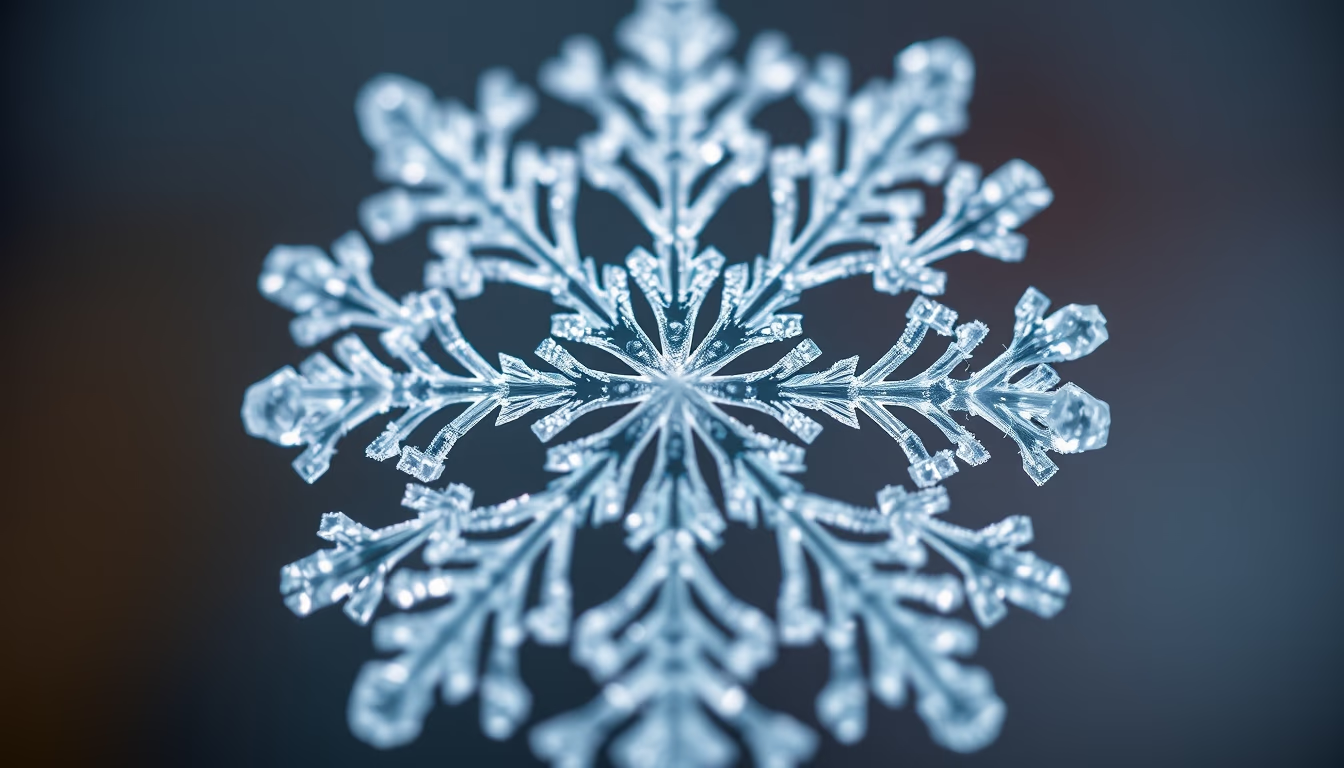
Symmetric macro photograph of a snowflake reveals the geometric complexity of ice crystals, highlighting hexagonal symmetry and dendritic details.
About this subject
Snowflakes are ice crystals that form in clouds when water vapor deposits directly into solid ice, a process known as deposition. Each crystal grows around a nucleus, such as dust or pollen, and its final shape depends on temperature and humidity conditions. The hexagonal symmetry is a fundamental feature, resulting from the molecular structure of solid water, but perfectly symmetric snowflakes are rare because slight environmental variations can break symmetry.
Dendritic snowflakes, like the one in the photograph, are the most photographed due to their branched beauty. They form at temperatures between -13°C and -17°C, when growth is fastest at the tips. The Nakaya classification groups crystals into categories such as plates, needles, columns, and dendrites. Macro photography of snowflakes requires specialized equipment like magnification lenses and controlled lighting, as well as subzero temperatures to prevent melting.
Snow plays a crucial role in the hydrological cycle and global climate. In Brazil, snowfall is rare, occurring mainly in the southern region, such as in the Serra Catarinense and Rio Grande do Sul. Snow also influences popular culture as a symbol of winter and renewal in many traditions. Scientists study snowflakes to understand precipitation and atmospheric dynamics.
Frequently Asked Questions
Why do snowflakes have a hexagonal shape?
The hexagonal symmetry comes from the molecular structure of solid water. Water molecules arrange in a crystal lattice with 120-degree angles, resulting in six-sided crystals.
Is it true that every snowflake is unique?
Yes, it is highly likely. Although basic symmetry is common, variations in temperature, humidity, and fall trajectory create unique patterns. However, identical flakes may exist at the molecular level.
What is the ideal temperature for photographing snowflakes?
Between -5°C and -20°C with adequate humidity. Very low temperatures produce smaller, less branched crystals. The best time is right after snowfall, before they melt or sublimate.
Direct URL
https://pub-c7d6a6ea828543ac903a74a341ccb2e1.r2.dev/imagens/snowflake-macro-symmetric-macro-closeup-p1.avifHow to credit
Include a visible link back to UtilizAí. Copy one of the snippets below:
<a href="https://xn--utiliza-eza.com/en/midia/imagens/snowflake-macro-symmetric-macro-closeup-p1">Snowflake macro symmetric</a> by <a href="https://xn--utiliza-eza.com">UtilizAí</a>, licensed under <a href="https://creativecommons.org/licenses/by/4.0/">CC BY 4.0</a>.
[Snowflake macro symmetric](https://xn--utiliza-eza.com/en/midia/imagens/snowflake-macro-symmetric-macro-closeup-p1) by [UtilizAí](https://xn--utiliza-eza.com), CC BY 4.0
License: CC-BY-4.0