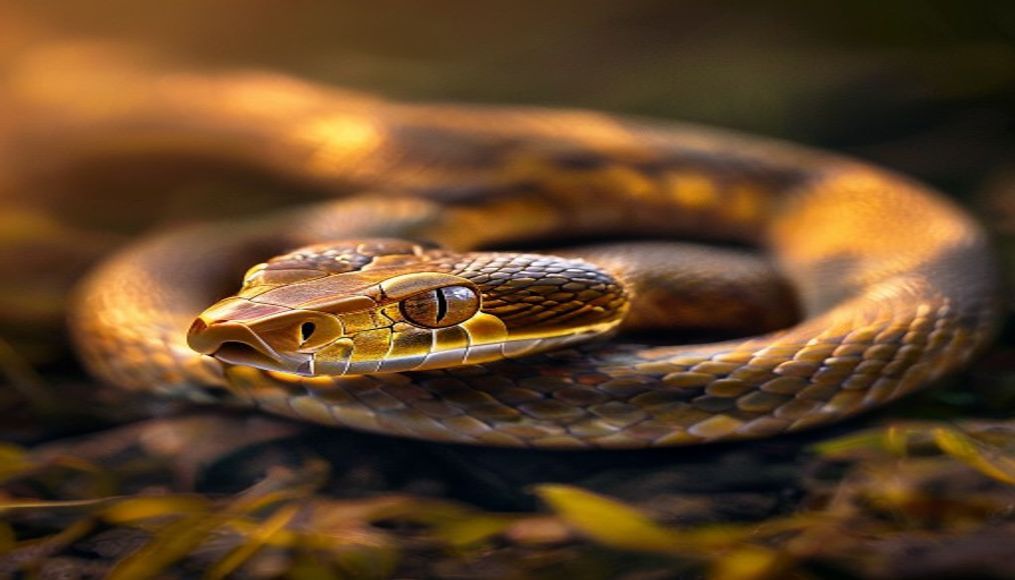
Snake python coiled
1344×768 · AVIF · CC BY 4.0
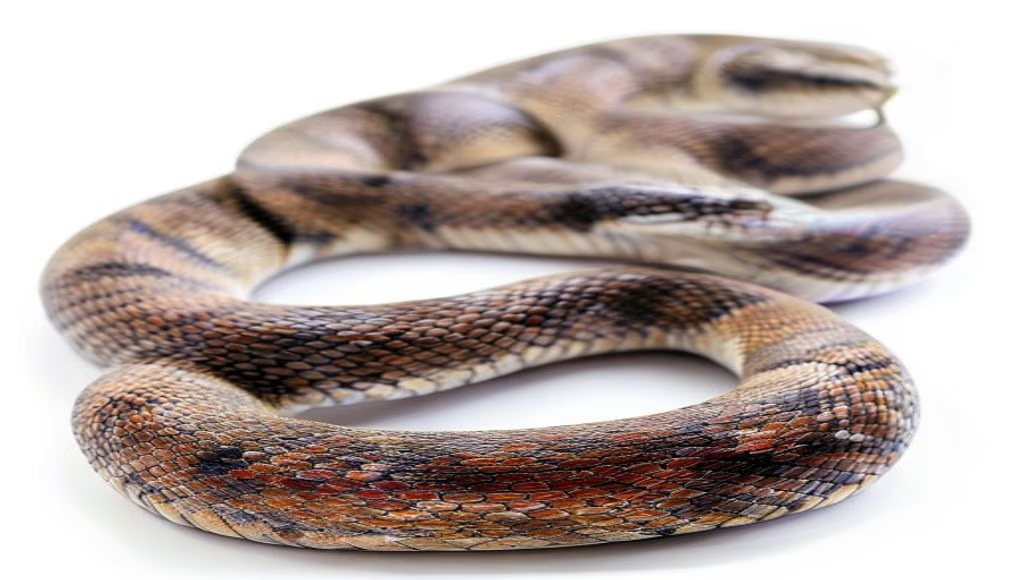
Coiled python reveals details of anatomy and behavior of one of the world's largest snakes.
About this subject
Pythons belong to the family Pythonidae, a group of non-venomous snakes that kill by constriction. These snakes are native to Africa, Asia, and Australia, but not to Brazil, where similar ecological roles are filled by boas and anacondas. The most well-known species is the Burmese python (Python bivittatus), which can exceed 5 meters in length and weigh over 90 kg. They are powerful animals, with muscles capable of exerting enough pressure to stop blood circulation in their prey.
When a python coils, it is not just resting; this posture is typical for thermoregulation and digestion. After a large meal, which can include medium-sized mammals like antelopes or alligators, the snake remains motionless for days or weeks. During this period, its metabolism increases dramatically, and the generated heat is dissipated through coiling. The dorsal scales, often keeled, aid in traction and protection.
The Burmese python has become a problematic invasive species in southern Florida, USA, where it was introduced by irresponsible pet owners. Tens of thousands of pythons are estimated to live today in the Everglades, competing with native predators and reducing mammal populations. This case is a classic example of how the exotic pet trade can impact fragile ecosystems.
Culturally, pythons are revered in some regions, such as China, where they symbolize wealth, and feared in others. Although not venomous, bites from large pythons can cause serious injury due to their recurved teeth and powerful jaws. Conservation of some species, like the Indian python (Python molurus), is threatened by habitat loss and hunting for the skin trade.
Frequently Asked Questions
What is the difference between a python and an anaconda?
Pythons belong to the family Pythonidae, native to the Old World (Africa, Asia, and Australia), while anacondas (genus Eunectes) belong to Boidae and occur in South America. Both are constrictors, but anacondas are semiaquatic and can be even heavier.
Are pythons venomous?
No. Pythons lack venom-injecting fangs. They kill their prey by constriction, squeezing until the victim stops breathing or suffers cardiac arrest.
Where do pythons live?
Pythons inhabit tropical and subtropical habitats in Africa, Asia, and Australia. Some species, like the Burmese python, have become invasive in Florida (USA) due to accidental releases.
Direct URL
https://pub-c7d6a6ea828543ac903a74a341ccb2e1.r2.dev/imagens/snake-python-coiled-commercial-product-photography-p2.avifHow to credit
Include a visible link back to UtilizAí. Copy one of the snippets below:
<a href="https://xn--utiliza-eza.com/en/midia/imagens/snake-python-coiled-commercial-product-photography-p2">Snake python coiled</a> by <a href="https://xn--utiliza-eza.com">UtilizAí</a>, licensed under <a href="https://creativecommons.org/licenses/by/4.0/">CC BY 4.0</a>.
[Snake python coiled](https://xn--utiliza-eza.com/en/midia/imagens/snake-python-coiled-commercial-product-photography-p2) by [UtilizAí](https://xn--utiliza-eza.com), CC BY 4.0
License: CC-BY-4.0