Shipping containers stacked port
1344×768 · AVIF · CC BY 4.0
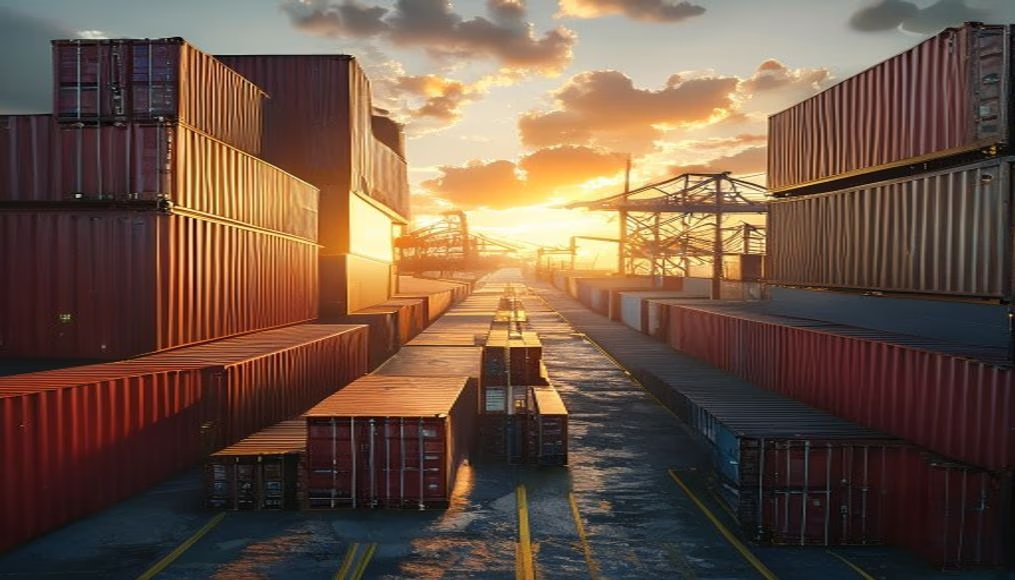
Shipping containers stacked at ports represent the heart of global trade, moving billions in goods every day.
About this subject
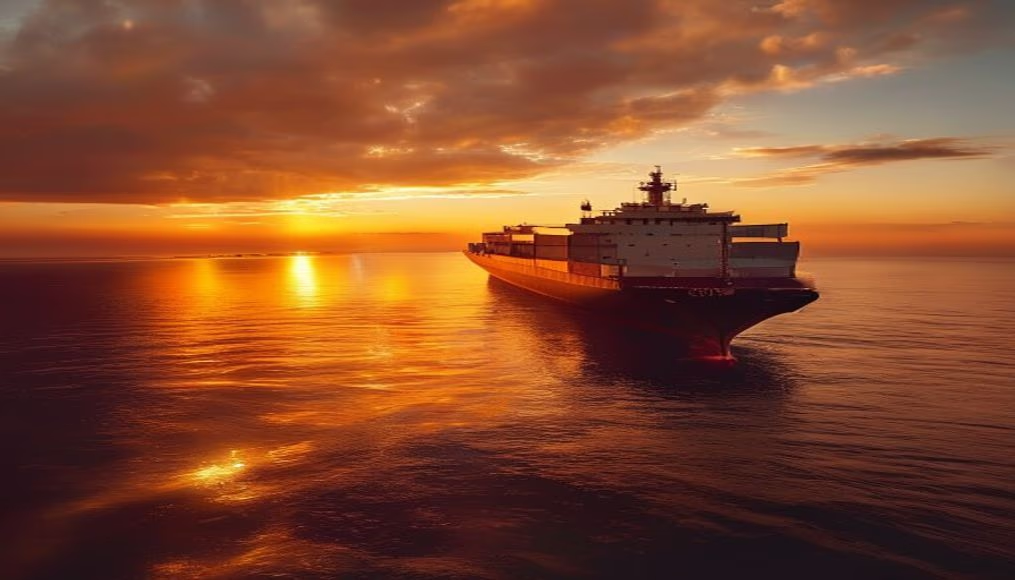
Shipping containers are the backbone of international trade. Standardized by ISO since the 1960s, they allow goods to be transferred between ships, trains, and trucks without manual reloading. This intermodality drastically reduced logistics costs and accelerated globalization. A modern container ship can carry over 20,000 TEUs (twenty-foot equivalent units), and stacks in port terminals can exceed 10 containers in height.
In Brazil, the Port of Santos is the largest port complex in Latin America, handling about 30% of the country's foreign trade. There, thousands of containers are moved daily, many carrying commodities like coffee, soybeans, and meat. Terminal efficiency relies on tracking systems and automated cranes that can stack and unstack containers in seconds. Container colors are not random: blue is common for Maersk, orange for Hamburg Süd, and each color aids visual identification in yards.
Interestingly, the lifespan of a steel container is about 15 to 20 years, after which many are repurposed as homes, offices, or even swimming pools. Stacking, besides optimizing space, follows strict safety rules to prevent tipping. Stacks are organized by weight, destination, and cargo type, ensuring that refrigerated containers (reefers) have access to electrical power. Without this logistics, fresh products like Chilean fruits or medicines would not reach consumers in time.
Frequently Asked Questions
What does TEU stand for?
TEU stands for Twenty-foot Equivalent Unit, the standard measure used to describe the capacity of ships and port terminals. A 40-foot container equals 2 TEUs.
Why are shipping containers colored?
Colors aid quick visual identification in yards. Each shipping line adopts distinct colors: Maersk uses blue, MSC uses yellow, Hamburg Süd uses orange, among others. Additionally, refrigerated containers are usually white to reflect heat.
What is the maximum stacking height for containers?
In port terminals, stacking can reach 10 containers high (about 30 meters), depending on crane type and safety regulations. On ships, the maximum height is determined by the vessel's design, but can exceed 20 containers above deck.
Direct URL
https://pub-c7d6a6ea828543ac903a74a341ccb2e1.r2.dev/imagens/shipping-containers-stacked-port-travel-photography-v10.avifHow to credit
Include a visible link back to UtilizAí. Copy one of the snippets below:
<a href="https://xn--utiliza-eza.com/en/midia/imagens/shipping-containers-stacked-port-travel-photography-v10">Shipping containers stacked port</a> by <a href="https://xn--utiliza-eza.com">UtilizAí</a>, licensed under <a href="https://creativecommons.org/licenses/by/4.0/">CC BY 4.0</a>.
[Shipping containers stacked port](https://xn--utiliza-eza.com/en/midia/imagens/shipping-containers-stacked-port-travel-photography-v10) by [UtilizAí](https://xn--utiliza-eza.com), CC BY 4.0
License: CC-BY-4.0