Sandgrain microscope closeup
1344×768 · AVIF · CC BY 4.0
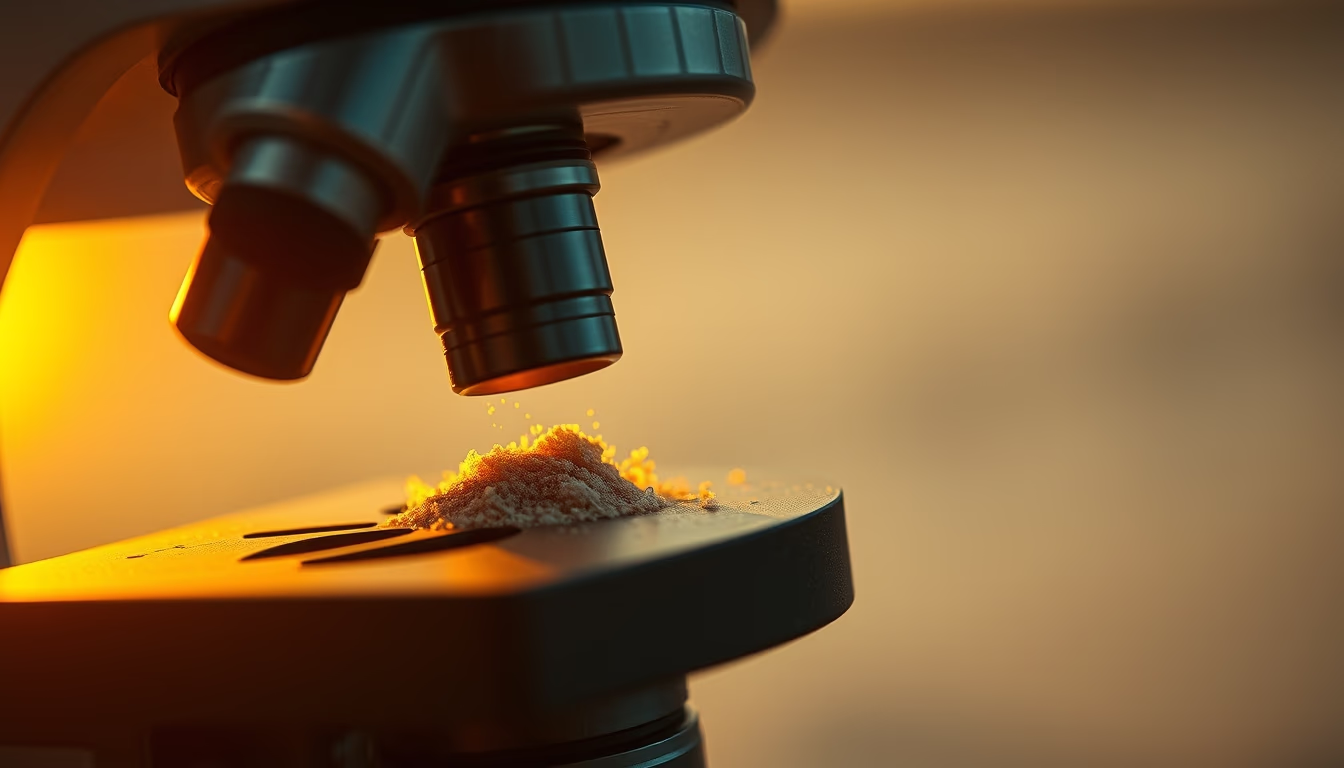
Sand grains viewed under a microscope reveal a world of details: shapes, colors, and textures that tell the geological story of their origin.
About this subject
Sand is composed of mineral particles, rock fragments, and sometimes shells or organic matter. Under a microscope, each grain becomes unique. Quartz is the most common mineral due to its hardness and resistance to weathering, but feldspar, micas, shell fragments, and even tiny crystals of garnet can be found. The shape of grains varies from angular (recent transport) to well-rounded (long transport by water or wind).
The surface of sand grains retains marks from the environments they have passed through. Eolian grains, such as those from the Sahara Desert, have frosted, rounded surfaces, while river beach grains tend to be more angular with impact marks. These features are studied in sedimentology to determine the provenance and transport history of sediments.
The grain size scale classifies sand grains between 0.0625 mm and 2 mm in diameter. Very fine grains can be confused with silt, and coarser ones with gravel. Sand color also varies: white sands from tropical beaches are rich in quartz and calcium carbonate, while black volcanic sands contain minerals like magnetite.
Interestingly, each beach or desert has a distinct microscopic signature. Scientists use these differences to trace sediment sources, reconstruct ancient landscapes, and even in forensic investigations (analysis of sand in shoe soles).
Frequently Asked Questions
Are all sand grains the same?
No. Composition, shape, color, and texture vary depending on the source rock, transport, and depositional environment. Sands from different beaches or deserts can be very distinct under the microscope.
What can a sand grain reveal under a microscope?
It can reveal mineralogical composition, the type of transport (eolian, fluvial, marine), and even the distance traveled. Frosted surfaces indicate wind transport; impact marks suggest water transport.
How is sand grain size measured?
Using sieves with different mesh openings or laser diffraction analysis. The Wentworth scale classifies sand grains between 0.0625 mm and 2 mm.
Direct URL
https://pub-c7d6a6ea828543ac903a74a341ccb2e1.r2.dev/imagens/sandgrain-microscope-closeup-cinematic-wide-shot-p4.avifHow to credit
Include a visible link back to UtilizAí. Copy one of the snippets below:
<a href="https://xn--utiliza-eza.com/en/midia/imagens/sandgrain-microscope-closeup-cinematic-wide-shot-p4">Sandgrain microscope closeup</a> by <a href="https://xn--utiliza-eza.com">UtilizAí</a>, licensed under <a href="https://creativecommons.org/licenses/by/4.0/">CC BY 4.0</a>.
[Sandgrain microscope closeup](https://xn--utiliza-eza.com/en/midia/imagens/sandgrain-microscope-closeup-cinematic-wide-shot-p4) by [UtilizAí](https://xn--utiliza-eza.com), CC BY 4.0
License: CC-BY-4.0