Samurai katana
1344×768 · AVIF · CC BY 4.0
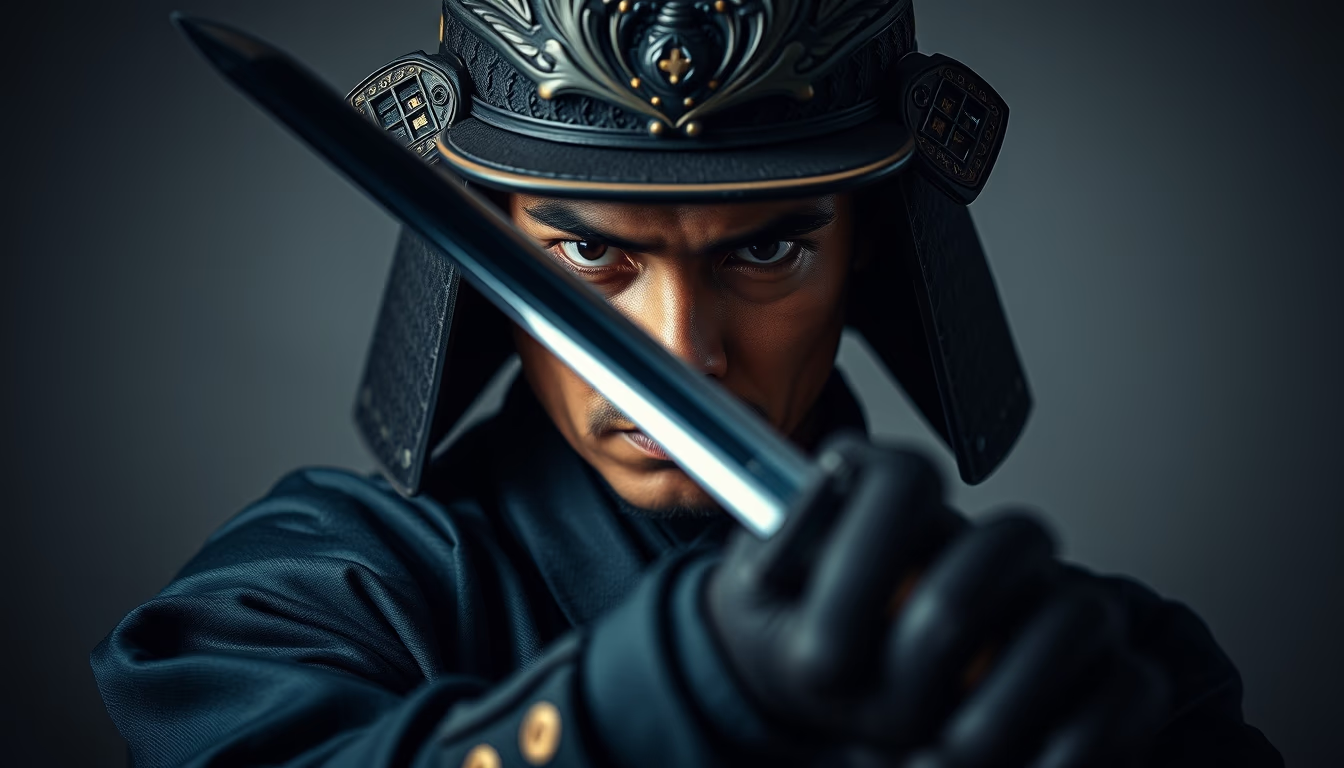
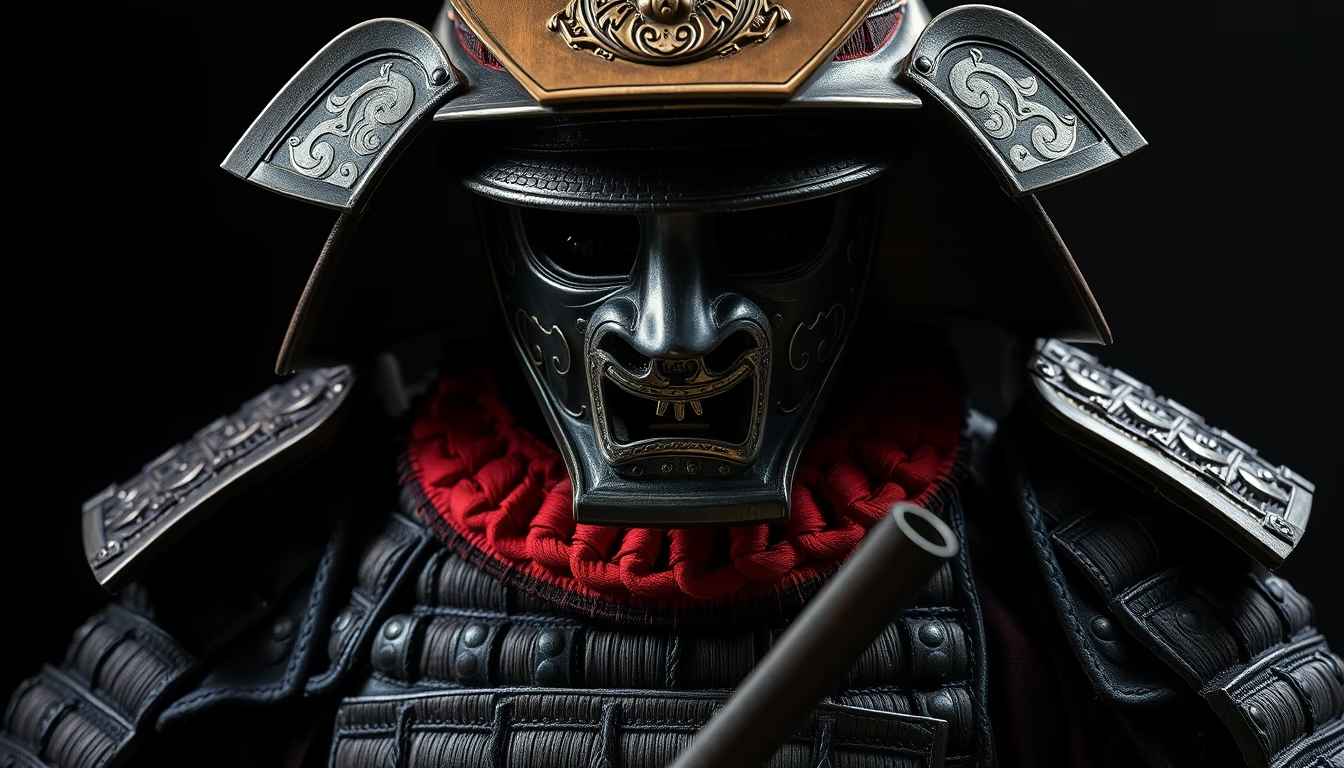
The katana, curved sword of Japanese samurai, symbolizes honor and artisanal precision in Japan's feudal history.
About this subject
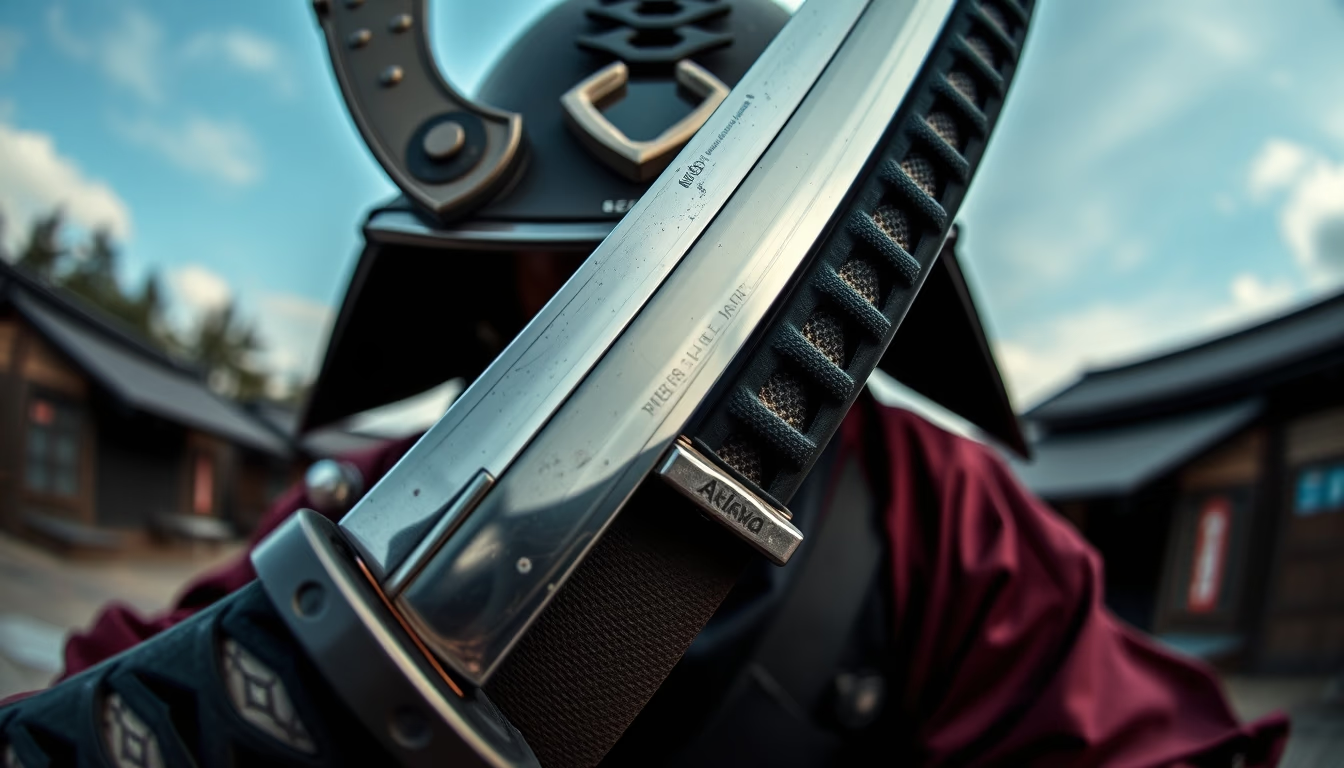
The katana is a Japanese sword with a curved, single-edged blade traditionally wielded by samurai during the feudal period. Its manufacture involves a complex process of folding and forging steel, resulting in a blade that is exceptionally strong and sharp. The differential hardening technique creates a distinct temper line (hamon), giving hardness at the edge and flexibility at the back. For samurai, the katana was not just a weapon but the soul of the warrior, treated with almost religious reverence.
Historically, the katana emerged in the Kamakura period (1185-1333), replacing earlier straight swords. During the Edo period (1603-1868), it became a status symbol of the samurai class, with blades signed by renowned smiths such as Masamune and Muramasa. High-quality swords were passed down as heirlooms and often given names. After the abolition of the samurai class in the 19th century, traditional katana production declined, but the knowledge was preserved by master craftsmen.
Culturally, the katana transcended the battlefield. It appears in ukiyo-e woodblock prints, classical literature like "Hagakure," and more recently in Akira Kurosawa films and anime such as "Samurai Champloo." In Brazil, Japanese immigration brought the practice of kendo and iaido, martial arts using katana replicas. Today, the sword is a collectible and study object, with antique examples displayed in museums such as the National Historical Museum in Rio de Janeiro.
Technically, the katana has a gentle curvature (sori) and a blade length typically between 60 and 80 cm. The hilt (tsuka) is wrapped with ray skin and braided silk cord. The guard (tsuba) is often decorated with nature or mythological scenes. The scabbard (saya) is made of lacquered wood. Authentic katanas are hand-forged, while modern replicas use stainless or Damascus steel, unsuitable for serious martial practice. Maintenance involves cleaning with clove oil and periodic polishing by specialists, ensuring preservation for centuries.
Frequently Asked Questions
What is the main difference between a katana and a common Western sword?
The katana has a curved, single-edged blade, while Western swords often have straight, double-edged blades. Additionally, the katana is forged using folded steel and differential hardening, providing high strength and efficient cutting.
How is a traditional katana blade made?
The blade is forged from tamahagane steel, produced in a traditional furnace. The steel is repeatedly folded and hammered to remove impurities and create layers. Differential hardening is applied using clay and water, creating the hamon line and selective hardness.
Why is the katana so culturally valued in Japan?
The katana symbolizes the samurai's soul and represents honor, discipline, and artisanal perfection. It is considered a work of art and cultural heritage, revered in ceremonies, martial arts, and family traditions over centuries.
Direct URL
https://pub-c7d6a6ea828543ac903a74a341ccb2e1.r2.dev/imagens/samurai-katana-magazine-editorial-p0.avifHow to credit
Include a visible link back to UtilizAí. Copy one of the snippets below:
<a href="https://xn--utiliza-eza.com/en/midia/imagens/samurai-katana-magazine-editorial-p0">Samurai katana</a> by <a href="https://xn--utiliza-eza.com">UtilizAí</a>, licensed under <a href="https://creativecommons.org/licenses/by/4.0/">CC BY 4.0</a>.
[Samurai katana](https://xn--utiliza-eza.com/en/midia/imagens/samurai-katana-magazine-editorial-p0) by [UtilizAí](https://xn--utiliza-eza.com), CC BY 4.0
License: CC-BY-4.0