Samurai katana
1344×768 · AVIF · CC BY 4.0
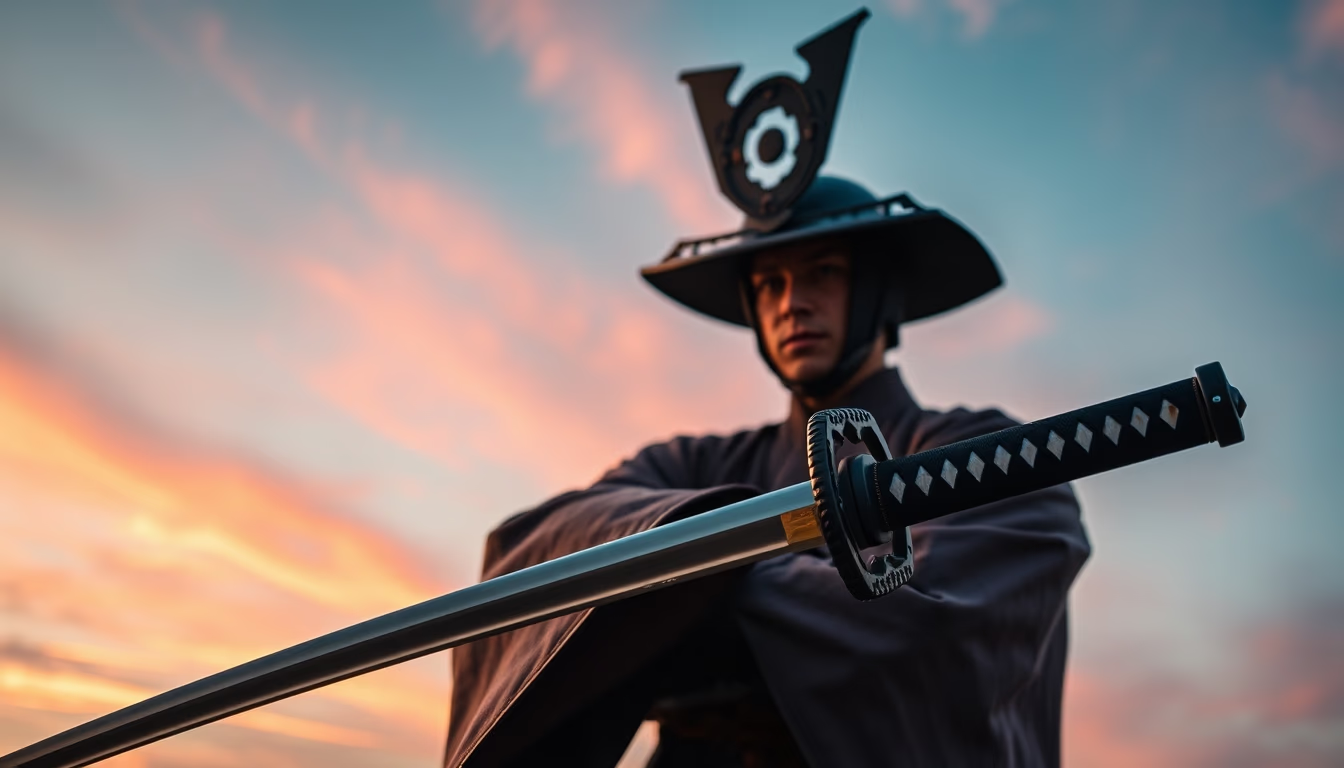
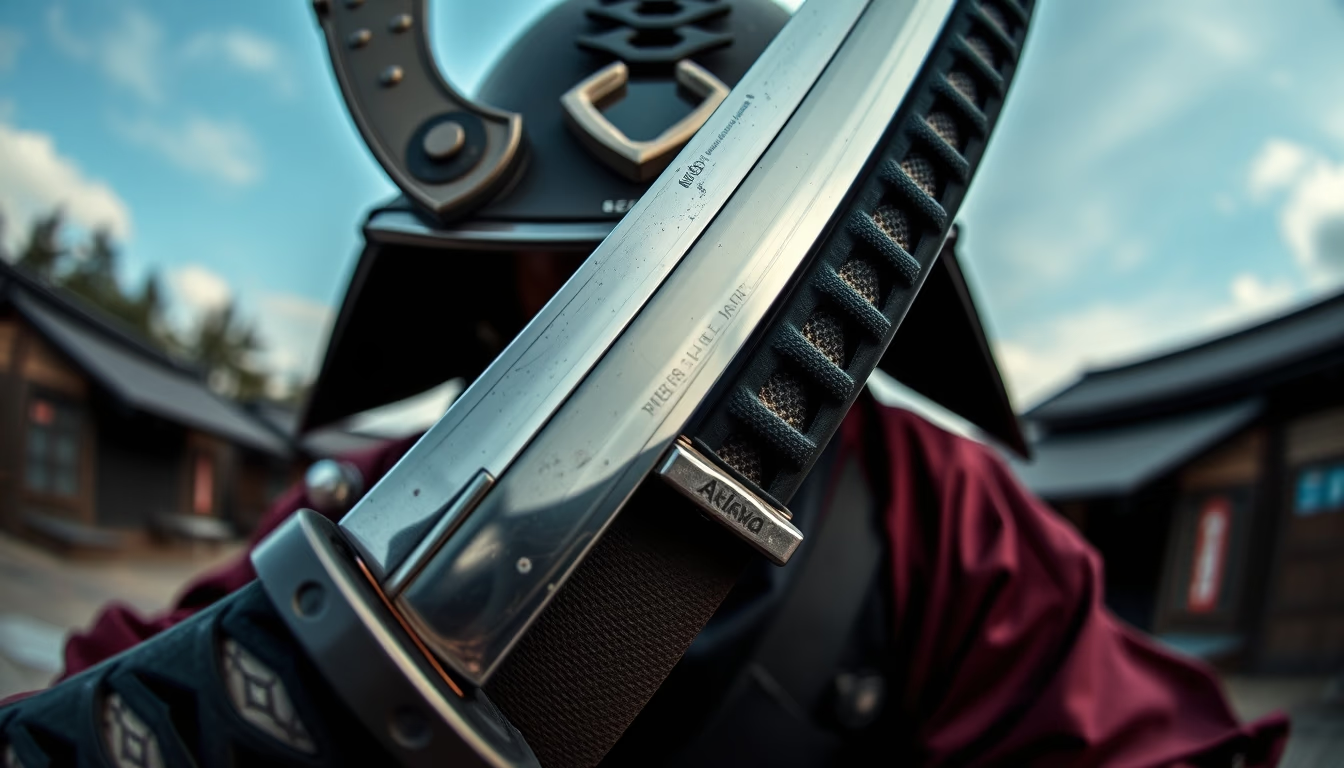
The katana is the traditional Japanese sword of the samurai, known for its curved, sharp blade, a symbol of the feudal warrior class.
About this subject
The katana is a Japanese sword with a curved, single-edged blade over 60 centimeters long, used by samurai during Japan's feudal period (12th to 19th centuries). Its distinctive shape and differential hardening technique produce an extremely sharp edge and a resilient spine, enabling precise, powerful cuts. Forging a katana involves repeated folding and hammering of tamahagane steel, a process that can take months, followed by a special heat treatment that creates the hamon (hardening line).
Historically, the katana was not just a weapon but a symbol of status and honor for the samurai. It was considered the warrior's soul and often passed down as a family heirloom. During the Edo period, katana use was restricted to samurai, and ownership was an exclusive privilege. After the Meiji Restoration (1868), carrying swords was banned, leading many smiths to adapt their skills for other purposes.
Today, the katana is appreciated as an art form and collector's item. Authentic katanas made by licensed Japanese artisans are registered as cultural properties, and their production follows traditional techniques preserved for centuries. Western pop culture, especially movies and anime, popularized the image of the katana as a nearly mythical weapon, but its true history is even more fascinating.
Trivia: the katana was often paired with a wakizashi (short sword), forming the daisho (big and small). The samurai also carried a tanto (knife) and a yumi (bow) as part of their complete arsenal.
Frequently Asked Questions
What is the difference between a katana and a tachi?
The katana is worn with the blade facing upward, while the tachi is worn with the blade downward, typically by cavalry. The katana has a slightly shorter blade length and is more curved near the hilt.
How is a katana made?
The katana is forged from tamahagane steel, which is repeatedly folded and hammered to remove impurities and create layers. Then the blade is shaped, hardened with clay and water, polished, and fitted with a tsuka (handle) and tsuba (guard).
Is the katana still used today?
Yes, in martial arts like iaido and kendo, as well as cutting practices (tameshigiri). Antique katanas are preserved as cultural heritage, and new ones are made by licensed artisans in Japan.
Direct URL
https://pub-c7d6a6ea828543ac903a74a341ccb2e1.r2.dev/imagens/samurai-katana-long-exposure-p9.avifHow to credit
Include a visible link back to UtilizAí. Copy one of the snippets below:
<a href="https://xn--utiliza-eza.com/en/midia/imagens/samurai-katana-long-exposure-p9">Samurai katana</a> by <a href="https://xn--utiliza-eza.com">UtilizAí</a>, licensed under <a href="https://creativecommons.org/licenses/by/4.0/">CC BY 4.0</a>.
[Samurai katana](https://xn--utiliza-eza.com/en/midia/imagens/samurai-katana-long-exposure-p9) by [UtilizAí](https://xn--utiliza-eza.com), CC BY 4.0
License: CC-BY-4.0