Samurai katana
1344×768 · AVIF · CC BY 4.0
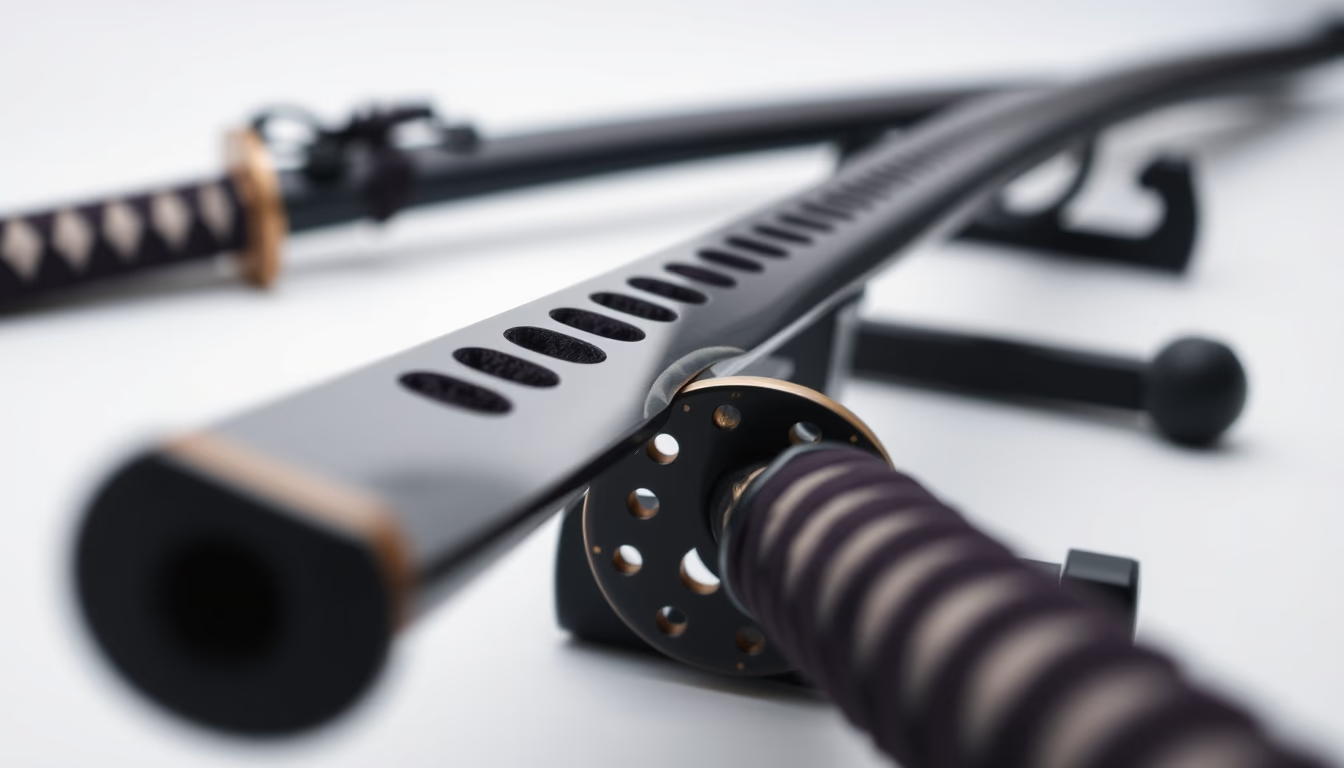
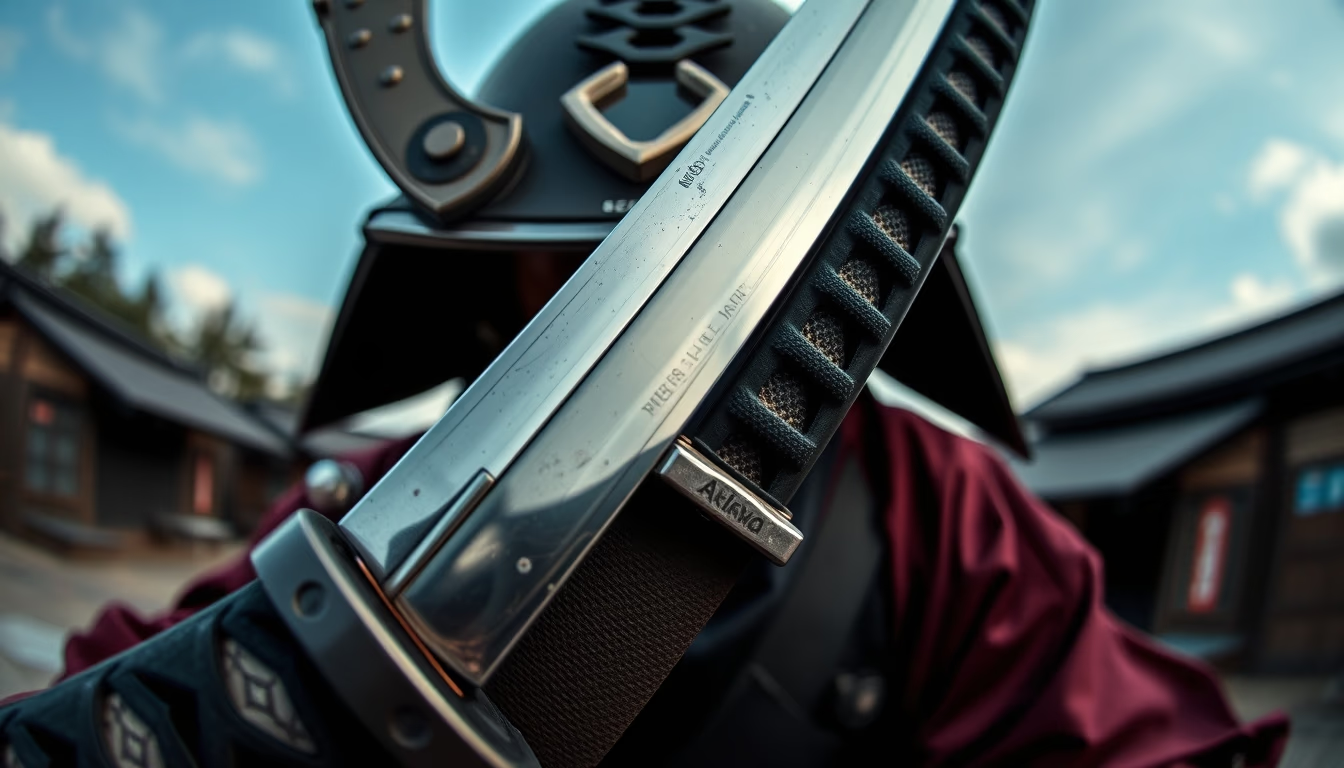
The samurai katana is a Japanese curved sword, symbol of feudal warriors and the art of swordsmanship.
About this subject
The katana is a Japanese curved sword traditionally used by samurai in feudal Japan. It emerged during the Kamakura period (1185, 1333), when warriors needed a quick and efficient weapon for cavalry combat. Unlike earlier swords like the tachi, the katana was worn edge-up, allowing a continuous draw-and-cut motion.
Katana construction involves complex forging techniques. Steel is repeatedly folded to create layers, removing impurities and distributing carbon unevenly. This results in a blade with a hard edge capable of perfect sharpening, but a softer spine to absorb impacts. The temper line, called hamon, gives each sword a unique visual signature.
Culturally, the katana represented the samurai's soul and was considered an extension of his spirit. It accompanied warriors in battles and ceremonies, and its ownership was restricted to the samurai class. After feudalism was abolished, the katana became valued as an art object and collector's item, regulated in modern Japan.
Today, katanas are produced by traditional craftsmen and modern manufacturers, serving practitioners of martial arts like iaido and kendo, as well as collectors. Authentic pieces can be worth thousands of dollars, and the manufacturing process is recognized by UNESCO as an Intangible Cultural Heritage.
Frequently Asked Questions
Why is the katana blade curved?
The curvature, called sori, allows for more efficient cutting when drawing the blade. It also facilitates a quick draw and helps absorb impacts during combat.
How is a traditional katana made?
The process involves forging tamahagane steel in a forge, repeatedly folding it to create layers, shaping the blade, applying clay for differential hardening, and polishing. A craftsman may take months to complete a single sword.
What is the difference between a katana and a tachi?
The katana is worn edge-up with a smaller curvature, used with one or two hands. The older tachi was worn edge-down with a larger curvature, suitable for cavalry combat.
Direct URL
https://pub-c7d6a6ea828543ac903a74a341ccb2e1.r2.dev/imagens/samurai-katana-commercial-product-photography-p1.avifHow to credit
Include a visible link back to UtilizAí. Copy one of the snippets below:
<a href="https://xn--utiliza-eza.com/en/midia/imagens/samurai-katana-commercial-product-photography-p1">Samurai katana</a> by <a href="https://xn--utiliza-eza.com">UtilizAí</a>, licensed under <a href="https://creativecommons.org/licenses/by/4.0/">CC BY 4.0</a>.
[Samurai katana](https://xn--utiliza-eza.com/en/midia/imagens/samurai-katana-commercial-product-photography-p1) by [UtilizAí](https://xn--utiliza-eza.com), CC BY 4.0
License: CC-BY-4.0