Rotary dial phone
1344×768 · AVIF · CC BY 4.0
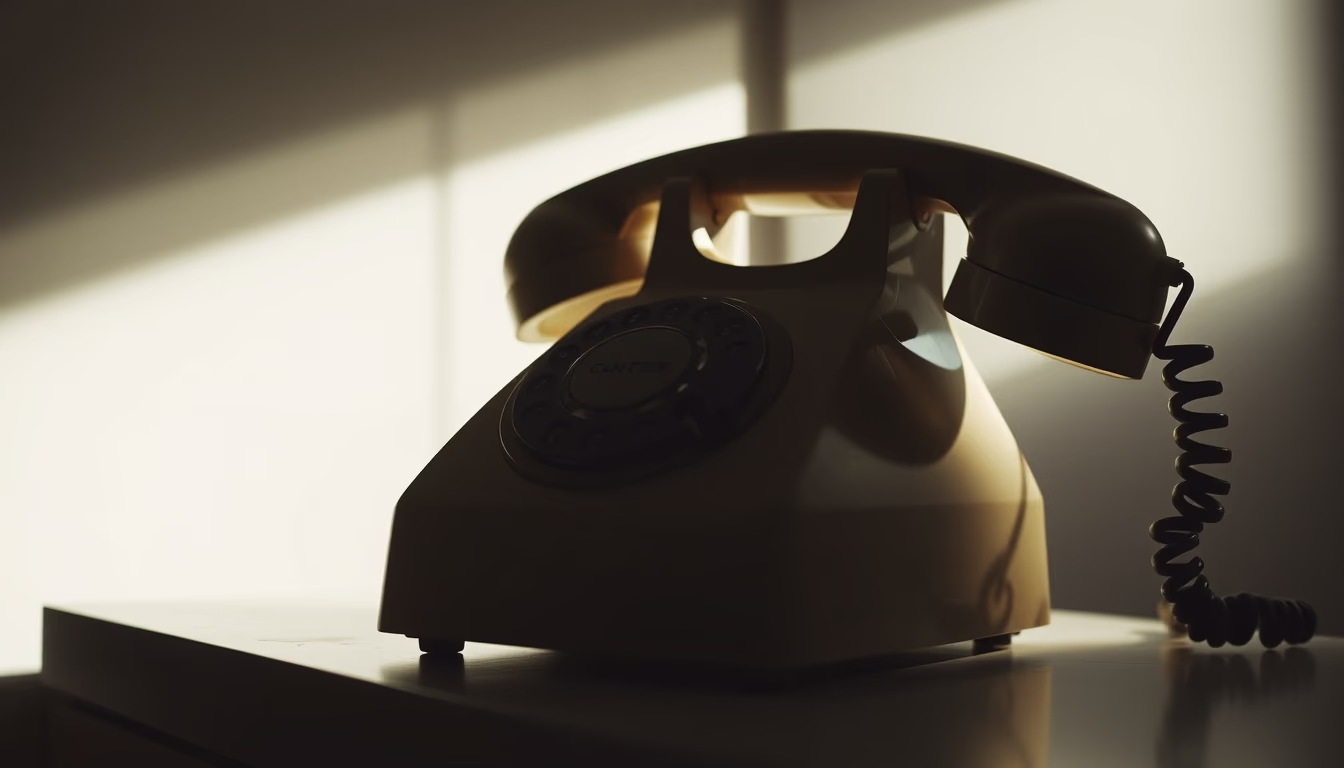
The rotary dial phone, a 20th-century communication icon, defined generations with its rotating mechanism and unmistakable design.
About this subject
The rotary dial phone, also known as the rotary phone, was the primary means of residential and commercial communication for much of the 20th century. Invented by Almon Brown Strowger in 1891, the pulse dialing system allowed users to dial numbers by rotating a disc with holes; as the disc returned to its original position, it generated electrical impulses interpreted by the telephone exchange. Although early models were wall-mounted, tabletop phones made of black Bakelite became symbols of modernity from the 1940s through the 1960s.
The rounded design and heavy material gave the device a commanding presence in homes. Each number on the disc corresponded to a specific pulse combination, and dialing speed depended on the user's skill. Interestingly, the rotary dial was gradually replaced by touch-tone keypads starting in the 1980s, but the rotary system remained in use in rural areas into the 2000s. Today, the rotary dial phone is a collector's item and a nostalgic object, often associated with film noir and retro living rooms.
The cultural significance of the rotary dial phone extends beyond technology. It represented the democratization of communication, allowing ordinary people to connect instantly. In countries like Brazil, both imported and nationally manufactured models (such as those by Siemens) were widely used until the privatization of the telephone system in the 1990s. The characteristic sound of the disc spinning and the click as it returned are affective memories for many who grew up in the pre-digital era.
Fun facts include speed dialing records, dialing competitions, and appearances in films such as "The Passenger" (1975) and "The Prestige" (2006). The design even influenced modern smartphone interfaces, which retain the circular arrangement of the numeric keypad in some apps.
Frequently Asked Questions
How do rotary dial phones work?
When you rotate the disc and release it, a spring returns the disc to its starting position, generating electrical pulses corresponding to the dialed number. Each number produces a specific number of pulses interpreted by the telephone exchange.
When was the rotary dial phone invented?
The concept was patented by Almon Brown Strowger in 1891, but commercial rotary dial models appeared in the early 20th century. The classic Bakelite design became popular in the 1940s.
Why do people feel nostalgic about rotary dial phones?
Many associate rotary dial phones with a slower, more personal era of communication, along with the aesthetic design and characteristic sound that evoke childhood memories or a romanticized past.
Direct URL
https://pub-c7d6a6ea828543ac903a74a341ccb2e1.r2.dev/imagens/rotary-dial-phone-fine-art-photography-p3.avifHow to credit
Include a visible link back to UtilizAí. Copy one of the snippets below:
<a href="https://xn--utiliza-eza.com/en/midia/imagens/rotary-dial-phone-fine-art-photography-p3">Rotary dial phone</a> by <a href="https://xn--utiliza-eza.com">UtilizAí</a>, licensed under <a href="https://creativecommons.org/licenses/by/4.0/">CC BY 4.0</a>.
[Rotary dial phone](https://xn--utiliza-eza.com/en/midia/imagens/rotary-dial-phone-fine-art-photography-p3) by [UtilizAí](https://xn--utiliza-eza.com), CC BY 4.0
License: CC-BY-4.0