Rotary dial phone
1344×768 · AVIF · CC BY 4.0
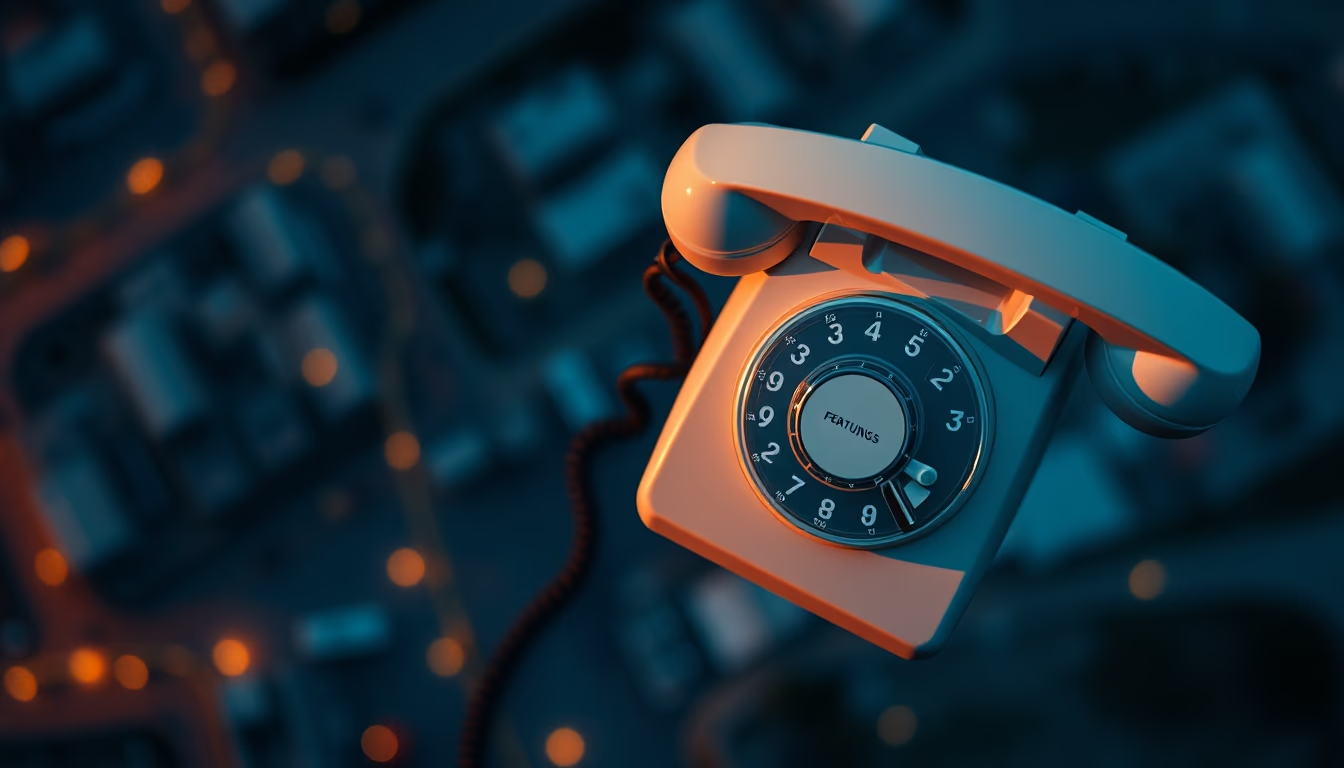
The rotary dial phone, also known as a rotary phone, was the standard communication device for decades, defining an era before digital keypads.
About this subject
The rotary dial phone, invented in the United States in the late 19th century and popularized from the 1920s onward, used an electromechanical mechanism to dial numbers. Each digit corresponded to a rotation of the disc, generating coded electrical pulses. For example, dialing the number 1 produced one pulse; number 9 produced nine pulses. This system was known as pulse dialing and operated over analog telephone networks, such as the former PSTN.
In Brazil, rotary phones were widely used until the 1990s, especially in homes and small businesses. Iconic brands include Siemens, Ericsson, and Telebrás. The most famous model in the country was the Black Bakelite Telephone, a robust and heavy design. The characteristic sound of the disc rotating when pulled and released became an auditory memory for generations.
A technical curiosity: pulse dialing was slower than tone dialing (DTMF), introduced later. While a 7-digit number could take up to 15 seconds to dial on a rotary phone, on keypad models it was nearly instantaneous. Additionally, the disc design with finger holes required precision: if the disc did not fully return, the number might be recorded incorrectly.
Culturally, the rotary dial phone symbolizes an era of more deliberate and personal communication. It frequently appears in films and TV series depicting the 1950s through 1980s. Today, it is a collector's item and vintage decoration, also used in telephone training or legacy emergency systems, such as elevators still equipped with rotary dialers.
Frequently Asked Questions
How does a rotary dial phone work?
When you rotate the disc for each digit, the mechanism breaks the electrical circuit a number of times corresponding to that digit. These pulses are interpreted by the telephone exchange as the dialed numbers.
Why were rotary phones replaced?
Tone dialing (DTMF) became prevalent because it was faster and more reliable. Keypads also enabled additional features like redial and use in automated systems (answering machines, switchboards).
Can I still use a rotary phone today?
Yes, if the phone line still supports pulse dialing. Many modern carriers use converters that interpret the pulses, but functionality may be limited on VoIP networks.
Direct URL
https://pub-c7d6a6ea828543ac903a74a341ccb2e1.r2.dev/imagens/rotary-dial-phone-aerial-drone-shot-p0.avifHow to credit
Include a visible link back to UtilizAí. Copy one of the snippets below:
<a href="https://xn--utiliza-eza.com/en/midia/imagens/rotary-dial-phone-aerial-drone-shot-p0">Rotary dial phone</a> by <a href="https://xn--utiliza-eza.com">UtilizAí</a>, licensed under <a href="https://creativecommons.org/licenses/by/4.0/">CC BY 4.0</a>.
[Rotary dial phone](https://xn--utiliza-eza.com/en/midia/imagens/rotary-dial-phone-aerial-drone-shot-p0) by [UtilizAí](https://xn--utiliza-eza.com), CC BY 4.0
License: CC-BY-4.0