Roman scroll papyrus
1344×768 · AVIF · CC BY 4.0
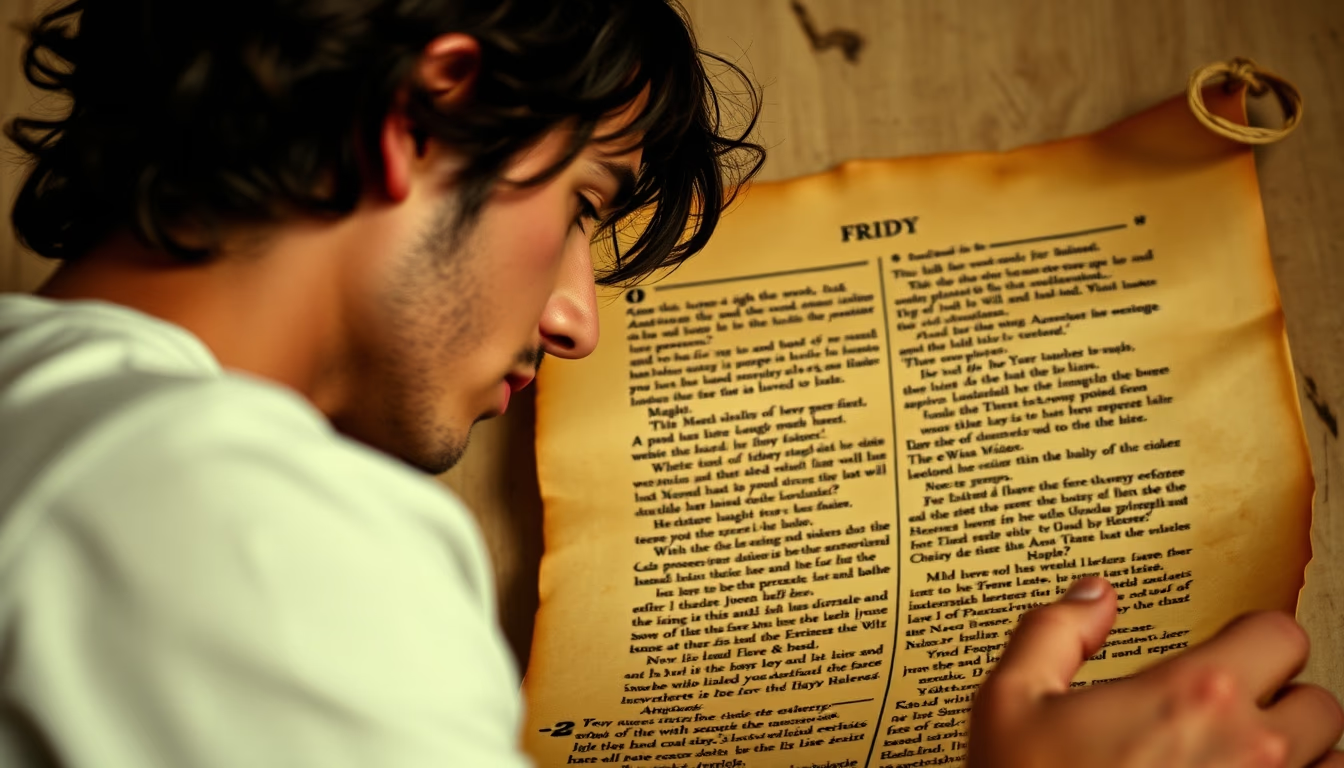
A Roman papyrus scroll preserves ancient texts, revealing the writing and culture of the Roman Empire.
About this subject
Papyrus was the most widely used writing material in the ancient world, especially in Egypt and the Roman Empire. Made from the Cyperus papyrus plant, its strips were overlapped, pressed, and dried to form sheets that were glued into scrolls. The Romans adopted papyrus from the Greeks and Egyptians, using it for administrative documents, letters, literary works, and legal records. A typical scroll measured between 6 and 10 meters in length and was rolled around a wooden or ivory rod.
The preservation of Roman papyri is rare due to the material's fragility. Most surviving examples come from arid conditions, such as the Egyptian desert, or carbonized in sites like Herculaneum after the eruption of Vesuvius in 79 AD. The Herculaneum papyri, part of the Villa of the Papyri library, contain Epicurean philosophical texts, including works by Philodemus of Gadara. The Oxyrhynchus papyri in Egypt have yielded thousands of fragments documenting everyday Roman life.
Reading a papyrus scroll required unrolling it with both hands, revealing columns of text written with soot-based ink. The handwriting varied from formal capital letters (cursive) to faster styles for daily use. Despite its importance, papyrus was gradually replaced by parchment (made from animal skin) and later paper, but its legacy as a medium for classical literature remains invaluable. Most known texts by authors such as Virgil, Cicero, and Seneca have reached us through medieval copies, but the original papyri offer a direct window into antiquity.
Frequently Asked Questions
How were Roman papyrus scrolls made?
Scrolls were made from the stem of the Cyperus papyrus plant. The inner layers were cut into thin strips, overlapped horizontally and vertically, pressed, and dried in the sun. The resulting sheet was smoothed and glued to others to form a continuous roll.
What are the most famous examples of preserved Roman papyri?
The Herculaneum papyri, carbonized by the eruption of Vesuvius, contain Epicurean philosophical texts. The Oxyrhynchus papyri in Egypt are a vast collection of fragments including administrative documents, letters, and excerpts from literary works.
Why have so few Roman papyri survived to the present day?
Papyrus is a very fragile organic material that decomposes easily in humid environments. Most surviving examples have only endured in exceptionally dry conditions, such as the Egyptian desert, or carbonized, as in Herculaneum.
Direct URL
https://pub-c7d6a6ea828543ac903a74a341ccb2e1.r2.dev/imagens/roman-scroll-papyrus-film-grain-authentic-p11.avifHow to credit
Include a visible link back to UtilizAí. Copy one of the snippets below:
<a href="https://xn--utiliza-eza.com/en/midia/imagens/roman-scroll-papyrus-film-grain-authentic-p11">Roman scroll papyrus</a> by <a href="https://xn--utiliza-eza.com">UtilizAí</a>, licensed under <a href="https://creativecommons.org/licenses/by/4.0/">CC BY 4.0</a>.
[Roman scroll papyrus](https://xn--utiliza-eza.com/en/midia/imagens/roman-scroll-papyrus-film-grain-authentic-p11) by [UtilizAí](https://xn--utiliza-eza.com), CC BY 4.0
License: CC-BY-4.0