Roman scroll papyrus
1344×768 · AVIF · CC BY 4.0
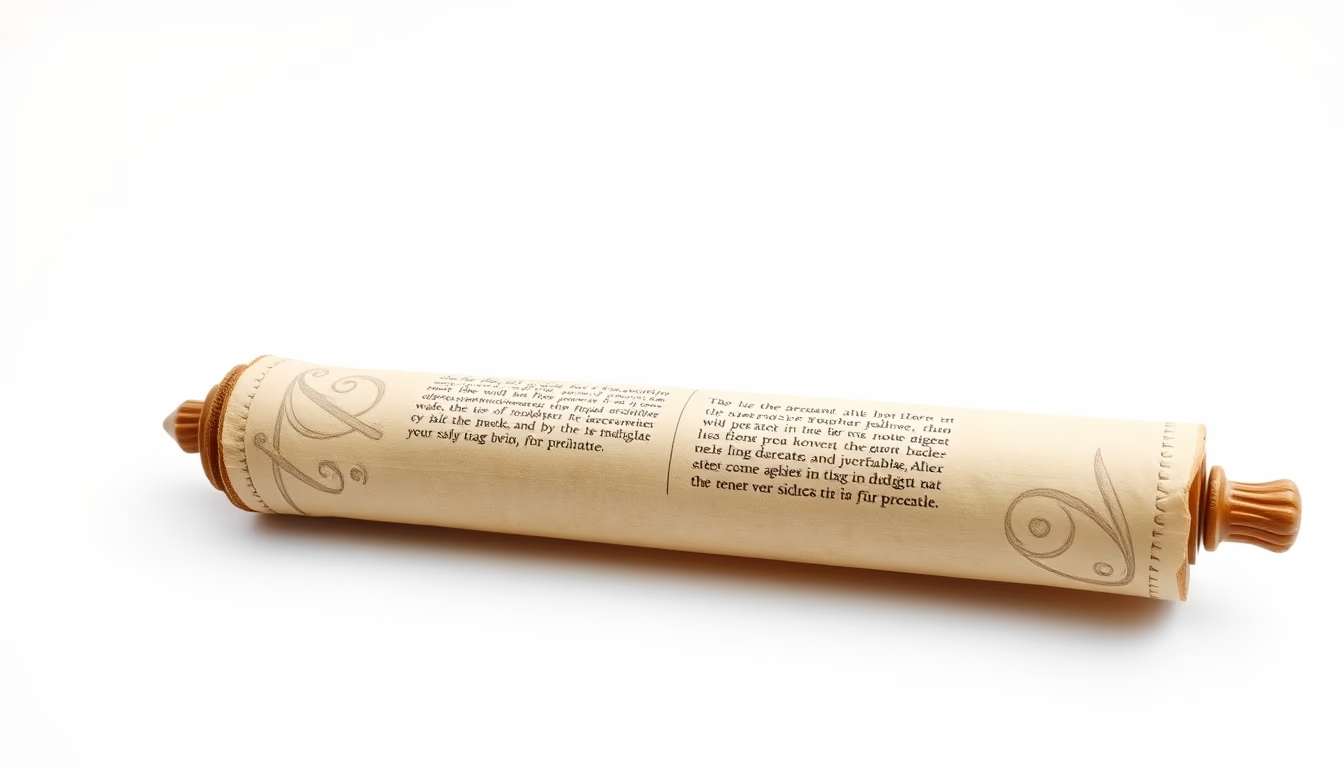
Roman papyrus scrolls, essential supports for literature and administration of the Empire, reveal ancient writing and reading practices.
About this subject
Papyrus, made from the Cyperus papyrus plant cultivated along the Nile, was the primary writing material in the ancient Mediterranean world. The Romans inherited the manufacturing technique from the Egyptians and improved it, producing rolls (volumina) up to 10 meters in length. These scrolls were wound around wooden or ivory rods and read horizontally, with the text arranged in columns. Production involved cutting the papyrus stalk into thin strips, overlapping them crosswise, pressing, and drying in the sun.
The use of the papyrus roll was dominant in ancient Rome until the 4th century AD, when the parchment codex began to gain preference. Works by poets such as Virgil and Ovid, philosophical treatises by Seneca, and administrative documents of the Empire were originally written on papyri. Unfortunately, most of these texts were lost due to the material's fragility, papyrus deteriorates quickly in humid climates. The majority of surviving papyri have been discovered in Egypt, where the dry, hot climate favored preservation.
Interestingly, Romans also used papyrus rolls for correspondence, lists, and contracts. The rolled format allowed compact storage in libraries and archives, such as the famous Library of Alexandria, which housed hundreds of thousands of rolls. Reading required both hands, unrolling with one and rolling with the other, hence the Latin term 'volumen' (from volvere, to roll). Roman papyrus was usually written on only one side, with ink made from soot, gum arabic, and water. The decline of papyrus was due to the increasing production of parchment, more durable and suitable for the codex, which became the predominant format in the Middle Ages.
Frequently Asked Questions
How did the Romans manufacture papyrus?
The process involved cutting the papyrus stalk into thin strips, overlapping them crosswise, pressing, and drying in the sun. The result was a strong, flexible sheet ready to be glued into rolls.
Why did most Roman papyri not survive?
Papyrus is very sensitive to humidity, fungi, and insects. Only extremely dry climates, such as the Egyptian desert, allowed many examples to be preserved.
What replaced the papyrus roll in ancient Rome?
From the 4th century AD onwards, parchment (made from animal skin) and the codex format (book with pages) began to replace the papyrus roll, as they were more durable and easier to consult.
Direct URL
https://pub-c7d6a6ea828543ac903a74a341ccb2e1.r2.dev/imagens/roman-scroll-papyrus-commercial-product-photography-p6.avifHow to credit
Include a visible link back to UtilizAí. Copy one of the snippets below:
<a href="https://xn--utiliza-eza.com/en/midia/imagens/roman-scroll-papyrus-commercial-product-photography-p6">Roman scroll papyrus</a> by <a href="https://xn--utiliza-eza.com">UtilizAí</a>, licensed under <a href="https://creativecommons.org/licenses/by/4.0/">CC BY 4.0</a>.
[Roman scroll papyrus](https://xn--utiliza-eza.com/en/midia/imagens/roman-scroll-papyrus-commercial-product-photography-p6) by [UtilizAí](https://xn--utiliza-eza.com), CC BY 4.0
License: CC-BY-4.0