Roman scroll papyrus
1344×768 · AVIF · CC BY 4.0
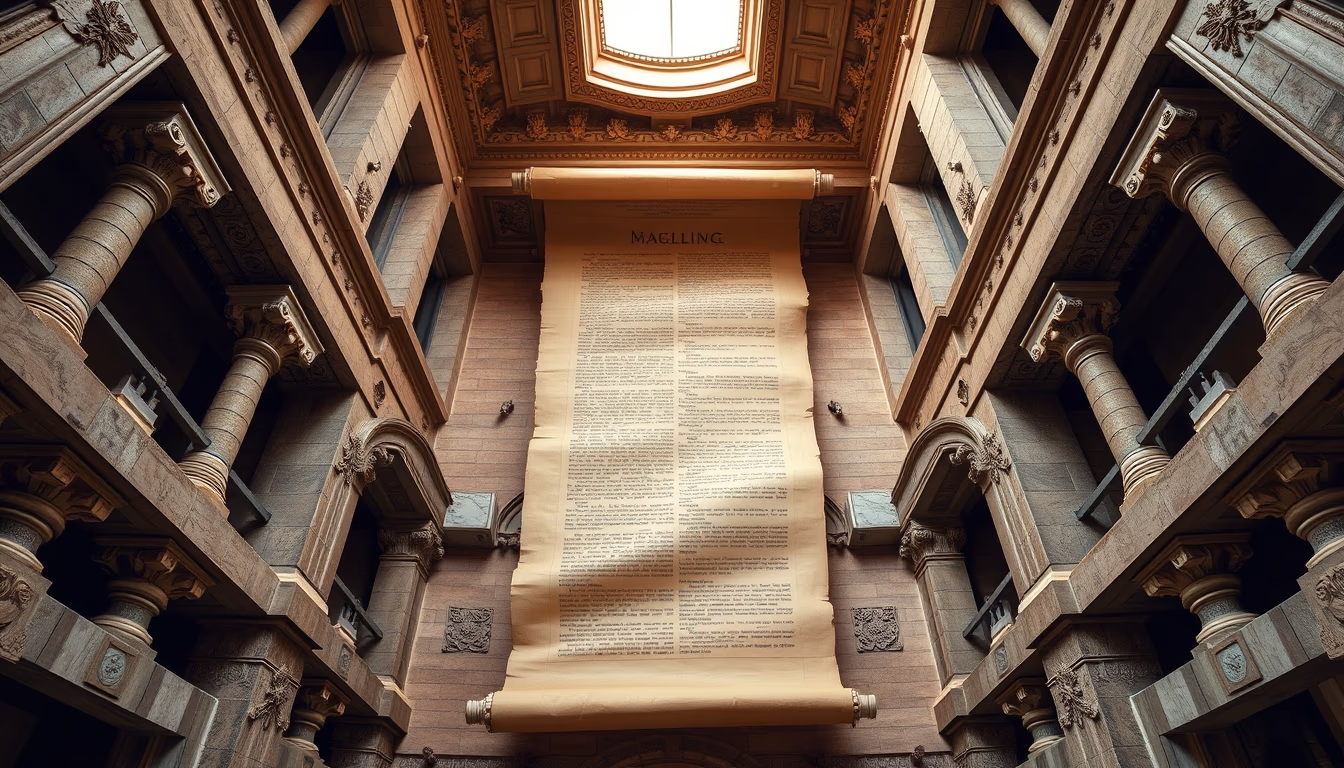
Roman papyrus scrolls were vital records of ancient life, from legal documents to literary works, preserved in arid conditions.
About this subject
Papyrus, made from the Cyperus papyrus plant cultivated in Egypt, was the most common writing material in the Roman world until parchment became widespread. Romans imported papyrus in scrolls (volumina) that could reach up to 10 meters in length. Production involved cutting the stem into strips, overlaying them in perpendicular layers, pressing, and drying in the sun. The result was a smooth surface for writing with ink made from soot and gum arabic.
Texts were written in vertical columns (paginae), read by unrolling with one hand and rolling with the other. Roman scrolls contained everything from purchase contracts to copies of Virgil and Cicero. Most surviving papyri come from sites in Egypt, such as Oxyrhynchus and Herculaneum, where extreme aridity and volcanic burial allowed preservation. It is estimated that only 1% of what was written has survived to the present day.
The use of papyrus declined after the 4th century AD as animal-skin parchment became more durable and economical. The last known Roman papyrus dates from the 7th century. Today, museums such as the British Museum and the National Library of Naples hold significant collections, continually studied with multispectral imaging techniques to reveal previously illegible texts.
Frequently Asked Questions
How were Roman papyrus scrolls made?
They were made from the papyrus plant stalk, cut into long strips. The strips were arranged in two perpendicular layers, pressed, and dried in the sun. The surface was then smoothed with a stone or shell.
Where were the most famous Roman papyri found?
The most famous are from Oxyrhynchus (Egypt), with thousands of fragments, and Herculaneum (Italy), preserved carbonized by the eruption of Vesuvius in AD 79.
Why are Roman papyri so rare?
Papyrus decomposes easily in humid environments. Only extremely dry climates, like the Egyptian desert, or special conditions, such as carbonization, allow preservation over millennia.
Direct URL
https://pub-c7d6a6ea828543ac903a74a341ccb2e1.r2.dev/imagens/roman-scroll-papyrus-architectural-photography-p10.avifHow to credit
Include a visible link back to UtilizAí. Copy one of the snippets below:
<a href="https://xn--utiliza-eza.com/en/midia/imagens/roman-scroll-papyrus-architectural-photography-p10">Roman scroll papyrus</a> by <a href="https://xn--utiliza-eza.com">UtilizAí</a>, licensed under <a href="https://creativecommons.org/licenses/by/4.0/">CC BY 4.0</a>.
[Roman scroll papyrus](https://xn--utiliza-eza.com/en/midia/imagens/roman-scroll-papyrus-architectural-photography-p10) by [UtilizAí](https://xn--utiliza-eza.com), CC BY 4.0
License: CC-BY-4.0