Rock garden raked patterns
1344×768 · AVIF · CC BY 4.0
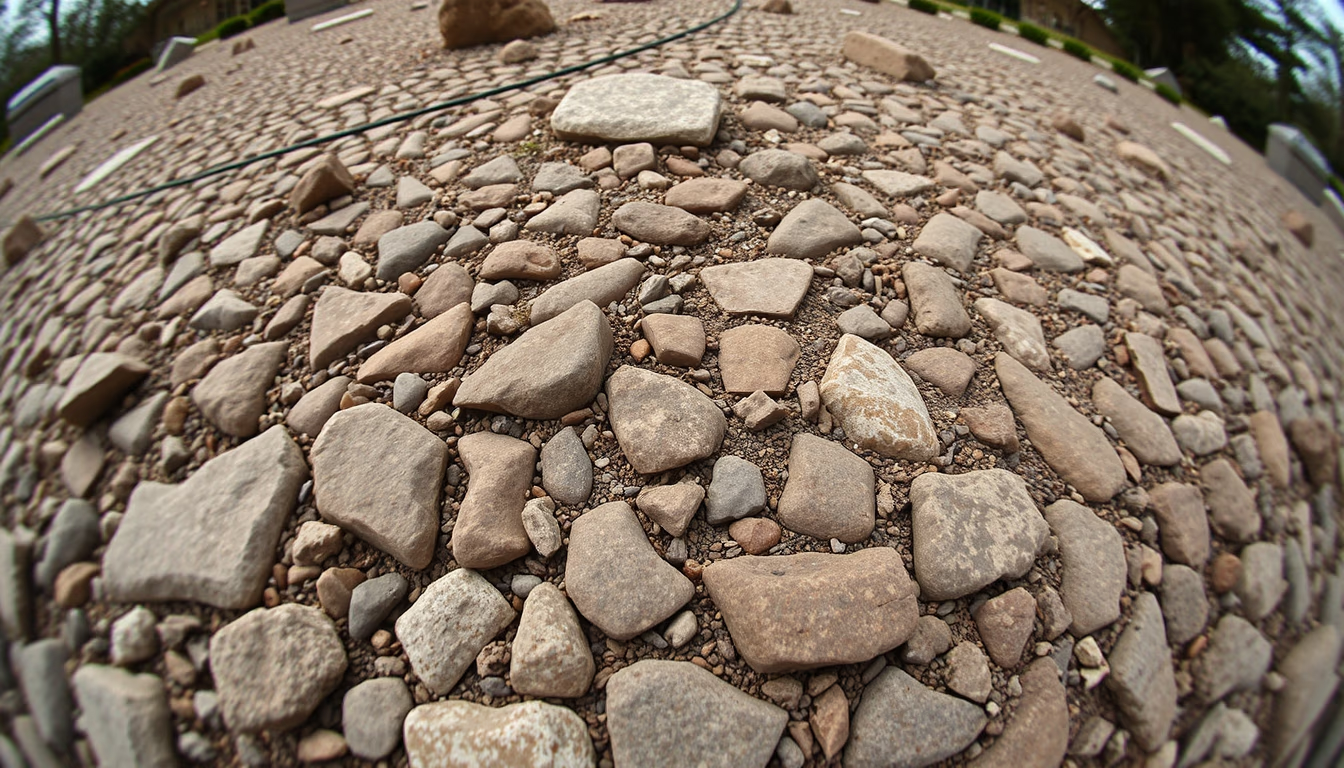
Japanese dry gardens, or karesansui, use raked sand patterns to represent water, mountains, and the flow of time.
About this subject
Japanese rock gardens, known as karesansui, are a centuries-old art form combining minimalism and symbolism. Originating in the Muromachi period (14th-16th centuries), these dry gardens avoid water, using fine gravel or sand carefully raked. The raking patterns, such as concentric waves around stones, represent water, rivers, or the ocean, while the stones symbolize mountains or islands. The act of raking is a meditative practice, often performed by Zen monks, who see it as a form of contemplation and impermanence.
One of the most famous examples is Ryoanji in Kyoto, where 15 stones are arranged so that only 14 are visible from any angle. The sand is raked daily in straight and circular patterns, following precise techniques that vary by school or gardener. The depth, spacing, and angle of the grooves depend on soil type and local climate. In larger gardens like Daisen-in, patterns may depict waterfalls or giant waves, creating an illusion of movement.
Culturally, karesansui invite introspection. They are not meant to be walked on but viewed from a specific angle, usually from inside a temple. Stone selection is crucial: they are chosen for shape, texture, and arrangement, following wabi-sabi aesthetics (beauty in imperfection) and Japanese feng shui principles. The raking patterns are remade daily, symbolizing constant renewal and the fragility of existence.
Today, raking techniques are applied in contemporary gardens worldwide, including Brazil, where some parks and private homes adopt the Zen style. Maintaining these patterns requires special tools like bamboo or wooden combs and knowledge of wind direction to prevent leaves from ruining the design. Beyond aesthetics, the practice is an exercise in patience and mindfulness.
Frequently Asked Questions
What is the meaning of sand patterns in Zen gardens?
The sand patterns represent moving water, such as waves, rivers, or waterfalls. They symbolize the flow of life and impermanence, and are meant to induce meditation.
How often is the sand raked in a Japanese garden?
In traditional temples, the sand is raked daily, usually in the morning, to keep the patterns sharp. In public gardens, the frequency may be lower depending on visitor traffic.
What tools are used to create these patterns?
Bamboo or wooden rakes with teeth of various widths are used. Some gardeners also use straightedges to guide lines and combs for finer textures.
Direct URL
https://pub-c7d6a6ea828543ac903a74a341ccb2e1.r2.dev/imagens/rock-garden-raked-patterns-fish-eye-wide-angle-fresh6.avifHow to credit
Include a visible link back to UtilizAí. Copy one of the snippets below:
<a href="https://xn--utiliza-eza.com/en/midia/imagens/rock-garden-raked-patterns-fish-eye-wide-angle-fresh6">Rock garden raked patterns</a> by <a href="https://xn--utiliza-eza.com">UtilizAí</a>, licensed under <a href="https://creativecommons.org/licenses/by/4.0/">CC BY 4.0</a>.
[Rock garden raked patterns](https://xn--utiliza-eza.com/en/midia/imagens/rock-garden-raked-patterns-fish-eye-wide-angle-fresh6) by [UtilizAí](https://xn--utiliza-eza.com), CC BY 4.0
License: CC-BY-4.0